Thoughts to Ponder 614
God and Natural Disasters
Parashat Noah
In Jewish Thought and Philosophy, Theodicy and Parashat Noach
ויאמר אלהים לנח קץ כל בשר בא לפני כי מלאה הארץ חמס מפניהם והנני משחיתם את הארץ
God said to Noah, “I have decided to put an end to all flesh, for the earth is filled with lawlessness because of them: I am about to destroy them with the earth. Bereshit 6:13
Throughout all of human history, mankind has been confronted with enormous and deadly natural disasters. After each disaster, many good souls, Jews and non-Jews, wonder what the higher meaning is behind all this. Religious people, in particular, postulate that there is a divine purpose to these catastrophes, and most of them believe that it must be human moral and religious failure that caused this divine wrath to rain down upon them and their fellow men.
Such reactions and attitudes are part of the outlook on life within religious communities, and there is a strong tendency among some religious people to blame the irreligious for these disasters. Many even blame themselves for the lack of their own religiosity and religious observance.
This is especially true of religious Jews. We feel responsible for the shortcomings of mankind and so we endlessly repeat: mipnei chato’enu, because of our sins, this has befallen us. Many even believe that disasters visited upon non-Jews are of our making. While there is something very beautiful about this mindset — not letting us off the hook, even when it is not we who are affected, but the gentiles — there is also something very wrong with it. Not only does it play into the hand of anti-Semites, it is also theologically unsound.
It can hardly be denied that the Torah and Jewish tradition are replete with examples of God warning the Jewish people of grave consequences if they do not follow the Divine Will.
Rambam’s (Maimonides) famous statement in his Mishneh Torah seems to bear this out. The great sage teaches us that after each catastrophe that has befallen the community, Jews should blow trumpets, fast, and repent.[1] To believe that these tragedies are accidental and of no meaning is highly irresponsible, warns Maimonides. It is the epitome of callousness and denial of Divine Providence. It is close to atheism.
Still, this cannot be the whole story. Common sense — and a keen understanding of Jewish religious philosophy and sources — seem to tell us that there is more to this than meets the eye. In fact, the constant emphasis on the moral and religious responsibility of Jews, and mankind at large, for any disaster that befalls them may well be a serious deviation from Jewish religious teachings. While many might argue that any denial of divine retribution would constitute apikorsut (heresy), it could very well be that the opposite is heresy and even a form of idol worship.
Is man the measure of all things?
Do good and evil events in this world really always depend on human behavior? Was there no other reason for God to create the universe than to test human beings and reward or punish accordingly? Is man really the measure of all things? Despite the statement quoted above, Rambam seems to doubt this. In his Moreh Nevuchim,[2] he states that God made everything lema’anehu,[3] a phrase taken by many commentators to refer to human beings, (i.e. for the sake of man), but which Maimonides understands to mean for His (i.e. for God’s) sake rather than for man’s.
Are we compelled to believe that black holes and baby universes, the millions of stars and other celestial bodies, were created only to test human moral and religious conduct? Would it not be more logical to conclude that God’s reasons for creating the universe are much greater and more significant than the problem of human behavior? Why create planets and invisible baby universes when what is of sole importance is human behavior on one tiny globe? As long as we do not know why God created the universe, including so many other worlds, we cannot say for sure whether every calamity is a result of our shortcomings. Some may be, and some may not be.
When Iyov (Job) demands an explanation from God as to why he has lost his children and his wealth, and is suffering such terrible pain, God’s response is not that he has in any way misbehaved. Instead, He asks Iyov: “Where were you when I laid the foundations of the earth? Tell me, if you have understanding.”[4] God challenges Iyov’s very notion that suffering is always related to sin. Who says that My treatment of human beings is always to be judged by your criteria of righteousness? There are larger issues at work.
While Iyov’s friends argue that he must have sinned, God rejects this argument. He declares that such an attitude is a denial of His multidimensional being and His larger cosmic plan. Iyov’s suffering has nothing to do with sin. God protests this very idea and tells him it is a declaration of preposterous heresy and an expression of childishness to think that way. Even worse, it is a reflection of human arrogance. Are we really so important? Since when are we able to judge God and decide why He created the universe? Such haughtiness is nothing but an attempt to squeeze God into the parameters of what we believe God should be. It is based on preconceived ideas of what God is and is not. We constantly try to view God through our own prism. But that reveals more about us than it does about God. Such an attempt is nothing less than idol worship.
The joy of life
The joy of life, which is so much a part of Jewish tradition, focuses on the fact that from a divine perspective, things could actually be much worse. Despite God’s impenetrable nature and thoughts, He shared some of His “good” qualities with us, informing us that our existence has great meaning, though we may never know what that meaning consists of. It is this aspect that is celebrated by Jewish tradition and beckons us to understand that despite all the pain, it is for the most part possible to enjoy life, to attain simchat chayim!
The claim that we are responsible for every disaster is an unbearable burden. It is an attitude of hopelessness that may lead us to give up and to see God only as a vengeful God with Whom we cannot have a relationship. It would be better to reason, as does Søren Kierkegaard, that God sometimes applies His “teleological suspension of the ethical”[5] so as to achieve His goals within the universe. This is true not just because we have a philosophical need to see God in terms of his total Otherness, but because it may be closer to the truth. Theodicy, in claiming that God can be justified in human terms, is a form of idol worship.
Over the years, Jewish worship has adopted an attitude of mipnei chato’enu galinu me’artzenu (because of our sins we have been exiled from our land), which has developed into a form of pessimism that is not loyal to the teachings of our Jewish tradition. It pretends that we are superhuman; this is dangerous and religiously unhealthy.
This approach has infiltrated and dominated too many of our daily prayers, which should be replaced with prayers about God whose exalted greatness is inscrutable, but worthy of our worship.
Humility
Whether or not a devastating fire or any other natural disaster, even if it was started by human beings, is an expression of divine displeasure we do not know. Nor will it ever be known, until we will again be blessed with prophets. Instead, it should evoke in us a feeling of deep humility. It should serve as a wake-up call, that all our boasting, our arrogance, our claiming that we know it all and that one day all of nature will be under our control, is one of the most pathetic dreams humans have ever entertained. One catastrophic storm can bring all of the world’s population to its knees.
No doubt we should treat each disaster as if it were a warning, a call for repentance, for humility, and even more a call to help wherever we can. The dangerous apathy of many of us in the wake of such terrible tragedy is perhaps the most devastating expression of human failure.
We must be fully aware that calamities are perhaps part of God’s cosmic plan far beyond human behavior, and we are not to be blamed. This is an important message to send to our young people, lest they despair under the yoke of religious pessimism. Better a God Who is incomprehensible than a God Who unremittingly causes us to feel that all catastrophes are our fault. Believing the latter is un-Jewish.
Questions to Ponder
- Do you agree with Rabbi Cardozo’s claim that the rationale of “mipnei chato’enu”—because of human sin, we have been exiled—is dangerous and unhealthy, pretending as it does that man is superhuman? If so, do you think guilt is ever a productive motivating force? If not, what do you think can protect those who do adopt this approach from the concerns Rabbi Cardozo expresses?
- In the Mishneh Torah, Rambam prescribes fasting and repentance when bad things happen in the world, indicating a belief that those bad events are not random, but the will of God—as is everything that happens in the world. But in Moreh Nevuchim, Rambam suggests that God created the world for Himself, implying that the tests to man’s faith are immaterial. How do you reconcile these two approaches of Rambam?
- If it is not mankind’s business to know why good and bad things happen in this world (as God informs Job), how do you assimilate the explicit biblical message that “reward” and “punishment” are directly caused by good or bad actions (seen, for example, in the second paragraph of the Shema)? And doesn’t this idea also undermine the force of God’s instruction to us that we should do good—for if not, bad will befall us?
- Given the conclusion of Bet Shammai and Bet Hillel that man would have been better off not having been created, what gets you out of bed in the morning?
Notes
[1]. Hilchot Ta’anit 1:1-4.
[2]. Part 3, chap. 13.
[3]. Mishle 16:4
[4]. Iyov 38:4.
[5]. Søren Kierkegaard, Fear and Trembling, eds. C. Stephen Evans and Sylvia Walsh, trans. by Sylvia Walsh (Cambridge: Cambridge University Press, 2006), 46-58.

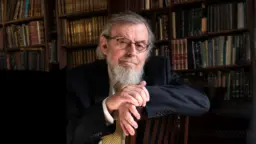
Rabbi Nathan Lopes Cardozo
Rabbi Dr. Nathan Lopes Cardozo is the Founder and Dean of the David Cardozo Academy and the Bet Midrash of Avraham Avinu in Jerusalem. A sought-after lecturer on the international stage for both Jewish and non-Jewish audiences, Rabbi Cardozo is the author of 13 books and numerous articles in both English and Hebrew. He heads a Think Tank focused on finding new Halachic and philosophical approaches to dealing with the crisis of religion and identity amongst Jews and the Jewish State of Israel. Hailing from the Netherlands, Rabbi Cardozo is known for his original and often fearlessly controversial insights into Judaism. His ideas are widely debated on an international level on social media, blogs, books and other forums.