Thoughts to Ponder 710
When Foreign Notions Enter Through the Back Door
לא־תלך רכיל בעמיך לא תעמד על־דם רעך אני ה’ … ולא תלכו בחקת הגוי אשר־אני משלח מפניכם כי את־כל־אלה עשו ואקץ בם … אני יהוה אלהיכם אשר־הבדלתי אתכם מן־העמים
Do not deal basely with members of your people. Do not profit by the blood of your fellow [Israelite]: I am the Eternal. … You shall not follow the practices of the nation that I am driving out before you. … I the Eternal am your God who has set you apart from other peoples. VaYikra 20:22-25
During the COVID-19 pandemic, we witnessed a disturbing phenomenon. While most citizens were careful to heed the instructions of the medical establishment, the Hareidi community adamantly refused to do so. They did not close their yeshivot, schools, and chadarim. They continued to allow large religious gatherings to take place. They acted in ways that put their own members and others in mortal danger. And in the end, they paid the price: the death rate among the Hareidi population was more than four times that of the non-Hareidi population.[1]
I believe that this was not just the result of Orthodox politics, or of rejection of the State of Israel, the Israeli authorities, and the knowledge of the medical profession. Rather, this behavior stems from deep-seated religious beliefs that impact the very foundations of Judaism and human existence. And it is in these beliefs that segments of the Hareidi world make a fundamental mistake regarding one of the most basic teachings of Judaism.
I want to emphasize that this is true of only part of the Hareidi community. But it is a very vocal part, and it does intolerable damage to Judaism and our fellow Jews.
While it is known that I do not agree with various aspects of the Hareidi outlook, I still respect this world very much for its passion and its many wonderful characteristics. And it is exactly because of this that I hope that by writing this essay I am making a small contribution toward helping the Hareidi community to rectify a crucial ideological mistake—a mistake that has caused much animosity and has brought Hareidi Judaism into disrepute. (It should also be mentioned that at a later stage many Hareidi institutions did close down due to the dangers brought on by COVID-19.)
The Hareidi adoption of Christianity
It seems to me that part of the Charedi community has adopted an idea that is totally foreign to Judaism but is, strangely enough, fundamental to Christianity. This is a typical example of how—probably due to the experience of exile—Christian ideas have infiltrated several aspects of Hareidi Judaism through the back door. This may be true even of other segments of religious Judaism that are not at all Hareidi.
Classical Christianity teaches that under all circumstances one must “save one’s soul”; everything must be sacrificed for the sake of the salvation of one’s soul. Only in that way is one able to enter Heaven. This is very well expressed through the question of whether, at the time of birth, we should save the baby or the mother, when both cannot be saved (a frequent scenario in previous generations). Classical Christianity teaches that we would have to save the baby, since its soul cannot enter Paradise without being baptized.[2] The mother, on the other hand, has already been baptized and has nothing to worry about when she dies. In other words, the salvation of the soul (through baptism) always has priority.
The Jewish Tradition adamantly protests against this view. Judaism considers this idea to be not only fundamentally mistaken but sacrilege of the first order. According to Judaism, we must save our bodies before anything else! “To live” is more important than “to be saved.”
The idea that under all circumstances we must “save our souls”—meaning that when forced to violate the commandments or coerced to drop a religious lifestyle, we must sacrifice our lives—is completely un-Jewish. It is only after we have secured our physical existence that we are obligated to observe the commandments, and it is only then that we have lost out on “real” life if we did not observe them.
To live is the greatest mitzvah of all
This certainly doesn’t mean that we should violate the commandments for the sake of mere convenience, or to live a comfortable life. But it does mean that we must ensure that we can at least live a simple life that allows us to breathe; that we don’t become deathly ill or completely unable to live a “human” life.[3]
Why? Because nothing is holier than life itself; not even the Divinely-given commandments! This means that making sure that we stay alive is more important than the observance of all the mitzvot combined. Compared to life itself, they are all secondary.
To put it differently: the most important biblical commandments are “U’vacharta ba’chayim”—“You shall choose life”[4] and “V’chai bahem, v’lo she’yamut bahem”[5] — “You shall live by them (the mitzvot)”, which the Talmud interprets as “you shall live by them, and not die because of them”[6].
Only three prohibitions override this obligation to preserve life: When one is forced to kill an innocent person in order to save one’s own life; when one is forced to have sexual intercourse with somebody with whom they, by biblical law, are not allowed to have relations; and when one is forced to publicly worship idols.[7] Only in these three cases are we commanded to die rather than transgress.
It is true that in the case of sh’mad, (religious persecution) we are required to give up our lives rather than transgress even the smallest commandment. [8] But this extreme case is the exception!
It is important to remember that we are allowed to take certain reasonable risks—such as driving a car, flying in a plane, crossing the street, etc.—as long as the chances of being killed are minimal and, in the words of the Talmud, “many have trodden there.” [9] Otherwise, life would become totally impossible.
For the same reason, we are allowed to try to save somebody else’s life only when it is reasonably certain that we ourselves will remain alive.[10] We are also allowed to put our lives at risk when we need to defend our country and its population, since this means saving the lives of many.
In all other cases, we are not allowed to put ourselves in mortal danger to observe the commandments. On the contrary, we are obligated to violate these commandments to save lives.
When Hareidi culture trumps the Torah
When, in the midst of a global pandemic, part of the Hareidi world insisted that yeshivot and chadarim remain open and large religious gatherings be permitted, etc., that part of the Hareidi world justified this with the argument that without these things, the religious community would be unable to function properly and would fall apart. The social pressure required to keep these communities intact would no longer be there, and many young and not-so-young people would leave the fold, would cease observing the commandments, and would thereby forgo their lives in this world and the World to Come.
In other words, these people seem to argue that saving one’s soul is the primary value, and if that means that some people will definitely die—as was the case during the pandemic—then this is preferred, since the people who died will at least not have violated the Torah and will consequently inherit the World to Come.
This idea—quintessentially Christian—is as anti-Jewish as can be.
Those in the Hareidi community who believe this do not seem to realize that they have abandoned one of the most basic tenets of Judaism: the absolute value of human life. With the few exceptions mentioned above, preservation of life always has priority.
It’s one thing if the average Hareidi person may not realize this, but that some of their leaders have adopted this notion is beyond comprehension. It seems that they never internalized one of the most basic tenets of Judaism.
What Judaism teaches is actually astonishing: Not only does Jewish law demand that a Jew not observe the mitzvot when they are in danger of death on a single occasion, but that if they are continuously in danger of death, they must violate all the commandments throughout their lives, if that is the only way to prevent this danger! While such a situation is highly unlikely, theoretically this could mean that one would never be allowed by Jewish Law to keep kosher or observe Shabbat, etc., if by doing so one would constantly be in danger of death. In other words, life itself is so important that when we are forced to choose between life and the commandments, we must choose life, even when that life has no Jewish (ritual) context whatsoever.
In the eyes of Judaism, this is obvious. The greatest expression of commitment to our Jewishness is to live. No commandment, or combination of commandments, will ever be able to compete with this mitzvah!
What we obviously need to ask is: Why? Why is life so important that everything else has to give way, even something as important as the very essence of our identity—our Jewishness and Judaism?
Does Christianity not make more sense when it claims that we should always save our souls before the body? What, after all, is the meaning of life if not to serve God? What is the point of saving one’s body?
Judaism maintains that the greatest service to God is what we do with our lives. There is something about life that is immutable. Life is a “substance” that cannot be measured, is beyond all definition, and is totally out of the range of human understanding. Life is holier than anything else.
That Christianity has taken a different path would seem to be because it considers life more of an obstacle then a virtue. This belief likely owes much to the influence of Plato, who considers the soul to be imprisoned by the body, from which it needs to liberate itself. The body is seen as an impediment.
Judaism, however, sees the body as a crucial helpmate in the growth of the soul. The soul can grow only through virtuous bodily actions. God created the body not to frustrate the soul but to help it. Otherwise, why have a body? Without the body, the soul has no value, because it can’t accomplish anything without it.
For Judaism, God is to be found within the mundane—in holy deeds. Judaism is, as Rabbi Abraham Joshua Heschel states, “the theology of the common deed”.[11] God is concerned with everydayness, with the trivialities of life, which can be raised to increasingly higher levels without ever leaving the ground. It is not concerned with the mysteries of heaven, but with the norms of society and the affairs of the marketplace. It is there that we find God. In Rabbi Heschel’s words: “In doing the finite we are able to perceive the infinite”.[12]
It is for this reason that keeping the body alive will always be more important than saving the soul. One can save the soul only after the body is secure. Put differently: saving the body is the highest expression of saving one’s soul.
This is one of the fundamental differences between Judaism and classical Christianity.
It is also a great tragedy that a sector of the Hareidi community violates this principle and has adopted a notion so fundamentally foreign to Judaism.
A misguided notion of Talmud Torah
To be sure, there are other important issues at play in explaining why the Hareidi community reacts the way it does. One of these issues is the belief that “Talmud Torah”—learning Torah—is the ultimate goal of every male Jew, and that all other endeavors—such as the functioning and upkeep of society, the running of the Jewish State, its commerce, its agriculture, and more—are of much less importance than the study of Torah.
This idea, too, is entirely wrong. This view of Talmud Torah is akin to idol worship. The often-quoted rabbinic statement “V’talmud Torah k’negged kulam”—the study of Torah is equivalent to all the commandments[13]—does not mean that Torah learning is the ultimate objective of Judaism. If that were the case, it would be included in the category of the few mitzvot we mentioned above, for which one must give up one’s life rather than transgress. But that’s not the case.
The meaning of this statement is figurative. Without learning Torah, we would not know how to fulfill the commandments and transform ourselves into more sublime and moral people; we would not know how to run a just society, how to work the land, how to do business, and how to deal with our fellow human beings.
All of the commandments depend on learning Torah. Without that knowledge, one wouldn’t know how to observe them. But this has never meant that we need to give up our lives for learning Torah. In fact, doing so is forbidden! Sure, learning Torah is considered to be one of the greatest mitzvot and is certainly a goal in itself and a form of Divine worship. What we can agree upon is that without constant study of the Torah the Jewish people, as a whole, would probably not have survived. Torah is the lifeblood of Judaism, but even so, it’s not as holy as life itself.
The confusion concerning this matter within a part of Hareidi society is one of the great tragedies in modern Jewish life. The belief that learning Torah is the ultimate goal, to which all of life should be subordinated, is a false and dangerous one.
We can only pray that the Hareidi leadership will realize this and move its followers away from these foreign notions of saving one’s soul and the concomitant mistaken belief about learning Torah. Their leadership should return to the Jewish fold, guiding their followers to do the same.
Questions to Ponder
- Rabbi Cardozo argues that certain Hareidi beliefs during the COVID-19 pandemic reflect Christian rather than Jewish principles. How do we determine whether an idea is truly foreign to our traditions? What sort of criteria could be developed for considering whether an idea is fundamentally incompatible with Jewish tradition?
- Rabbi Cardozo attributes the actions of part of the Hareidi community during the pandemic to the belief that “saving one’s soul” takes precedence over preserving physical life. Are there other possible explanations for the community’s disregard for the rules? Do other explanations support or undermine Rabbi Cardozo’s assertion that it all comes down to deeply-held beliefs about the value of the soul over that of the body?
- Rabbi Cardozo points out that classical Christianity’s emphasis on “saving one’s soul” ultimately derives from Plato’s philosophy. Plato famously saw the soul and body as having an adversarial relationship. What other aspects of Hareidi society might reflect an adoption of this idea?
- It is clear that Judaism’s prioritization of physical life has had a tremendous impact on the evolution of Jewish Law over the centuries. Naturally, Christianity’s prioritization of saving the soul has had a similar impact on the development of Christian culture. In what ways have these different beliefs influenced the divergent paths of these faith traditions?
- The Hareidi community’s assertion that the study of Torah is more important than saving lives has been used to justify that community’s refusal to serve in the Israeli Army, or indeed, even to take part in the running of society. How does this belief reflect a departure from traditional Jewish teachings on the role of Torah study and its relationship to everyday life and societal functioning?
- How do you personally interpret the statement “V’talmud Torah k’negged kulam” (the study of Torah is equivalent to all the commandments)?
How might the Hareidi community reconcile its beliefs with the broader spectrum of Jewish teachings and values? What steps can be taken to promote a more balanced and nuanced understanding of religious obligations and ethical principles within that community?
Notes:
[1] “1 in 73 ultra-Orthodox Israelis over 65 has died of COVID, report says”. Times of Israel, 10 February 2021. https://www.timesofisrael.com/1-in-73-ultra-orthodox-israelis-over-65-has-died-of-covid-report-says/.
[2] There are many interpretations of what Baptism is. The most common is given by Martin Luther: “To put it most simply, the power, effect, benefit, fruit, and purpose of Baptism is to save. No one is baptized in order to become a prince, but, as the words say, to “be saved.” To be saved, we know, is nothing else than to be delivered from sin, death, and the devil and to enter into the kingdom (of Jesus) and live with him forever” (Large Catechism, 1529).
[3] This may mean that even when a person stays biologically alive but will be deprived of all the conditions that make life possible on the most basic level, they need to violate the commandments. See the writings of the “Dor Revi’i,” the Gaon Rabbi Moshe Shmuel Glasner, Chief Rabbi of Klausenburg, Hungary, from 1877-1923.
[4] Devarim 30:19.
[5] Vayikra 18:5.
[6] Yoma 85b.
[7] Yoma 82a.
[8] Sanhedrin 74a
[9] Shabbat 129b, based on Tehillim 116:6.
[10] Whether one is allowed to voluntarily give up one’s life in order to save the life of another is a matter of debate. See Shevet M’Yehudah by former Chief Rabbi of Israel Isser Yehudah Unterman z.l. (1886-1976), Chapters One and Two, Mosad Harav Kook, Jerusalem, 1983. See, also, Josephus, Antiquities of The Jews, book 18, chapter 8, mentioned in Milton Konvitz’s “Conscience and Civil Disobedience in the Jewish Tradition” in Contemporary Jewish Ethics, ed. Menachem Kellner, NY, Sanhedrin Press, 1978, p. 242-243. As far as I know, and interestingly enough, the story of the martyrs of Masada, who killed themselves rather than being taken captive by the Romans, is not mentioned in classical rabbinical literature. It is known that halakhic authorities were ambivalent about the collective suicide of Jews during the Crusades. It may be that these Jews decided to take their lives and those of their loved ones because they were afraid that they would be forced into idol worship, religious persecution, baptism, or sexual abuse.
[11] A. J. Heschel, The Insecurity of Freedom, Farrar, Straus and Giroux, 1955, pp. 102-3.
[12] A. J. Heschel. Man Is Not Alone, p. 265.
[13] Shabbat 127a.

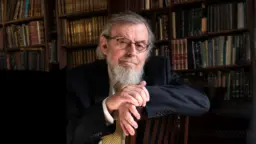
Rabbi Nathan Lopes Cardozo
Rabbi Dr. Nathan Lopes Cardozo is the Founder and Dean of the David Cardozo Academy and the Bet Midrash of Avraham Avinu in Jerusalem. A sought-after lecturer on the international stage for both Jewish and non-Jewish audiences, Rabbi Cardozo is the author of 13 books and numerous articles in both English and Hebrew. He heads a Think Tank focused on finding new Halachic and philosophical approaches to dealing with the crisis of religion and identity amongst Jews and the Jewish State of Israel. Hailing from the Netherlands, Rabbi Cardozo is known for his original and often fearlessly controversial insights into Judaism. His ideas are widely debated on an international level on social media, blogs, books and other forums.