Announcing the Cardozo Academy Writers Guild!
Due to the war in Israel and other circumstances, I have asked Yehoshua Looks, a member of our Think Tank, Writer’s Guild, and Management Consultant to the Cardozo Academy to share with me the penning of the weekly Thoughts to Ponder Series. These essays are written in the spirit of the Cardozo Academy and with my full approval.
I thank him very much!
Nathan Lopes Cardozo
Remember what the Amalekites did to you along the way when you came out of Egypt. When you were weary and worn out, they met you on your journey and attacked all who were lagging behind; they had no fear of God. When the Lord your God gives you rest from all the enemies around you in the land He is giving you to possess as an inheritance, you shall blot out the name of Amalek from under the heaven. Do not forget. (D’varim 25:17-19)
If this were not a year with an extra month of Adar, we would be in the midst of Purim preparations. Our Torah portion Tetzaveh, with its description of the Kohen’s “costume”, is usually read Purim week. This year, we have an advance remembrance of the holiday on Friday with Purim Katan, refraining from sorrowful elements in our prayers and eating just a bit more festively, in cognizance that it is Erev Shabbat.
The essence of traditional Purim preparation begins the Shabbat before in synagogue, with the additional Torah reading of Parshat Zachor, which includes the mitzvot to remember what the Amalekites did to us, to blot out their name, and not to forget. After the events of October 7, we in Israel relate viscerally to these mitzvot in a way we didn’t before.
In discussing why Mount Sinai is called by that name, among the explanations provided by the Gemara (Shabbat 89a-b), is that the hatred (sin’a) of the nations for Israel descended upon Sinai as the Jewish people received the Torah from God. The moment our covenantal relationship became operative, antisemitism came into the world, empirically and utterly irrationally. The response of the nations, who had rejected the gift of Torah, became a never-ending hatred of the Jewish people.
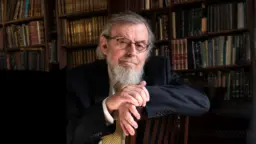
Rabbi Jonathan Sacks, z’l, in his article, “Two Types of Hate”, draws the distinction between rational and irrational hatreds:
When hate is rational, based on some fear or disapproval that – justified or not – has some logic to it, then it can be reasoned with and brought to an end. But unconditional, irrational hatred cannot be reasoned with. There is nothing one can do to address it and end it. It persists.
Theodor Herzl, writing in 1897, came to a similar conclusion:
We have sincerely tried everywhere to merge with the national communities in which we live, seeking only to preserve the faith of our fathers. It is not permitted us. In vain are we loyal patriots, sometimes superloyal; in vain do we make the same sacrifices of life and property as our fellow citizens; in vain do we strive to enhance the fame of our native lands in the arts and sciences, or her wealth by trade and commerce. In our native lands where we have lived for centuries we are still decried as aliens, often by men whose ancestors had not yet come at a time when Jewish sighs had long been heard in the country . . . If we were left in peace . . . But I think we shall not be left in peace.
Implications for the current conflict
Dr. Einat Wilf, in a recent podcast with Rabbi Daniel Gordis, dismisses the idea that the Palestinians’ conflict with Israel can be solved with a Two-State Solution:
So, let’s say the battle started more than a century ago, and it was motivated by a variety of reasons, part of it is just opposition to Jews and immigration. I think much more deeply, 90% of the explanation lies in the fact that Zionism challenged the 1,400-year-old image in the Arab and Muslim world of the proper role of the Jew as lower, of lower value, of lower status…They don’t care about the land. They care about the Jews on the land.
Furthermore, Dr. Wilf traces the Arabs use of the prevailing brand of antisemitism to further their war against the Jews:
But what they found over the years, and it already begins in the 30s and 40s is that the fact that their enemies are the Jews, is a massive asset, because they can draw at any particular moment on whatever anti- Jewish, anti- Zionist, anti- Semitic ideology reigns in the world at the moment. So, in the 30s and 40s, they draw on the Nazis…And then in the 50s and 60s pan- Arabism basically becomes the ideology that elevates Palestinianism into this theology. And then the Soviet Union, beginning in the 60s, 70s, 80s becomes the main backer of Palestinianism as the spearhead of the battle against Jewish dignity and Jewish sovereignty.
And then in the 90s it becomes the Sunni jihadism, and now it’s Shiite jihadism… But this is what Palestinians always discovered. They can draw on this massive asset of anti- Jewish ideology however it gets manifested at a particular moment in history.
This is Amalek. This is the unending hatred that we were warned would last until the end of days, “The Lord will be at war with Amalek throughout the ages”. (Shemot 18:16)
When remembrance of Amalek is now
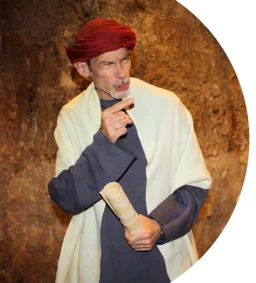
Prior to October 7, I began preparing for the role of an actor who was blacklisted in the early 1950s for having supported communist causes for idealistic reasons, and for refusing to name names. The play, The Value of Names, deals with themes of antisemitism, reconciliation, and how past events become a prison for the present. After October 7, my identification with my character and his refusal to put aside what was taken from him became very real.
Several weeks ago, relaxing before a Shabbat meal with a few friends, each of us shared similar experiences of the profound sadness we were feeling—brought on by all the losses—recognizing that something hopeful has died within us. And we cried.
The social philosopher Irving Kristol once quipped:
A neoconservative is a liberal who’s been mugged by reality. A neoliberal is a liberal who’s been mugged by reality but has refused to press charges.
We cannot afford not to press charges. God has made only two unconditional promises to the Jewish people: one that we are eternal, that we will not disappear; and the second that He will ultimately redeem us. The first promise has up to now been kept, while we yearn for the second.
Even though the Land of Israel is our inheritance from God, our continuing presence in the Land is conditional; meaning that it is dependent on our behavior, which the Torah makes most explicitly clear in its two enumerations of blessings and curses. May we take the long view, remembering that our conflict with Amalek is generational, and may we have the perseverance to see this current war to its necessary conclusion.

Yehoshua Looks
Rabbi Yehoshua Looks made aliyah with his family in 1996. He has an MBA from Harvard with 20 years senior management experience in the United States. Yehoshua is the COO of Ayeka, Treasurer and Board Member of AACI, among other activities. He is also a student and teacher of Torah. For many years, Yehoshua was a regular contributor to HaAretz Rabbis' Round Table.