Rabbi Yochanan ben Zakai and the “Portable Homeland”
In a fascinating narrative in the Talmudic tractate of Gitin (56b), we are told that Rabbi Yochanan ben Zakai, the leader of the Jewish people at the time of the invasion by the Roman Empire, was confronted with a question of life and death. Vespasian, who would soon become the new Roman emperor, had brought the Jews to total exhaustion after years of intensive battles. Jerusalem was under siege, people were dying, there was famine, and despair had overtaken the Jewish community. At any moment the (Second) Temple would be destroyed. There was no way the Jews could rid themselves of the enemy, and only one question remained: Do they surrender and save whatever could be salvaged, or do they fight until the death without any hope or future?
Rabbi Yochanan, made a critical decision—one that would save Judaism and would send a great message to all future Jews. He asked to meet with Vespasian. On the advice of his nephew Aba Sikra, Rabbi Yochanan’s disciples hid him in a coffin, smuggled him out of the besieged city, and brought him to the future emperor. When asked why he came to see Vespasian, Rabbi Yochanan responded that the Jews were willing to surrender, on one condition: “Give me Yavne and its Sages.” The city of Yavne was known to be the home of many influential sages, the center of Jewish learning and the seat of an outstanding rabbinical court.
This seemed a minor request and Vespasian agreed, seeing no harm in such a humble petition. Little did he know that this agreement ultimately led to the Jews outliving the Romans by thousands of years. Nor did the Jews who opposed this capitulation to Rome realize that Rabbi Yochanan’s agreement with Vespasian was not a sign of weakness, but in fact a heroic deed that ultimately led to a great victory.
Rabbi Yochanan understood that Jewish survival was not dependent on their possession of the land of Israel, nor even an army, but rather on an identity and an ideology. In the case of any other nation the possession of territory would be crucial to their survival. But for the Jewish people this was not the case. Although Rabbi Yochanan did not deny the centrality of the land of Israel, he knew that Jews could continue to be a people even without a land. It would be dangerous, and far from ideal. It would cause unparalleled harm, and bring the Jewish people to the edge of its capacity to survive. But if necessary, it could work.
The Portable Homeland
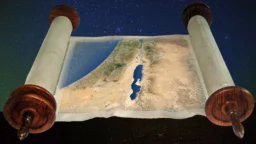
However, this required a revolution in thinking that would turn the Jewish people on its head. It needed the creation of what Heinrich Heine called a “portable homeland.” This “homeland” was to be created from the very components of which the original covenant with God was made: the Torah. The Jewish people would be able to carry this portable country—in the form of the Biblical text—into the lands of exile.
Rabbi Yochanan realized that it was not so much the love of the land that motivated the Jews to maintain their identity as Jews, but rather their ongoing love affair—one of the greatest love affairs of all time—with a single text.
Still, the plain text alone would not accomplish this goal; it was the constant dialogue with this text that would transform the Jews into an eternal people. It was the enduring interpretation of the text which would guarantee Israel’s capacity to overcome all its enemies. As long as the Jews kept studying this text, the Jewish people would survive, even in exile.
But even more was needed. The Jews throughout all the generations would need to engage in conversation with the great Sages of the past. They would argue with them as if they were alive, as if sitting at their feet in the great Talmudic academies and studying their texts. Landless and powerless, they would inhabit a mental universe where the horizons in space and time would be vaster than the sum total of their enemies’ empires.
It was this realization which prompted Rabbi Yochanan to “surrender” to Vespasian. He knew very well that this would lead to an unprecedented victory—an accomplishment that would outlive the Roman Empire and ultimately bring the Jews back to the Land of Israel. It was for this reason that he uttered his historic words, “Give me Yavne and its Sages.” By obtaining this concession from Vespasian, he not only safeguarded the Torah and its Sages, but above all, the people of Israel. By laying the foundations for the portable homeland of the Jews, he in fact had guaranteed their glorious future.
Still, Rabbi Yochanan ben Zakai understood that merely engaging with the text was not enough to ensure Israel’s survival. This engagement must be integrated with day-to-day life. Unlike the great academies of Greece, theoretical study was not how the sages of Yavne would prevail. Rabbi Yochanan fully understood that Greek philosophy could reach only a limited elite body of students. More importantly, he knew that philosophy was truth thought but not truth lived. By giving the sages of Yavne the opportunity to continue their studying and teaching, Rabbi Yochanan ensured that what they taught was also, and above all, what they and their students lived. They would make sure that “what ought to be” would become “what is”. The integrity of the Sages of Yavne guaranteed that Jews would never succumb to moral bankruptcy as did the Greeks and others, who taught ethics and law but did not live it. It was not philosophy which the Sages taught, but life; not faith taught, but faith lived.
A message for our times
In these difficult days, it is important to remember Rabbi Yochanan’s message.
We Israelis must realize that our connection with our land is sui generis, completely unique, and in complete contradiction to the way other nations relate to their homelands. Most nations first entered their land and only then created their laws. But Israel’s laws, in the form of the Torah, were given in the wilderness, where they were given the commandment to inherit their land. The law gave birth to the land and its nation, and not the reverse.
Even when the Jews lost their land, they still had their law—their portable homeland—which they carried to all the corners of the world. This is the reason why the Jewish people, unlike all other nations, survived for nearly two thousand years in foreign countries, outliving all their enemies.
For too long, many of us have told our children that to be an Israeli soldier is the pinnacle of Jewishness and Zionism. The truth is that it is not, and never was. The pinnacle of Jewishness is to realize that we have a holy mission. It is not the land as such that we need to defend. We need internalize the understanding that it is our destiny to be God’s stake in human history, and to be an inspiration to the world. And the best way to do this by holding onto our land. The land is a means, not an end in itself.
How sad when Jews go astray on the greatest mission ever given to mankind, believing that we can hold territory without this mission. We cannot. Not even with the best and most moral army in the world could we remain on our land if we forget our great mission. This is the lesson taught us by Rabbi Yochanan ben Zakai.
After this war is won, the next great challenge facing the State of Israel will be the possibility that its soldiers will one day refuse to serve and defend this country. How long will we be able to rely on the Israeli army if its combatants do not realize what it is they are fighting for? It is important that they know that they are defending an idea and a holy mission which far surpasses the defense of a piece of land! For now, they clearly do know this, but for how long will this continue?
There is no Israeli claim to the land. There can only be a Jewish claim. And this claim can only persist as long as its defenders believe in Israel’s, the Jewish people’s mission, and are prepared to die for it.
After this terrible war is over, the government of Israel must realize that, by denying large segments of its people proper—and inspiring—Jewish education, it risks tragedy. If it continues this dangerous path, it will bring another exile even in its own land.
As Abraham Joshua Heschel wrote: The gravest sin for a Jew is to forget what he represents. To be a Jew is either tragic or holy. Let it be holy.

Rabbi Nathan Lopes Cardozo
Rabbi Dr. Nathan Lopes Cardozo is the Founder and Dean of the David Cardozo Academy and the Bet Midrash of Avraham Avinu in Jerusalem. A sought-after lecturer on the international stage for both Jewish and non-Jewish audiences, Rabbi Cardozo is the author of 13 books and numerous articles in both English and Hebrew. He heads a Think Tank focused on finding new Halachic and philosophical approaches to dealing with the crisis of religion and identity amongst Jews and the Jewish State of Israel. Hailing from the Netherlands, Rabbi Cardozo is known for his original and often fearlessly controversial insights into Judaism. His ideas are widely debated on an international level on social media, blogs, books and other forums.