Israel and the World Cup – Some Rabbinic Advice
A tongue-in-cheek look at how Israel could win the next World Cup in Soccer
As the European Cup in Berlin, Germany, has come to an end, causing me sleepless nights and giving a serious depression, especially after my native country (Holland) shamefully lost this game against the British Empire, I began to wonder why we Israelis did not win all the games as everybody had expected. No doubt this is on the minds of all my readers.
I decided to conduct a careful study of what went wrong. To do so, I first went to Beitar Yerushalayim’s locker rooms and put my ear to the wall. Then I traveled to the HaPoel Tel Aviv team, once more pressing my ear to listen. Finally, with that same ear, I walked into the rooms of Maccabi Haifa and again listened. My conclusion: The reason why the Israelis lost is because they did not listen to my rabbinic advice.
The problem with Israelis is that they think they know it all. True, most of the time they do. But when it comes to soccer, forget it. They have no clue. I am Dutch, and I was an old friend of the most famous international Dutch soccer player, Johan Cruyff z.l. On top of that I am a rabbi, and even Jewish. The combination is unsurpassed. So, let it be clear: I know what I am talking about.
Let’s be honest. Everyone knows that we Jews run the world. We dominate the White House, control the financial world, and have the brightest minds. Nobel prizes abound. Our country is larger than China, and we occupy more foreign territory than any other nation. We also have unbeatable soldiers and are, by far, the most irritating people in the world. With such a reputation, everybody knows that for us to win the World Cup in 2026 in New Jersey is child’s play. So, why did we not win the European Cup?
I am pleased to have the opportunity to write about this. It is a shande (a shame) that we are not the talk of the world’s sports community. When we defeat Arab armies, neutralize Hamas, and, with God’s help, eliminate Hizballah, they can’t stop speaking about us. We are the most discussed country in the world. But when it comes to soccer, not a word! As if we don’t exist. It is downright anti-Semitic.
So, what is the problem? The problem is that Israelis do not understand the inner world of a football. They think it is a ball like all other balls. Wrong! Every Jew should know that one has to understand the personal feelings of the ball, its ups and downs. What the Israelis do not get is that the ball has a neshome of its own. You have to have a relationship with a ball. Like a shidduch, a romance. Like, lehavdil, learning Talmud. Debating all the options on the soccer field. The commentaries and the sub-commentaries.
A real Jewish football player knows where the leather wants to go, understands its difficulties and needs, and comprehends its relationship with other balls. One does not just run after a ball. One identifies with the ball and gets into its kishkes. True, you can’t learn this; it is in genes. It is mysterious and beyond description.
What a Jewish soccer player must always ask himself is this: how do I make the ball ripe for the goal? The player must not wish to blow his own horn. He must be preoccupied with only one thought: I am nothing, the ball is everything. I have to sacrifice my personality to the ball. I have to fade out in the presence of the ball. I have to be the ball. That is real soccer! That way, the goal is suspended in the air, ready to be plucked. It’s as simple as that.
When I played with Johan Cruyff years ago in the Dutch Ajax team, there was one thing we both knew. You have to let the ball do the work. To put it in layman’s terms: you must stand exactly in the spot where you know the ball will come in a few minutes. True, the ball is not there yet. Perhaps it is not even on its way. It may take twenty minutes. No problem. It will get there. Just have patience.
I remember how Cruyff and I would stand in the middle of the field while the others would be chasing the ball. The fans in the stadium went crazy and started cursing us. But we would just laugh, order coffee, read the paper, recite some psalms, and wave to our girls. We simply waited motionlessly.
Cruyff would stand with his head bowed, as if listening to something. Indeed he was; he was listening to the movements of the ball—its groans, its pleas. Then he would draw himself up to his full height and say to me, “Cardozo, in 18 minutes the ball will be here.” And so it was. Yes, I stood offside and the goal did not count, but that is of little importance. What mattered was the gesture. That is what we Jews call soccer. It is not footwork, but rather brainwork. It is seichel and neshome work.
But alas, the Israelis still believe it has everything to do with footwork, the buildup of the torso, and the anatomy of the hip. Nebbich! Nothing will help them win the World Cup until they grasp the truth.
But there is something else. Our boys have to be much better prepared. They must study the type of grass on the soccer field, the quality of air they should expect, and which way the wind will blow. In what language are the people in the stadium shouting? What types of trumpets and other horns are they using?
Israeli grass, for example, is different from the grass in Berlin. The German stalk has fifteen percent higher glucose than the Israeli one, while its granules grow in the opposite direction from the way they grow in Jerusalem. This is because Jews speak their language from right to left. Over the course of hundreds of years, the shouting of Hebrew in the stadium caused a genetic mutation making the grass grow against the common order of things.
Why is this important? Because when you want to kick the ball to the next soccer player, you need to know whether the grass is your enemy or your friend. Does it accommodate the ball, or frustrate it? It is all about friction and pressure. And we Jews know what these are. Our entire history has been one of constant friction—with the world and with ourselves. They have kicked us around, left and right. But we have become immune and have outlived all our enemies. So Israelis think that the ball, too, is immune. But it is not. It is sensitive to the core and just wants to score.
And what about the air? What is its composition? Some types of air have a higher salt concentration, while others carry more carbon-derived substances. Still others will consist of anti-leather components. And then there is fresh air as well as decomposed air. Has this any influence on the ball? No. But the player may think it does and substitute his shot from the hip for an upper left dribble, leading to disastrous consequences.
Then there is the issue of the wind. What kind of wind is blowing in New Jersey? Is it the same wind as in Tel Aviv? Definitely not. There is a huge difference. We, here in Israel, have a western wind coming from the Mediterranean, while in New Jersey, there is a Wind-Hoek (windy corner). All this has an enormous effect on the direction in which the ball will fly.
And let us not forget about the famous American bugle, blown by tens of thousands of fans in the stadium. Israelis think it is like a shofar but it isn’t. A shofar demands serious contemplation of the self, while the task of the bugle is to irritate the opponent. Combined with the obsessive waving of the American national flag, it may push the ball toward a totally different direction than expected.
Israelis may think these are trivialities that do not matter at all. Wrong again! And that is where we, the rabbis, come in. Our advice is indispensable. We rabbis have studied the Talmud and we know that trivialities are the stuff of which the world is made. We have contemplated and debated every detail of human existence, just as scientists dedicate their lives to studying the habits of insects or the properties of a plant. To them every trifle is significant. They diligently inquire into the most intricate qualities of things because God is in the details. And so it is with us rabbis. We are experts in how to make a problem out of every solution! Therefore we are immortal and unbeatable and know exactly what football is all about.
So what needs to be done to ensure that next time we Jews win the World Cup?
The first thing we must do is send a group of Israeli scientists—botanists, geologists, and meteorologists—to the USA. They need to test the ground and look into seed time, growing power, root-substances and above all, the pigment of the chlorophyll cells. Similarly, they must examine the air quality and the various types of wind. Is there upbeat wind, or downbeat wind? It is crucial to put all these winds and air substances in special wind sacks and send them for analysis to the Meteorological Center in Beth Dagan, located near Rishon LeZion.
Then we must gather our players together and discuss with each of them what will be the consequences of playing his position on the soccer field. After all, a goalkeeper will draw different conclusions from the substance of grass than will the center forward who needs to take a corner shot. (He especially needs to keep an eye on the grass blade’s direction of growth.) All this can also have detrimental consequences for the left wingback, and for the way the fellow who stands offside deals with his breathing technique.
With a keen understanding of the emotional makeup of the ball, and its neshome, we Jews will be able to start playing football and win every World Cup. True, the United Nations will object, claiming that we did not play fair, that we occupied the ball and denied it its freedom. But we will hold our heads high and proudly declare that the fault lies entirely with the fact that we did not listen to our rabbis.
Am Yisrael Chai!
(Inspired by Dutch author and humorist, Godfried Bomans, 1913-1971)

Rabbi Nathan Lopes Cardozo
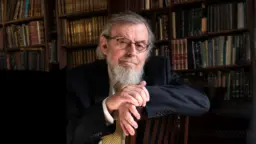
Rabbi Dr. Nathan Lopes Cardozo is the Founder and Dean of the David Cardozo Academy and the Bet Midrash of Avraham Avinu in Jerusalem. A sought-after lecturer on the international stage for both Jewish and non-Jewish audiences, Rabbi Cardozo is the author of 13 books and numerous articles in both English and Hebrew. He heads a Think Tank focused on finding new Halachic and philosophical approaches to dealing with the crisis of religion and identity amongst Jews and the Jewish State of Israel. Hailing from the Netherlands, Rabbi Cardozo is known for his original and often fearlessly controversial insights into Judaism. His ideas are widely debated on an international level on social media, blogs, books and other forums.