Thoughts to Ponder 814
Ido Pachter’s Introduction to Jewish Law as Rebellion – Part 4
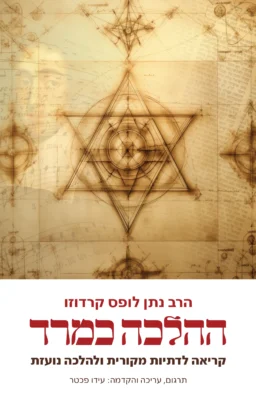
In his Hebrew translation of my book, Rabbi Pachter continues to explain the foundations on which the book is based. Having explained my personal journey with its ups and downs, my mother’s decision to become Jewish, my encounter with my brother over kosher wine, I decided to study at the ultra-orthodox Gateshead Yeshiva in England. This was a fascinating experience and opened for me a world which I had never before contemplated. The perpetual debates in the Talmud about every aspect of life were mind boggling. This style of debate had nothing in common with the Greek method of thinking and its philosophical underpinnings. In fact, it offered no “theology” as we know it in the West. It did not ask the kinds of questions formulated by the great Western philosophers. This disappointed me, but it also created in me a fascination for the “music” behind these Talmudic debates, which were focused mainly on how to live one’s life, rather than on existential inquiry. Only later did I realize that Judaism consists of a weltanschauung—a world view—of tremendous depth, which is expressed in deeds and rituals that penetrate the deepest dimensions of the human being. In that sense I discovered Judaism in a different way than my fellow Yeshiva students did. They had grown up within Judaism, and thus were not able to see it from the outside as I did. They were so used to the splendor of Judaism that they were blinded by it and so no longer could they perceive it. At a later stage of my life, I myself fell victim to this same problem. I realized that I had lost my earlier fascination and had to start all over again. Rabbi Pachter now explains how I tried to do this.
Ido Pachter’s Introduction – Part 4
In his approach to Judaism, Rabbi Cardozo seeks to preserve the experience of his first encounter with it, even after years of living within the system. Once he identified in Judaism a worldview that gives man a vivid and vibrant view of reality—a view that does not take life for granted but sees it as wonder and constant renewal—he refused to accept anything less in it. It is this perspective that Rabbi Cardozo brings to halacha, into the routine of the religious person’s life; that it should not become stagnant. But how?
Rabbi Cardozo proposes that we understand halacha as art, comparing it at times to music and at times to painting. The greatest artists created wondrous works from personal creative freedom; without this freedom of spirit and thought, these artists would not have been able to produce art at such a rarified level. But in order to maintain their creative freedom, they had to adhere to clear and rigid rules. Without obeying rhythmic forms and the laws of harmony, the greatest composers would not have been able to create magnificent works. Without precision in the details of each painting, Rembrandt could not have produced his wonderful landscapes and portraits. A rigid framework of precision and form is essential to bringing any creative piece to completion.
In this respect, halacha consists of rules and laws which makes religious creativity possible. Rabbi Cardozo writes:
To be religious is to allow God entry into my thoughts, my deeds, what I see and feel. It is to have a constant, intense awareness of living in His presence, seeing His fingerprints everywhere, and living up to that awareness.
[…]
To become religious is to face opposition, even from oneself – to dare, to defy, and even to doubt. The way to reach God is through spiritual warfare, and all we can hope for is to catch a glimpse of His existence. It is an ongoing challenge.
According to Rabbi Cardozo, the problem in the religious world today is that the means have become more important than the goals. Instead of seeing in halacha the notes that produce the music and the lines that generate the painting, halacha has become an end unto itself. Instead of releasing the spirit, halacha has become its prison. Instead of making space for God’s fingerprints in the world, it has usurped His place. The religious person becomes devoted to halacha and strictly adheres to its meticulous demands without even being aware of what it represents and what it is supposed to achieve.
But it goes beyond that. Those who appreciate art will never get bored, even if they hear or see it over and over again. Those whose ears are sensitive enough know how to recognize the difference between the same musical pieces played by different musicians, and also how to distinguish between different performances of the same piece by the same musician. As artistic sensitivity increases, a person recognizes more significant spiritual depths in each melody and each rendition. This is true of halacha as well. Even if its pattern is ritualistic, those who are sensitive to the music it produces are able to find new depths and nuances in it every time. A halacha observed one day should not resemble the same halacha observed another day. This is how a world of rituals and rules can become a unique and lasting expression of religious feelings and experiences.
In this same manner, Rabbi Cardozo explains the role of blessings. There are many halachot dealing with the details: which blessing is to be said, where and when. But this extensive and meticulous preoccupation must not obscure the purpose of the blessing, which is to awaken in a person the sensitivity to wonder in every aspect of life, even the smallest. This is what is written in the book before us:
In Judaism, we hone our ability to perceive the transcendent in our everyday reality by making a beracha whenever we partake of food or drink. Jews make berachot, which are statements of astonishment and recognition of the remarkable and amazing complexity that surrounds us, whenever we see a new fruit tree, wear a new garment, smell a pleasant fragrance, etc.
The beracha, when said with concentration and feeling, ensures that we experience each day as something entirely new… This is indeed one of the most important goals of traditional Jewish practice: to experience spirituality in commonplace deeds.
In order for halacha to fulfill its role, it is necessary to first and foremost educate the consciousness of the person observing it. Today, many demand a change in the content of halacha to redeem it from stagnation. This is also what Rabbi Cardozo wants. But according to him, the change must be first and foremost in the consciousness of the person observing the halacha. In order to see the depths in halacha, one first has to sharpen one’s vision. To hear the music running through it, you have to attune your ear and develop musical sensitivity. Only those who come to halacha from an authentic religious place, seeking God and not taking life for granted, will be able to experience it as a dynamic system that calls for the renewal of life every day and in every hour. He who is deaf to the music will not be able to find this treasure within it. Then, of necessity, halacha falls into a dreary routine.
In the next post, we will give some examples how this works, in practice.

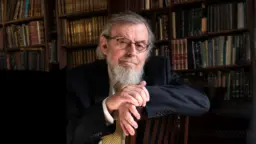
Rabbi Nathan Lopes Cardozo
Rabbi Dr. Nathan Lopes Cardozo is the Founder and Dean of the David Cardozo Academy and the Bet Midrash of Avraham Avinu in Jerusalem. A sought-after lecturer on the international stage for both Jewish and non-Jewish audiences, Rabbi Cardozo is the author of 13 books and numerous articles in both English and Hebrew. He heads a Think Tank focused on finding new Halachic and philosophical approaches to dealing with the crisis of religion and identity amongst Jews and the Jewish State of Israel. Hailing from the Netherlands, Rabbi Cardozo is known for his original and often fearlessly controversial insights into Judaism. His ideas are widely debated on an international level on social media, blogs, books and other forums.