From the Cardozo Academy Writers Guild
At the entrance to Tekuma, the mass car graveyard near the southern Israeli town of Netivot, stand the scorched remains of an ambulance from the Nova festival that was destroyed by an RPG with a dozen people inside. Some cars have broken dashboards and are littered with bullet holes. One white Toyota Corolla, owned by Keith and Aviva Siegel of Kfar Azza, was used by Hamas to take them hostage and later discovered by IDF forces at Shifa hospital in Gaza. Several dozen vehicles atop one another are burned beyond any recognition.
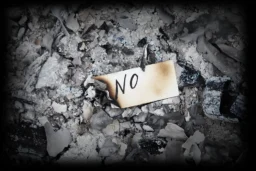
The guide for the site, Elinor Kogan, explains that over a three-week period, huge commercial vacuum cleaners with a 70 liter capacity were brought in to collect human ash from within the cars. When finished, 200 sacks of ash were taken to Rishon Letzion and buried in a mass grave.
The walls of scorched metal remind me of two parts of modern Jewish history. The first is the shoe memorial in Auschwitz; the second the charred skeletons of the 1948 armoured truck convoys on Route 1 that attempted to break the siege of Jerusalem. Perhaps that’s not coincidental. The dark day of 7 October contains parts of both—a continuation of the War of Independence, and the brutality of the Shoah on the other. It’s certainly the first time Jews have been burned en masse since that dark period of Jewish history.
The theme of ashes, (efer / עפר) plays a role in two stories in this week’s parsha. Abraham uses the term when entering into negotiation with God to spare the city of S’dom. As the patriarch tries to bargain God down, he humbly refers to himself as just dust and ashes, a metaphor for the fragility of humans daring to dialogue with the Divine. Yet while our bodies do ultimately become dust, they only turn to ash if, like those in cars on route 232 or other places in the Gaza Envelope on October 7, they are consumed by fire. For many Israelis, Abraham’s phrase is no longer just a metaphor.
The other mention of ashes is in the Akeida, where Abraham is commanded to take his beloved son Isaac to Mount Moriah and offer him as an olah, a completely burned offering:
|
וַיֹּאמֶר קַח-נָא אֶת-בִּנְךָ אֶת-יְחִידְךָ אֲשֶׁר-אָהַבְתָּ, אֶת-יִצְחָק, וְלֶךְ-לְךָ, אֶל-אֶרֶץ הַמֹּרִיָּה; וְהַעֲלֵהוּ שָׁם, לְעֹלָה, עַל אַחַד הֶהָרִים, אֲשֶׁר אֹמַר אֵלֶיךָ |
The story not only fascinated traditional commentators but modern Israeli and Zionist thinkers too. For many early Zionist thinkers struggling to create a Jewish state, the willingness to sacrifice was seen as an ideal. Moshe Shamir, (born 1921) described the Akeida as “the greatest, most magnificent, and most deeply meaningful of all.” He called it “the story of our generation.”
Yet once the state was established (via great sacrifice) and the Six Day War expanded Israeli territory, the tone towards the Akeida changed. Yossi Sarid, a left-wing member of Knesset (born 1940) was critical of Abraham. “Fields of war and cemeteries are full of young people, whose parents saw themselves as standing like Avraham” he said. “How much life would have been spared had the Akeida not been turned into a model of sacrifice?”
As Avi Sagi explains in The Meaning of the Akeida in Israeli Culture and Jewish Tradition, those attitudinal changes “point to shifts in the ways Israeli society approaches the meaning of its existence.” Two basic attitudes are identifiable. The first views the Akeida as “the deepest symbol of modern Israeli existence, epitomizing the Zionist revolution and the sacrifices it exacted.” The second “rejects both the myth and its implications.”
For these generally irreligious Israelis, the change in approach seems generational. The first generation imbibed the willingness to sacrifice as essential; the second, those who lived in a stable independent state, believed it to be superfluous. As Sagi points out, that rejection signified their wish to be “release[d] from a perception of Israel as a society imbued with an historic mission”—a preference to focus on building a normal society away from “the burden of Jewish responsibility and Jewish destiny.” With Jewish existence more secure, they believed “sacrifices and Akeidot are no longer justified. ‘Grand’ ideas lose their meaning.”
The Biblical text repeatedly depicts how father and son walked together up Mount Moria — וילכו שניהם יחדיו . But after the angel calls out and the ram is sacrificed, Abraham returns alone—וישב אברהם את נעריו. The father-son relationship has indelibly changed.
If Abraham returns alone, where is Isaac? One Midrash suggests he was learning in Yeshiva, or recovering in Paradise. A third option is more stark:
|
ויצחק היכן הוא? אלא אמר ר’ אלעזר בן פרת: אף על פי שלא מת יצחק, מעלה עליו הכתוב כאילו מת ואפרו מוטל על גבי המזבח. מדרש הגדול בראשית כב יט פרשת וירא |
More ashes, this time on the altar. The Babylonian Talmud even notes that those Jews who built the second temple knew the exact place of the altar because they saw the ashes of Isaac piled up in that spot. The ashes aided the people. Another Midrash suggests those ashes will encourage God to forgive the Jewish people and save them from suffering.
|
אמר לו (אברהם): כשם שהיה בליבי מה להשיבך ולומר לך… וכבשתי את יצרי ולא השבתיך, כך כשיהיו בניו של יצחק חוטאין ונכנסין לצרה, תהא נזכר להם עקידתו של יצחק, ותחשב לפניך כאילו אפרו צבור על גבי המזבח ותסלח להן ותפדם מצרתן תנחומא פרשת וירא כ”ג.
|
My personal request is more modest than Abraham’s—not of God but of ourselves. May our generation, living in an independent sovereign state that has experienced events we thought belonged to the darkest days of the diaspora; we who are neither the generation celebrating sacrifice nor wholly rejecting it; we who now understand (if we didn’t before) that there is no escape from the so called “burden” of Jewish responsibility and destiny; may the memory of the ashes of the Jewish past and the Jewish present help us find a contemporary meaning to this story that provides inspiration for the challenges ahead.
Amen.

Calev Ben-Dor
A former analyst in Foreign Ministry, Calev Ben-Dor has worked in the Israeli policy and national security world for over 15 years. He is currently Editor of the <i>Fathom Journal</i> and has vast experience in lecturing and teaching about Jewish texts, Israel, and the Middle East to different groups.