The story of Joseph and his brothers is a marvel. At the time it took place, no one could have imagined how it would end. Over the course of thirteen chapters in Sefer Bereshit the most unexpected things occur. Each turn of the page reveals a new twist, each one that no reader — and certainly no character — could have foreseen.
The brothers’ intention to kill Joseph is shocking. Reuven’s suggestion to throw him into a dry pit, intending to save him later, at least sounds more reasonable. Surely, once their tempers cooled, they would come to their senses and send the boy back to his father with a stern reprimand. After all, Joseph was only a teenager.
Then, quite suddenly, a caravan of Ishmaelites appears out of nowhere, and Joseph is sold. One astonishing turn follows another.
What are the chances that Joseph ends up precisely in the house of Potiphar, Pharaoh’s chamberlain — and that Potiphar’s wife attempts to seduce him? And what are the chances that he resists? The Torah hints that this was no simple matter: the unusual shalshelet cantillation on the word vayema’en (“and he refused”) (10:8) suggests hesitation, inner struggle, almost capitulation.
As a result, Joseph is thrown into prison, where he just happens to meet Pharaoh’s baker and butler, each troubled by strange dreams. And then suddenly, Joseph stands before Pharaoh himself. Within a very short time he becomes the second most powerful person in Egypt, saving the empire from economic collapse through an ingenious plan.
Eventually, tens of thousands of people pass through his palace to buy food — among them his own brothers. The irony is almost unbearable. Nobody is asked to appear before Joseph except them.
The brothers have no idea what is happening or why. For them everything is accidental: a chain of inexplicable misfortunes. Joseph alone sees a pattern — but even he cannot know how the test he sets for them will turn out. Only later do the brothers begin to ask the question: What is God trying to tell us?
All these years they had assumed Joseph was lost — perhaps a forgotten slave in some Egyptian dungeon. They must have replayed their decision many times, wondering whether they had done the right thing. And every time they stubbornly concluded that they had done the right thing. That self-justification blinded them when they finally stood before him. Such is the nature of the human mind.
And so a profound drama unfolds. Joseph and his brothers see the same events, hear the same words, yet understand them in utterly different ways. They are worlds apart. Two people can witness the same reality and inhabit entirely different meanings. As Epictetus observed, “We are not disturbed by events, but by our judgments about them.”[1]
The brothers believe they are in control, confident in their own narrative, until it is too late.
What is most striking is that nowhere does the Torah explicitly tell us that God is orchestrating any of this. No miracle occurs. Everything is perfectly natural — and at the same time completely improbable, almost absurd. It could be mistaken for a folktale, a minor story that should have been forgotten.
And yet it becomes the foundation of Jewish history. Without the brothers’ jealousy, without their attempt to remove Joseph from their lives, without Joseph’s capacity to see possibility within catastrophe — the family of Jacob would never have been transformed in Egypt, and without Egypt there would have been no Exodus, no Sinai, no Torah, no people of Israel.
Thomas Mann begins his great novel Joseph and His Brothers with the line: “Deep is the well of the past. Should we not call it bottomless?”[2] The story of Joseph is precisely that well. Each small decision, every apparently trivial act, each coincidence adds itself to an avalanche of meaning and destiny.
God’s presence in history is invisible while we are living it. Only with hindsight when look back do we begin to discern a pattern — a hidden coherence that was never visible from within the moment itself. As the Torah itself suggests: “No human being can see Me and live.” (Shemot 33:20) God is not seen in the present. He is discovered in retrospect.
And perhaps that is the deepest message of the Joseph story: that history is not written forward, but read backward.
Notes:
[1] Epictetus, Enchiridion, §5: “Men are disturbed not by things, but by the views which they take of things.”
[2] Thomas Mann, From the prelude to Joseph and His Brothers.

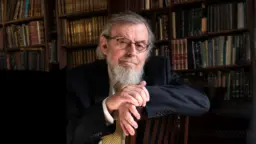
Rabbi Nathan Lopes Cardozo
Rabbi Dr. Nathan Lopes Cardozo is the Founder and Dean of the David Cardozo Academy and the Bet Midrash of Avraham Avinu in Jerusalem. A sought-after lecturer on the international stage for both Jewish and non-Jewish audiences, Rabbi Cardozo is the author of 13 books and numerous articles in both English and Hebrew. He heads a Think Tank focused on finding new Halachic and philosophical approaches to dealing with the crisis of religion and identity amongst Jews and the Jewish State of Israel. Hailing from the Netherlands, Rabbi Cardozo is known for his original and often fearlessly controversial insights into Judaism. His ideas are widely debated on an international level on social media, blogs, books and other forums.