ויגש אליו יהודה ויאמר בי אדני ידבר נא עבדך דבר באזני אדני ואל יחר אפך בעבדך כי כמוך כפרעה אדני שאל את עבדיו לאמר היש לכם אב או אח
Then Yehuda went up to him and said, “Please, my lord, let your servant appeal to my lord, and do not be impatient with your servant, you who are the equal of Pharaoh. My lord asked his servants, ‘Have you a father or another brother?’” Bereshit 44:18
The Jewish people’s relationship with time is paradoxical and complex. We are a people with a long history and great hopes for the future. We still experience the exodus of Egypt as if it were happening today. At the same time, we enjoy a blissful glimpse of Olam Haba (the world to come) every Shabbat as we sit at our Shabbat tables like kings and queens; our enchanted dreams of the future become momentarily realized.
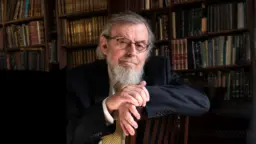
However, despite our glorious past and marvelous vision of the future, we have difficulty relating to the “here and now.” As Jews, we do not feel at ease within the limited confines of the “present”. We are in need of a “space” in which we can include the past and the future and condense them into the present. This is far from easy. What we need is what Rabbi Joseph B. Soloveitchik calls: “Generation Awareness.”
Rabbi Soloveitchik relates an unforgettable lesson that he learned from his melamed (teacher) when he was a young boy studying in heder.[1] The boys were learning the biblical story of Yosef and his brothers. The Torah relates how Yosef questioned his brothers “Have you a father, or a brother?” to which his brothers replied: “We have an old father and a young child of his old age…” (Bereshit 44:19).
But why ask the question in this way? Yosef, the melamed concluded, was anxious to know whether his brothers felt themselves committed to their roots, to their origins. Were they “origin conscious”? Are you, Yosef asked the brothers, rooted in your father? Do you look upon him the way the branches, or the blossoms, look upon the roots of the tree? Do you look upon your father as the feeder, as the foundation of your existence? Do you look upon him as the provider and sustainer of your existence? Or are you a band of rootless shepherds who forgot their origin, who wander from place to place, from pasture to pasture?
Rabbi Soloveitchik summed up the key takeaway of this story. “Ha-yesh lachem av? Do you have a father?” means:
Are you proud of your fathers? Of what they stand for? If you do, if you admit to the supremacy of your own fathers and ancestors, then, ipso facto, you admit to the supremacy of the Universal Father, the ancient Creator of the world who is called Atik Yamim (“Ancient of Days”).
This is generation awareness.
We find this concept of generation awareness in connection with the Sinai revelation:
“I make this covenant and this oath not with you alone but with those who are here standing with us this day before the Lord your God and those who are not with us today.” (Devarim 29:13-14).
Rashi comments that “those who are not with us today” means all the future generations.
What does this mean?
It means that Jews do not live in time; they transcend time. We are a nation that transcends history and is lifted into eternity. All Jews stood at Sinai, even those who were not physically present. Similarly, the Talmud relates an “encounter” between Moshe Rabbenu and Rabbi Akiva, even though, historically speaking, they could never have met! [2]
In our study halls, Maimonides could have a discussion with the Gaon of Vilna, and the Baal Shem Tov can sit in the Tent of Avraham Avinu and discuss the halachic observations made by the Talmudic sages. Wherever and whenever Jews live, they live in “eternal time” and they all meet in the same Beit Midrash.
Over the thousands of years of exile, we maintained a connection wherever we found ourselves. We kept discussing our mission and debating the Talmud, even though we lived thousands of miles apart and hundreds of years removed. We are the first “Internet” people and were able to enter a “time machine” and get out in every century we wanted. This made us into a nation which by its very definition could never fit into the community of nations.
Getting lost in the river of time
In our age, there is little sense of historical continuity. Things move at such a quick pace that we lose the ability to keep track of time. Thus we enter into a state of time-detachment and a-temporality. We can compare this mindset to what is known in the philosophy of science as a paradigm shift, i.e. a scientific development that is not the product of a gradual and incremental improvement upon earlier scientific discoveries, but a completely new discovery. Such a thing is totally unprecedented and “hits” us unexpectedly with utter amazement.
In science, this is a great triumph. But in everyday life, it may have deleterious psychological side-effects. When we lose our connection with the “before” — when memories of the past are no longer important — we lose our road map to the future. We need to be rooted in the past in order to leap toward the future.
As Jews, we are highly aware of the dangers of this. We know that if there is anything that keeps us alive it is the eternal bond between the generations. As a nation small in numbers, we know that we cannot survive by might alone. There can be no future if there is no continuity with the past.
More than any other nation, we depend on a strong attachment to our past. We have no numbers to count on. If we forget our generation awareness we will, just like many other nations, disintegrate rapidly. This is beside the fact that any desire to be a nation like all the others will be undermined by a world which does not want us to “be counted among the nations. (Bereshit 23:9)” This is clearly demonstrated by the constant and increasing animosity that Israel has to deal with.
Today we realize that we have too much history, too little geography, too many hopes for the future, and too few members to survive. We survive only by a miracle. Therefore, we need to create a strong bond between our fellow Jews and their ancestors in order to create a brighter future. It is time for us to wake up and find our way back to what our forefathers stood for.
The ties that bind
Our children and our grandchildren hold for us great hopes and dreams. We hope that they will speak our language, think our thoughts, feel our sentiments, and hold onto our priorities. We hope they will implement our vision and cherish our ideals. We want them to belong to the “fraternity of the committed.” If this happens, we are confident that there will be a future.
But what are the essential components that constitute the “fraternity of the committed”? Is it just halachic living? Is it the uncompromising commitment to the code of Jewish law which forms this bond?
The answer is clearly in the negative. Halachic observance alone cannot create this kind of fraternity. We are in need of something more in order to move Judaism forward as a spiritually vital and existentially meaningful experience. This essential ingredient is something that seemingly many religious Jews today have forgotten.
The Talmud asks the question how it is possible that we recite a brachah (blessing) before we light the hanukkiah which includes the praise of God: “Who has commanded us to kindle the lights of Hanukkah.”[3] But where is it stated in the Torah that we need to light candles on Hanukkah? After all, this is a Rabbinic institution. There is no mention of this in the Torah since the story of Hanukkah took place hundreds of years after the giving of the Torah.
The Talmud gives us two answers:
Rav Avya said (that the justification for this bracha which states that we are commanded to light the candles) is “You shall not deviate from the word they (the Sages) will tell you” (Devarim 17:11). This means that since God commanded us to listen to whatever the sages pronounced as halacha, it is as if God Himself has commanded us to do so, therefore we can say: “Who commanded us.”
Rav Nehemiah offered an alternative solution and said that the source for this ruling is: “Ask you father and he will tell you and your elders and they will say to you” (Devarim 32:7).
The Netziv, Rabbi Natftali Tzvi Yehudah Berlin, the head of the famous Volozhin Yeshiva, (19th century) emphasizes that Rav Nehemiah teaches us about the power of custom, not halacha. The “father and elders” in the verse in Devarim 32:7 is not referring to the Sages of Israel, but to our own personal ancestors who initiated certain practices which later became customs and traditions in our families. In only a few instances were these traditions later established as halacha, such as in the case of lighting the candles on Hanukkah. It started as a custom and was slowly adopted by the people of Israel and eventually became law. Ultimately it was felt as if God Himself had commanded us to light the candles.
But most of the time, the meaning of the phrase “Ask your father and he will tell you and your elders and they will say to you” does not refer to halacha but the need to adopt family traditions and customs.
This is a most important and unusual observation. The Netziv introduces us to the power of Jewish customs (minhag), as distinct from halacha. These traditions shape the unique character of individual families and communities. They are extremely powerful in binding families and communities together in ways that halacha cannot achieve.
Halacha applies to all; it is not able to create specific customs which belong to one family and not to another. In this sense halacha fails to create the kind of particularistic bond which is crucial to the continuation of Jewish life. There is a strong need for exclusiveness and individuality of Jewish families and communities in order to ensure that Jews as a nation continue to survive and flourish.
This is the power of custom. But custom is much more than a specific set of family practices. It also involves certain familial expressions, songs, foods, and even body language. Halacha teaches us how to act, but it cannot provide insight into the quality of the act. It provides the musical score, but it is not the performance of the music itself. Minhag is the corrective to this. It is flexible and adds color and warmth to our family life. It generates a distinctive ambiance and creates the culture of specific families and communities. It has no halachic rules and thus it is able to provide us with a living bond between family members and communities. It is responsible for the feeling which families are so much in need of, namely, uniqueness and exclusiveness.
Once we have connected with the past as individuals, we can easily introduce ourselves into the future. We will even be able to meet our future relatives. They may not have been born yet, but they are already part of our family. We already know who they are, how they will live their Jewish lives, what values they will adhere to, and what life choices they will make. Together with the past generations, we will meet them in our present.
This is the meaning of “generation awareness.” Jewish survival depends on the conscious link between earlier and later generations. Rabbi Solovietchik calls this the “mesora community,” a community in which traditions and customs are passed down from generation to generation, not as ancient customs and quaint relics of the past but as living experiences in which we take enormous pride. Thus, Yosef’s question to his brothers had an answer, “Yes, we have a father!”
Notes:
[1] Rabbi Joseph B. Soloveitchik, “Do You Have a Father?” http://www.chabad.org/library/article_cdo/aid/3221/jewish/Do-You-Have-a-Father.htm
[2] Menahot, 29b.
[3] Shabbat 23a.

Rabbi Nathan Lopes Cardozo
Rabbi Dr. Nathan Lopes Cardozo is the Founder and Dean of the David Cardozo Academy and the Bet Midrash of Avraham Avinu in Jerusalem. A sought-after lecturer on the international stage for both Jewish and non-Jewish audiences, Rabbi Cardozo is the author of 13 books and numerous articles in both English and Hebrew. He heads a Think Tank focused on finding new Halachic and philosophical approaches to dealing with the crisis of religion and identity amongst Jews and the Jewish State of Israel. Hailing from the Netherlands, Rabbi Cardozo is known for his original and often fearlessly controversial insights into Judaism. His ideas are widely debated on an international level on social media, blogs, books and other forums.