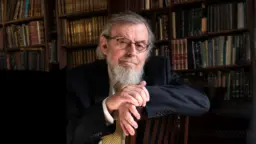
When the famous—and controversial—orthodox Israeli thinker, Professor Yeshayahu Leibowitz (1903-1994) was asked whether the statement “I believe in God” is meaningful, Leibowitz responded: “I do not understand these words if they are divorced from the obligations that derive from them … faith in God is not what I know about God, but what I know about my obligations to God”[1]
The enigma of he’emarta
One of the most unusual passages in this week’s parashah gave the great commentators a serious headache. In his powerful farewell speech, Moshe says:
“You have today brought about that one says of God (he’emarta) that He must be your God and you would walk in His ways and guard His statutes and His commandments and social regulations and to obey His voice. And God, today, caused it that one says of you, (he’emircha) that you shall be a chosen people to Him as He has promised you and keep all His commandments.”[2]
These verses are convoluted and mysterious. What exactly does he’emarta / he’emircha mean? Rashi admits that Scripture provides no parallel and hears a sense like “avouched/declared,” even hinting at a nuance of “boasting” (yit’ameru, Tehillim 94:4).[3] Ibn Ezra, by contrast, connects it with the word “amir”—the uppermost branch (cf. Yeshayahu 17:6)—suggesting “to exalt/raise up.”[4] In other words, is this “choosing” synonymous with “acquiring,” “separating,” or “elevating”? Or does it mean “publicly avowing”? Looking more carefully at the verse it is clear is that the phrase points to a covenantal act—something that makes God and Israel mutually perceptible in the world.
A mutual avowal
Strikingly, the Talmud reads our verses as a two-way declaration:
The Holy One said to Israel: You made Me a chativa achat—a unique entity—as it is said, Hear, O Israel, the Lord is our God, the Lord is One (Devarim 6:4). And I shall make you a chativa achat—a unique entity—as it is said, Who is like Your people Israel, one nation on earth.
Divrei HaYamim I/1 17:21 [5]
The meaning of chativa achat is “utterly singular”, of which there is no second. It is not only that God is unique and Israel is unique; rather, Israel’s avowal to God by keeping His commandments, makes God’s oneness audible in history, and God’s election of Israel makes Israel’s singular calling visible to humanity. The people of Israel thus “say” God into the public square by living the commandments; and God, in turn, “says” Israel into being as a holy people.
Read this way, Ki Tavo is not playing the philosopher’s game of proving that God “exists,” as though God were an item within a larger inventory of beings. Classical Jewish thought—especially Maimonides—insists that God is not “existence + more,” not a being among beings. God is the Necessary Existent (metzi’ut ḥovah), beyond our positive predicates; we speak best about God by saying what God is not.[6]
That is why the Torah does not linger over proofs. It calls us instead to a commanded life. We know God through God’s commanding voice. Without that voice, there is nothing to point to—no object behind the command that could be grasped as we grasp other things. God is made known in the world when Israel walks in His ways, hearkens to His voice, and keeps His commandments.
The Torah in human language
Even the stories of the Torah are, in a sense, translations of that commanding voice. Dibrah Torah belashon bnei adam—“the Torah speaks in human language”—so that finite beings can hear and live the Infinite. Revelation is rendered in narratives, metaphors, and laws, not to domesticate God but to make God’s will livable.[7]
A Hasidic teaching pushes this further. At Sinai, Israel heard only the silent aleph of “Anochi” (“I am the Lord your God,” Shemot 20:2). The aleph is soundless; it is pure summons. We do not “possess” revelation as a thing. We submit to it and are addressed by it.[8]
All we truly know of God is that He commands. That is how His oneness becomes public. If God is not a chativa achat, then—in our language—He does not “exist.” Either He is incomparable, or He is nothing.
And so it is with the Jews. If we are not a chativa achat, a people uniquely bound by covenant and mitzvot, then we are just one nation among many and will be governed by the ordinary laws of history. Our uniqueness is not ethnic pride but covenantal life; it is performed, not presumed.
Between history and covenant
Much of modern Jewish life oscillates between these two planes. When the commandments shape our private and public lives, God becomes audible in the world and Israel becomes visibly singular. When we live by His commandments people will “hear” that God exists. But when we set the commandments aside, God’s presence becomes unintelligible and Israel dissolves into the normal churn of history—subject to the same rise and fall that overtakes other nations.
That is the tragedy of a purely “national” existence. The convoluted syntax of Ki Tavo may be deliberate: Israel’s identity and God’s presence are mutually avowed and always at risk.
God and the Jewish people do not “exist” except in the adherence to His commandments.
Notes:
[1] Yeshayahu Leibowitz, Sihot, 97.
[2] Devarim/Deuteronomy 26:17–19.
[3] Rashi to Devarim 26:17; cf. Tehillim/Psalm 94:4 (yit’ameru).
[4] Ibn Ezra to Devarim 26:17; cf. Yeshayahu/Isaiah 17:6 (amir, the upper bough).
[5] Talmud Bavli, Berakhot 6a, on chativa achat; with Devarim 6:4 and Divrei HaYamim I/1 Chronicles 17:21.
[6] Maimonides, Guide of the Perplexed I: 56–58 (divine simplicity; negative attributes; the Necessary Existent).
[7] Dibrah Torah belashon bnei adam: see Talmud Bavli, Berakhot 31b; Yevamot 71a. See also Maalot HaTorah, Avraham, brother of the Vilna Gaon (1722-1804).
[8] Hasidic teaching: attributed to R. Menachem Mendel of Rimanov; recorded by R. Naftali Tzvi Horowitz of Ropshitz, Zera Kodesh.

Rabbi Nathan Lopes Cardozo
Rabbi Dr. Nathan Lopes Cardozo is the Founder and Dean of the David Cardozo Academy and the Bet Midrash of Avraham Avinu in Jerusalem. A sought-after lecturer on the international stage for both Jewish and non-Jewish audiences, Rabbi Cardozo is the author of 13 books and numerous articles in both English and Hebrew. He heads a Think Tank focused on finding new Halachic and philosophical approaches to dealing with the crisis of religion and identity amongst Jews and the Jewish State of Israel. Hailing from the Netherlands, Rabbi Cardozo is known for his original and often fearlessly controversial insights into Judaism. His ideas are widely debated on an international level on social media, blogs, books and other forums.