It was an astonishing experience. While on a lecture tour in New York, I was approached by two non-Jewish American soldiers who had returned home from Vietnam. They told me something deeply disturbing: though they had come from moral, religious homes that taught the sanctity of life, war had corrupted them. Not only had they been forced to kill—they had begun to enjoy it. Now back home, they were horrified at how their humanity had been eroded. Could they recover their sensitivity to life? Could their respect for human dignity be restored?
I told them to do something simple, yet radical: perform acts of kindness, immediately. Don’t merely contemplate virtue, but act. Volunteer at hospitals. Help strangers. Over time, I assured them, these actions would reawaken their consciences and their souls.
This idea is rooted in a powerful insight from the Sefer HaChinuch, a 13th-century work on the commandments: “Acharei ha-pe’ulot nimshachim ha-levavot”—“After the actions, the hearts are drawn.”[1] Our deeds mold our character. Habits form the heart.
Ritual and the Emotional Brain
Most human behavior is driven not by logic, but by emotion—often unconscious emotion. We imagine ourselves rational creatures, but in reality, the prefrontal cortex often plays catch-up to our deeper instincts. This is not only true of seemingly rational choices but also of ritual. Ritual is of utmost importance, because it is capable of touching the deepest corners of our hearts—parts of us that are beyond the reach of other influences. It is powerful because it bypasses cognitive resistance and imprints meaning on the soul.
William James, the American psychologist, grasped this well: habits, he wrote, become second nature. “We are spinning our own fates, good or evil, and never to be undone. Habit is capitalized action and habit becomes conscience.”[2]
Jewish law recognizes this formative power of ritual. The daily, weekly, and yearly rhythms of mitzvot—kashrut, Shabbat, family purity—are not only acts of obedience. They train the self in self-restraint, mindfulness, and reverence.
The Red Heifer: A Paradoxical Law
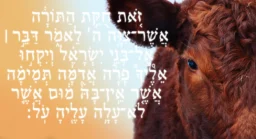
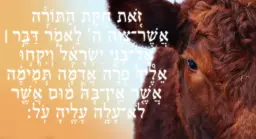
This week’s parasha, Chukat, presents perhaps the most baffling ritual in all of Torah: the inexplicable law of the Parah Adumah, the Red Heifer (Bamidbar 19:1–19). A red cow, without blemish and never yoked, is slaughtered outside the camp. Its ashes are mixed with water and other ingredients and used to purify those defiled by contact with the dead. But here lies the paradox: the one who is sprinkled becomes pure, while the one who performs the sprinkling becomes impure![3]
The Torah calls this chukat haTorah—a Divine decree. The Sages acknowledged that this law transcends understanding. Even King Solomon, the wisest of men, confessed: “I thought I could understand it, but it is far from me.”[4]
What are we to make of this?
The Role of Paradox
A paradox is not mere confusion. It is a collision of opposites that reveals a deeper layer of truth. Physics is full of paradoxes: wave-particle duality, Heisenberg’s uncertainty principle. So too, there is paradox in philosophy. Wittgenstein said that philosophy is “a battle against the bewitchment of our intelligence by means of language.”[5] Reason, when pursued to its limits, begins to question itself. Rationality ultimately commits suicide.
Kant observed that we are “mind-imposed”—that is, our very tools of perception shape what we can know. Malcolm Gladwell, in Blink, adds a psychological dimension: intuition often precedes thought. We feel before we know. Repetition of ritual engrains these intuitions. Habit creates patterns. Patterns create conscience.
When a Jew recites Kiddush on Friday night, it is not a rational act. It is a shaping of his soul; a building of memory. It is a gesture that says: “This is who I need to be, even when I do not yet feel it.”
Why Do You Believe What You Believe?
When a child asks “Why?” repeatedly, we eventually reach a point where reason runs dry. “Why is killing bad?” “Because life is holy.” “Why is life holy?” “Because we are created in God’s image.” “Why did God do that?” Eventually we say: “It just is.”
Camus, in The Myth of Sisyphus, makes a similar observation. Reason cannot tell us why life matters. It can only analyze what we already believe. Even science is limited. A psychologist sees trauma; a philosopher sees existential angst. Each uses his own lens, based on prior assumptions.
Spinoza remarked that a triangle would see God and the world in triangles. Gödel’s Incompleteness Theorem demonstrates that no rich logical system can be fully proven from within. So too it is with reason: it cannot justify itself.
The Necessity of the Absurd
So where does this leave us?
It leaves us with the Red Heifer; a ritual that defies reason, yet sanctifies. It purifies and defiles simultaneously. It reminds us that ultimate truth is not logical—it is lived. The life that we live is riddled with absurdity, yet charged with meaning. We do not “solve” this contradiction. We elevate it.
Death is the greatest absurdity. We are born to die. This fact can paralyze us—or it can awaken us. The Red Heifer, in all its irrationality, confronts death and transforms it into a path of purification.
Abraham Joshua Heschel wrote:
The search of reason ends at the shore of the known; on the immense expanse beyond it only the sense of the ineffable can glide… Citizens of two realms, we all must sustain a dual allegiance: we sense the ineffable in one realm, we name and exploit reality in another.[6]
Ritual bridges these realms. It anchors the soul amid chaos. It affirms that life is mysterious—but not meaningless.
The ritual of Red Heifer teaches us that the path to purity lies not in understanding but in surrender. We are reminded that some truths are too deep for logic, and only ritual can carry us across the divide. This does not mean that Judaism believes in “credo quia absurdum” (I believe because it is absurd) but that there are limits to reason.
The soldiers in the hotel lobby were not restored by philosophy, but by simple acts of care and kindness. So too it is with us. In a world of paradox, only living meaningfully can redeem us.
Notes:
[1] Sefer HaChinuch, Mitzvah 16.
[2] William James, The Principles of Psychology, 1890.
[3] See BaMidbar 19:7.
[4] Midrash Bamidbar Rabbah 19:3.
[5] Ludwig Wittgenstein, Philosophical Investigations, §109.
[6] Abraham Joshua Heschel, Man Is Not Alone, 1951.

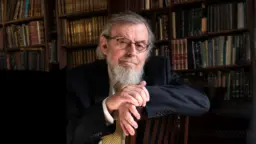
Rabbi Nathan Lopes Cardozo
Rabbi Dr. Nathan Lopes Cardozo is the Founder and Dean of the David Cardozo Academy and the Bet Midrash of Avraham Avinu in Jerusalem. A sought-after lecturer on the international stage for both Jewish and non-Jewish audiences, Rabbi Cardozo is the author of 13 books and numerous articles in both English and Hebrew. He heads a Think Tank focused on finding new Halachic and philosophical approaches to dealing with the crisis of religion and identity amongst Jews and the Jewish State of Israel. Hailing from the Netherlands, Rabbi Cardozo is known for his original and often fearlessly controversial insights into Judaism. His ideas are widely debated on an international level on social media, blogs, books and other forums.