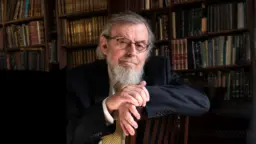
NOTE: This post is in response to a position argued by Rabbi Cardozo that the purpose of Halacha is to “complicate life in order to lead to the experience of God’s presence,” while noting that in recent centuries the development of Halacha has gone too far and overcomplicated life, defeating its purpose.
In attempting to define the purpose of Halacha, you posited that “complicating life leads to experiencing the presence of God.”
Is it really so? A personality that complicates things is neurotic and annoying. I find a great beauty in simplicity – pashtus. Why can’t Halacha’s purpose be ONLY to get us closer to God, and not via complication? How about, instead, by outlining Godly activities, in a clear, not over-burdened and over-detailed way? Does throwing myself into a myriad of complicated details regarding the legal relationships between inanimate objects, animals, people, abstract categories and everything else that fills the Talmud really bring me closer to God?
Of course, the Halachic material itself does revolve around a core of Godliness and morality, but a lot of it apparently takes us really far away from it.
This is what could be said for it:
- it certainly serves to fill up our day with stuff that is not rubbish with which many of our contemporaries alleviate their existential emptiness (TV, celebrities, internet).
- if one *perceives* oneself through these actions as getting closer to God, then that itself has a value.
This is what could be said against it:
- There is so much Halacha it is almost impossible to learn all of it and you end up feeling guilty or spending all your time studying it.
- For every action there is a cost somewhere. The constant activity and energy mandated by Halacha prevents one from growing in all sorts of other directions. No sooner do I get a bit of quiet time to think, maybe even to experience an emptiness inside me (the kind of emptiness that sends a person on a quest for meaning) than it is filled with the latest thing I am supposed to do as a Jew. On Shabbat morning, after the Halacha has beautifully constructed for me a quiet framework free of cellphones and TV, I cannot then spend the morning meditating or being with my inner life, as I am supposed to go to shul, mumble thousands of Hebrew words in prayer, listen to Torah being read at a speed far too fast for me to really engage in learning it, go home, have lunch, shluff, eat another meal – and presto, Shabbat is out.
In other words, Judaism is in its current form both a vessel for the search for meaning and journey to God, and at the same time a distracter from it. What I personally try to do within my Orthodox Judaism is to maintain as much of the vessel part, and reduce the distracter part as much as I feel comfortable doing.
I wonder why my religion tells me exactly how to tie my shoes, and yet does not pasken even five minutes of silent sitting meditation (saying no words at all), an activity that, I am finding as I practice meditation, throws me straight into the heart of who I am and my relationship to God. We have a lot to learn from the Buddhists.
Why am I instructed to say after eating cake a blessing named “al hamichya” full of words about the land, Zion and redemption but lacking a most basic spiritual message, simply put as: “Hashem, this cake contains wheat, eggs, sugar, all of which were gathered and processed by people so I could eat this delicious thing. Thank you Hashem for this and may I bless all the people who took part in this and may this food give me the strength to serve You.”
If I want to upkeep Shmitta, why do I land up squinting at labels and hanging little bags of rotten fruit up in my kitchen? The details take me far away from the core of the mitzvah, to the point of missing the boat completely.
Something is off – Halacha and spirituality overlap, but are far from the same thing.