Thoughts to Ponder 302
Halakhah as Symphony
From the Ideal to the Idyllic
In Baruch Spinoza and Halacha
The story is told of a young Talmudic scholar who upon completing the entire Talmud for the third time enthusiastically ran to tell his teacher the good news. “Rabbi,” he announced proudly, “I’ve just been through the whole Talmud for the third time.”
“Wonderful,” replied his teacher, “but let me ask you one question. How many times has the Talmud been through you?”
I would like to suggest that within this innocent story lies the entire tension of being Jewish in the modern world.
We all know that Jewish religious life is defined by observance of the Halacha, a set of rules that dictates to us the do’s and don’ts of our behavior. The scope of Jewish law covers every aspect of life from business to diet to interpersonal relations. And while the Jewish tradition definitely includes certain articles of faith, nevertheless the one whom we call the religious Jew is the one who lives – or at least tries to live – by all the rules and regulations of Jewish law. A person may feel proud to be Jewish, he may relate to Judaism culturally, or he may find intellectual stimulation in certain aspects of the Jewish tradition, but to act Jewishly always boils down to one thing: observing the Halacha.
The problem is that many of us may feel it a mistake to so narrowly circumscribe our religion in this way. Why, after all, does being a religious Jew have to be defined by observance of Jewish law? Many people feel a spiritual tendency and would like to consider themselves religious, however the limitations of Jewish law seem to them to run counter to any notion of spirituality. What happened to all the lofty emotional and spiritual elements of Man that religion is supposed to help us experience? There appears to be little emphasis on emotive expression, on the contemplation of the metaphysical, or on delving into the transcendent. Judaism seems to glorify Man’s deeds, relating not to the whole of his being, but rather reducing him to merely that which he does with his body.
When we look into Judaism we find that this emphasis on the deed has yet another major problem. The demand for conformity so much inherent in Judaism’s attempts to regulate our behavior too often impinges on our modern sensitivity as independent-minded, mature, and progressive individuals with the capability of making our own decisions. We do not feel that we need to be told how to tie our shoes or when to wash our hands. Yet the Halacha seems to assume that we cannot make these types of decisions for ourselves. There is hardly a single act or daily routine that does not fall within the scope of its ruling. It is as if we are being told to relinquish our own ideas in favor of rote compliance. Where then is there room for individuality and the spiritual expression that is unique to each and every soul?
Even for those who accept upon themselves to live by these rules, the demands of Jewish law can too easily lose their mystique. The sheer number of commandments can become a burden just to think about. There are 613 mitzvot in the Torah, but as Rambam writes, these are only the roots.[1] Each mitzvah then branches out into tens or even hundreds of halachot leaving us with a codex of thousands upon thousands of laws, each telling us something else to do or not to do. The breadth and scope of Jewish law could make even the most devout feel bound by so many fetters.
So herein lies the tension. What is the purpose of all these laws? Why are there so many of them? And how are we supposed to relate to them properly? Are we meant to be the young Talmudic scholar of our story who finds satisfaction in the simple performance of the laws and the fulfillment of his duties; or rather, as his rabbi seems to intimate, should we be striving for a more spiritual transformation that will make us into nobler and more dignified individuals? In short, are we supposed to go through Judaism or is Judaism supposed to go through us?
A Problem Throughout History
The truth is that this is a very old problem. Indeed, we know that it existed at least two thousand years ago because the early Christians struggled with it too. In particular, history teaches us of one man who after becoming a Christian sought to wage war on the Halacha. He went by the name Paul of Tarsus and he claimed, as many of his followers were to repeat, that Man cannot approach God through the merit of his deeds. What was needed rather was purity of the heart, absolute faith. The secret to salvation resides in the emotional dimension of human existence, claimed Paul. All the deeds in the world won’t help, because God judges what your heart feels, not what your body does. Because Judaism failed to recognize this basic fact, it actually failed as a religion altogether and had nothing left to offer mankind. According to Paul, Judaism’s adherence to Halacha was its undoing.
Not only Christianity, but also many other groups that sought to break away from traditional Judaism did so with this very complaint in hand. I dare say that even the Reform movement lodged this objection, and followed through by doing away with many of the mitzvot. The Reformers wanted to emphasize Jewish ethical imperatives, as well as the keeping of those mitzvot that have kept the Jewish people – whichever those may have been – but all other mitzvot by implication could and should be done away with. As with Christianity, the transformation was viewed as one from a cult of action to a religion of feeling and freedom.
Spinoza’s Critique
Secular philosophers have also noted this problem that seems to plague Judaism. In fact, they were spearheaded by none other than a Jew from the community in which I grew up in Amsterdam. His name was Baruch (changed to Benedictus) Spinoza, and he lived in the 17th century. Although he had been raised as a Jew, Spinoza broke away from his ancestral roots. He was one of modernity’s first truly “free thinkers” in that he was neither bound by a tradition nor any particular religious conviction.
Of all modern thinkers, Spinoza is most famous for his rejection of Jewish law. His complaint however was not unique. As many others did before and after him, he viewed Judaism as a kind of religious behaviorism that idolizes outward action at the expense of inner devotion. He lamented that the ultimate goal of the religious Jew seemed to be mere conformity to the minutiae of the law. There is no place in Judaism, claimed Spinoza, for “lofty speculations nor philosophical reasoning. I would be surprised if I found [the prophets] teaching any new speculative doctrine which was not commonplace to…gentile philosophers.” He believed that “the rule of right living, the worship and the love for God was to them [the Jews] rather a bondage than the true liberty.”[2]
Thus ran Spinoza’s critique of Judaism. And since the time that he voiced these words, almost every secular philosopher who has had something to say on the subject of Judaism has echoed his criticisms. Immanuel Kant even went so far as to claim that Judaism is “eigentlich gar keine religion (actually not a religion at all).”[3]
Religious Freedom
Yet there is a flipside: there are those who have seen virtue in Judaism where others have only seen vice. For example, the modern Jewish philosopher Moses Mendelssohn praised Judaism as being not a “revealed religion,” but rather a “revealed law.” “The spirit of Judaism,” wrote Mendelssohn, “is freedom in doctrine and conformity in action.”[4] Judaism offers flexibility. If you are a rationalist, study Talmud. If you lean toward the romantic, be a Chassid. If your bent is mysticism, find an outlet in Kabbalah. But the flexibility ends where your deeds begin – your actions may not depart from Jewish law.
As we have seen, however, others read the situation differently. They claimed that Judaism offered “freedom” in these matters simply because it had no clear spiritual path to offer. Instead of directing Man’s soul heavenward, it bound his body earthward. Hence Mendelssohn’s liberty was Spinoza’s bondage.
Yirmiyahu’s Proclamation
But theological and philosophical critiques aside, Judaism itself may provide the most searing indictment of its own obsession with the law. When we look into the Midrash on Eichah (Lamentations) we indeed find that such is the case. The author of Eichah, the prophet Yirmiyahu (Jeremiah), lived at the time of the destruction of the First Temple and was the period’s main seer of doom. The Jewish people had gone astray and the ultimate punishment was about to come – the destruction of the Temple and exile to a foreign land. It was Yirmiyahu’s unfortunate job to try to get them to repent.
With a bitter and broken heart, he chastised the Jewish people at God’s behest and cried out these words:
Oti azavu v’torati lo shamaru (They have forsaken Me and neither do they observe My Torah).[5]
Pay close attention to the words of Yirmiyahu’s rebuke. There is something strange about them. If the Jewish people had abandoned God, of course they must have done so by discarding the Torah. You could hardly have the one without the other. What is the difference between abandoning God and forsaking His Torah? Based on this textual anomaly, the Midrash seeks a deeper meaning to these words – a reinterpretation of Yirmiyahu’s prophecy. What Yirmiyahu was really proclaiming, says the Midrash is this:
Halavai oti azavu v’torati shamaru (Would that they forsook Me as long as they do not abandon My Torah).[6]
It seems God would rather have us keep the Torah than maintain our belief in Him!
Alas, the ultimate statement of Judaism: Be an atheist, be an agnostic, even believe in another religion just please observe the mitzvot while you do so. But if that’s what Yirmiyahu was saying, then we seem to have fallen right into the hands of those who have been criticizing Judaism all along for its obsession with deeds. How can Judaism be a religion if it makes no more demand than to just do what it says to do? No belief, no feeling – just action. Perhaps Kant was right after all, Judaism is not a religion!
Be Holy
I must admit to acting a bit subversively up to this point, for in truth there is obviously more to Judaism than just keeping the mitzvot. It would be too simplistic to claim that God merely expects us to perform certain actions by rote. Judaism would never be so banal as to make such a claim. We cannot deny that the mitzvot have a certain ideology behind them, an aim to which they are driving. We aspire to achieve something via the mitzvot, not merely their dry fulfillment. But what is this much sought-after but elusive goal?
When we look into the Torah one goal seems to stand out among all the others: Holiness, or Kedusha. Over and over again in the Torah God implores us to be holy. One such case is what the Torah has to say concerning the mitzvah to wear tzitzit (ritual fringes on a four-cornered garment):
In order that you will remember and perform all My commandments and you will be holy unto your God.[7]
Clearly the point is that doing the mitzvot is supposed to make us holy.
It must be stressed though that Judaism has its own unique understanding of holiness. In order to appreciate it, we must attempt to dissociate it from any preconceived notions that come to us from other sources. The Jewish concept of holiness is admittedly difficult to define. Like such concepts as love and beauty, we can only really tell what it is when we experience it. Any definition seems to offend our sensitivities as being just so much oversimplification. But if I may attempt a definition through the back door, as it were, I would say something to the effect of the following: Holiness is that which a person experiences when he lets God into his thoughts, feelings, and actions; when the sum total of his existence encounters its Creator. What we sense from this encounter is something of an internal transformation that brings on a certain feeling of elation and elevation.
No doubt we would all like to be holy. The only question is, how do we get there? The most popular response I have heard to this question is “transcendental meditation.” Now it is true that Judaism has a tradition of meditation. Chassidism and the Kabbalah hold it in very high regard. But it certainly is not a major aspect of our tradition. Nowhere in the Torah does God say, “If you want to be holy like Me, go meditate somewhere.”
The Torah does however give a different instruction as to how to become holy, albeit a rather strange and confusing one:
For I am Hashem, your God, you shall sanctify yourselves and you shall become holy, for I am holy and you shall not make yourselves unholy….
What makes us unholy? Continues the Torah:
…by [eating] any creeping creature that crawls on the ground.[8]
The Torah is making a most unusual claim here. It is telling us that if we want to be holy, all we need do is keep kosher. Just avoid eating non-kosher food and be sanctified to God.
The only problem is that it’s very difficult to see the connection between keeping kosher and being holy. Plenty of people keep kosher, but are they all what we would immediately identify as “holy people”? Holiness is about recognizing God in everything and experiencing Him with everything. In seeking holiness we are supposed to try to be like God and draw ourselves close to Him. How could all this possibly depend merely on our deeds, on such a simple thing as that which we eat? Surely the heart must come into it somewhere? Our beliefs must be of some importance?
Once again we are confronted by the likes of Paul and Spinoza telling us that we’ve gotten it all wrong. We now understand that the Torah expects us to be spiritual, but it expects us to achieve this goal through simple physical actions. Judaism seems to have neglected the crucial elements of Man in his striving for holiness, thereby forfeiting its right even to be called a religion. This is indeed a bitter critique of the foundations of Judaism, and it is not easily defeated. What then should be our response?
The Conflict Between the Body and the Soul
Let us approach an answer by way of another question. I would like to pose this question not only to Judaism but also to the two other traditions from which we have heard so far, namely the Christian and the Western-philosophical traditions. My intention in doing so is to sharpen our understanding of Judaism by way of comparing and contrasting it with other ways of thinking.
The question is the following: What is the relationship between the body and the soul? Everyone agrees that Man has both. We all want to find an expression for our soul, to feel its imprint on our being. But the task too often proves a challenge as the body attempts to thwart the strivings of the soul. How to resolve this conflict between the body and the soul is the principle objective of every major philosophy of life. How we live, what we live for, and how we relate to the world around us all depend on our answer to this question. I would like to address how the Christian, Western-philosophical, and Jewish traditions formulate their specific and unique responses.
Now, if we are to find enough paper upon which to submit an answer, we will obviously be forced into some generalizations. I do this not in disparagement of these traditions, but rather with the utmost respect for what they have to say. I certainly do not mean to downplay their breadth nor their scope, as I am aware that today these traditions cover a wide range of beliefs and ideas. Nevertheless, there are common threads, and a discrete pattern does emerge if one tries to view the forest for the trees. In a broad sense then, and from the perspective of their respective worldviews, what do these traditions teach about how to resolve the conflict between the body and the soul?
The Christian Approach
Christianity, as represented again by Paul and some of its other major theologians like Thomas Aquinas and St. Augustine, offers a very distinct answer to our question.
When it came to the body/soul conflict, the Church fathers claimed that resolution was simply beyond human capacity. Body and soul engage in constant struggle, and neither can reach any satisfaction by that which the other desires. The two will just have nothing to do with each other. In order to advance spiritually, one must completely subdue the body. Save your soul, said the Church fathers, because you cannot save your body – it is too attached to the pleasures of this world. The ideal lifestyle mandated by this outlook was internally very consistent. Christian leaders and monks were expected to take vows of celibacy and poverty and to separate themselves from worldly affairs. Since there was no way of sanctifying the body, it simply needed to be denied.[9]
The classical Christian position appears to us quite pessimistic. There is no hope to resolve the conflict between body and soul. However, from the perspective of our experience, this view is quite realistic. How often do we struggle with the desires of the body against our more lofty aspirations? The Church fathers certainly were on the mark when they recognized that this is indeed a great problem.
The Western-Philosophical Approach
Now let us turn our attention to the Western-philosophical tradition. This time though, instead of looking to Spinoza for guidance, we will consult the man who is perhaps the father of this tradition, the philosopher Socrates. The life and thoughts of Socrates have been made known to us mainly through the writings of Plato and Xenophon. It is clear from these writings that Socrates was a man who also struggled with the question of how to resolve this conflict. He certainly was not a materialist who relegated Man to the sphere of earthly matters. Rather, he grappled with the issue of how Man is best to live his life, both spiritually and physically.
The method Socrates taught to resolve the body/soul conflict is a two-step process. The first step involves a path of intellectual discovery of the “good life,” the proper way all men are supposed to live. Once the mind, the seat of the soul, has discovered this truth, all that remains to do is to inform the body about it. At this point the body will be so overwhelmed by the beauty and depth of the truth presented to it by the intellect that it will follow its advice automatically. Socrates therefore prescribed a life of philosophical investigation and put great faith in the ability of education to raise Man’s moral standards. The world he envisioned was ruled by philosopher kings who were so overcome by their own enlightenment that the dictates of the body simply did not hold any sway, the body having become a willing slave to the insight of the intellect.[10]
But if Christianity had been realistically pessimistic, Socrates was unrealistically optimistic. The flaw in his hopeful but rather naive reasoning is not too difficult to demonstrate. Imagine someone who wanted to become a gold-medal Olympic swimmer but had never before stepped foot into a pool. Socrates’ advice would probably be to tell him to go to a university, not to its pool but to its library. “Learn as much as you can about swimming,” Socrates would tell him. “Really become an expert in the subject, and then inform your body about it.” Now imagine that our friend proceeded to follow Socrates’ advice, earning his B.A. in doggy paddling, then going on to do his master’s in advanced breaststroke. Ultimately he defends his doctoral thesis entitled, “Sink or Swim: Toward a new theory of recreational buoyancy.” Can you imagine what would happen when our professor of swimming actually gets into the pool? He is more likely to drown than he is to win any race!
Training our body to do that which our mind knows to be true is unfortunately not as easy as Socrates made it out to be. The most convincing argument will always fail to move the stubborn sinner, because we do not automatically do what is right just because we know it to be so. The body, with all its complex drives and desires, offers strong resistance to the counsel of the soul.
The Jewish Approach
Judaism’s response to both these traditions is to tell them that they are both right, yet at the same time, both wrong.[11] The truth lies somewhere between the two extremes advanced by the Church fathers and Socrates. Judaism agrees with Christianity that the struggle between body and soul is very problematic; however it is not hopelessly insoluble. But whereas Western philosophy maintains that we can easily resolve this conflict, Judaism counters that it is not quite so easy. The task of training the body in the ways of the soul, of sanctifying the body and its desires, presents perhaps the most difficult challenge known to Man. It may indeed take an entire lifetime to achieve, but it is not impossible.
What then is Judaism’s answer to this dilemma? If it can indeed be done, how do we make the body receptive to the conditioning of the soul? Judaism claims, first of all, that the body and the soul are not completely separate entities. Man consists rather of a composite of the two, in which it is difficult to tell where one ends and the other begins. The body and the soul constantly interact with each other. Therefore, whatever Man thinks or feels will be reflected in his actions, and everything that man does will influence his thoughts and emotions.
It is this latter point that is most crucial for understanding how Man works. How do actions influence the spirit? The idea here is that external movements awaken the internal ones. Our deeds create a mentality, they infiltrate our subconscious mind in ways that ultimately shape who we are to become. Whereas good intentions and nice feelings will not necessarily produce morally correct behavior, if you do the right thing you will eventually come to feel the right feelings and think the right thoughts.
The reason why Judaism stresses the importance of law, and places so much emphasis on the conformity of action, is not because it believes Man’s deeds to be the sum total of his existence, but rather because his deeds are the key to all the other facets of his being. As the Torah makes clear when it tells us, “You are to know this day and return it upon your heart that God exists,”[12] spiritual growth only starts with intellectual realization, but it does not end there. What we experience is a process of “becoming real” with our knowledge, of truly making it a part of us. That transformation only comes about through one way: action.
Spiritual Change Through Physical Action
Once on a visit to America, as I was sitting in my hotel lobby minding my own business, I was approached by two men who wanted to know if I was a rabbi. Then without asking for any further credentials, they proceeded to tell me their story. The two men were Vietnam War veterans and they had a question that they wanted to ask specifically to a rabbi, because so far no one else had been able to help them.
It seemed the two men had been raised in America with strong Christian values, particularly as regards the sanctity of human life. As they were growing up they had never thought of hurting a fellow human being. Certainly they never dreamed of ever killing anyone. So you can imagine their fright when upon being sent into war in Vietnam, they were given orders to kill the enemy. Nothing could have been so incongruous with their upbringing or so repulsive to their very nature.
At first they resisted their orders. But under the duress of their commanding officers they were eventually forced to comply. The first time it was torture for their souls. The cognitive dissonance rang in their ears as they saw their most precious values shattered before them. They felt they would never be able to live with themselves again. But after a short while the killing got easier. Too easy. Even enjoyable. Things deteriorated to the point that murder became a game to them. They would even have competitions to see who could kill the most. Such had become the depths of their depravity and degradation.
As they stood before me they admitted with heavy hearts that they had lost all feeling for the sanctity of human life. The sensitivity they had felt in their youth toward others had not returned to them once they had reentered civilization. They admitted to me that on a whim they could kill anybody on the street and not feel an ounce of regret. What they wanted me to tell them was how to get that feeling back, the feeling that life is holy and not to be violated. They felt they had lost something and did not know how to go about finding it. Their spiritual leaders and psychologists had not been able to help them – could I?
I did not give them Socrates’ advice. All the books on philosophy, psychology, and poetry would not help to regain that feeling of compassion. Neither did I tell them that their mission was hopeless. I gave them rather the advice of the Torah. I told them to get involved with helping others, to do acts of loving kindness, what we call chessed. “Volunteer in a hospital or an old age home,” I advised. “Just start doing things for others and you will slowly begin to recognize life’s sanctity once more. The deeds will create a new mentality and bring out the thoughts and emotions that you did not even know were hiding there.”
Had they continued to resist as at first, perhaps these men could have maintained their moral clarity, even within that diabolical situation. But as soon as one allows his actions to lead him, and all the more so if one fails to recognize them in the first place, he cannot avoid being influenced by them. The only answer I could offer these men was to try to reverse the process that they had already undergone. Actions had desensitized them, and only by action could they regain what was lost. I have no idea whether or not they followed my counsel. I never heard from them again. But regardless, the advice was sound.
After One’s Actions is the Heart Drawn
The same is true of all mitzvot, not just chessed. Performing a mitzvah is not merely a religious rite or a symbolic act. When we do the mitzvot we become them. If at the outset the heart and the mind are not engaged, by doing the actions one will arouse the appropriate thoughts and feelings. These acts slowly begin to mold our consciousness around the ideas that they seek to impart. Each act closes the gap between what we are supposed to do and that which we are supposed to be.
Listen to the words of the Sefer HaChinuch (The Book of [Mitzvah] Education) as its author expounds upon Judaism’s philosophy of action:
Know that a person is influenced according to his actions. His heart and all his thoughts are [drawn] after his deeds in which he is occupied, whether good or bad. Thus, even a person who is thoroughly wicked in his heart, and every imagination of the thoughts of his heart are only evil the entire day – would he arouse his spirit and set his striving and his occupation with constancy in Torah and mitzvot, even if not for the sake of Heaven, he will veer at once toward the good, and with the power of his good deeds he will deaden his evil impulse. For after one’s actions is the heart drawn.[13]
At first the body will not naturally take to the conditioning of the soul, but after an initial push the external actions will eventually strengthen the internal feelings. These feelings will then gain more control over the actions that gave rise to them in the first place in an escalating spiral of spiritual enhancement. Ultimately the body will conform to the demands of the soul.
Internalizing the Meaning Behind the Mitzvot
I believe this is the message of a famous story told about a holy Chassidic rebbe. His students were so impressed with his level of piety that they assumed he must fast several times a week. Seeking to follow in his footsteps, they approached their rebbe and asked him, “Our master our teacher, how many times a week do you fast?” The rebbe turned to them with surprise. “Why, none,” he said. “I do not fast at all.” “Then how many times a year do you fast?” they asked. “I’m sorry,” said the rebbe, “you did not understand me. I do not fast at all – ever!” The students were very shocked. Even they themselves fasted on Yom Kippur, the Day of Atonement and Tisha B’Av, the national day of mourning for the destruction of the Temple and the other calamities of Jewish history. How could it be that they fasted and their holy rebbe did not? Reading the confused looks on their faces, the rebbe began again. “Let me explain,” he said. “Do not get me wrong. I certainly do not eat on Yom Kippur and neither do I eat on Tisha B’Av. But it is not because I am fasting on those days. On Yom Kippur, I just do not have time to eat. I’m too busy praying and trying to repent for my sins. And on Tisha B’Av, I simply have no appetite. So you see then, I never fast.”
Most of us do have time to eat on Yom Kippur and we do have an appetite on Tisha B’Av. But why is this so? Is it not because we fail to fully appreciate the power of these days and to internalize their significance? If we truly understood that we have only one day a year on which to gain atonement and purification, drawing ourselves ever closer to God, we would hardly entertain the notion of squandering the time away with a tasty meal. And if we were able to perceive the depth of tragedy behind the events that transpired on Tisha B’Av, then we would honestly be too upset to stomach any food.
The Torah and our Sages respectively tell us to act as if we have no time to eat or as if we have no appetite on these days. They do so based on the understanding that after some time practicing to act in this way we will begin to internalize the meaning of the action. As the Talmud says, “Mitoch shelo lishma, ba lishma,”[14] acting without proper intention will eventually bring one to have the proper intention. The Torah tells us to do the mitzvot so that we do not come to see spirituality as something external to us. We are called on rather to internalize it by first doing it. Once we start doing the mitzvot, we begin to think the mitzvot, we begin to feel the mitzvot. In the end, as the holy rebbe was trying to teach his students, we become the mitzvot.
Creativity Through Control
Now we are able to understand the necessity of so many positive commandments – the actions guide us toward realization of their inner meanings. But what we have yet to explain is why Judaism places so many restrictions on our behavior as well. Granted that the reverse of our above thesis also holds true: destructive actions guide the soul toward a corrupt character. But there is more to it than that. The negative commandments complement the positive, driving Man toward the supreme expression of his own unique spiritual creativity.
When I was growing up, people used to say that if you wanted to be creative all you had to do was “let go.” It was assumed that the way to unleash creativity was to shed all limitations and “go with the flow.” But reality proves otherwise. Letting go only makes us less focused and more confused. The range of options overwhelms us. The truth about creativity is just the opposite. It is born not out of the chaos of unconventionality, but rather from the devotion of discipline. True creativity is, as Abraham Joshua Heshel once said, “an emotion controlled by an idea.”[15] It is the ultimate triumph of form over undeveloped matter.
I remember as a schoolboy in Amsterdam being taken to see the paintings of the Dutch artist Rembrandt van Rijn. My teacher at the time was fascinated by a certain piece of his and took us to the museum to see it. The painting happened to be a portrait of Yirmiyahu crying over the destruction of the Temple. The teacher, a non-Jew, did not discuss the meaning of the painting. Rather, he instructed us to look closely at the hair on Yirmiyahu’s head. As I brought my face up as close as I could to the painting, I was stunned by how real it looked. Rembrandt had painted each and every hair individually, each strand a creation of its own. It literally looked alive, as if it were growing before my eyes.
Can you imagine what it would have been like to sit with Rembrandt in his studio, watching him paint such a portrait? With each tedious stroke of his tiny paintbrush you would hardly notice that he had done anything at all. What control he must have had, what restraint! Certainly he could never have created that masterpiece just by letting go. Only a master of the trade with an incredibly skilled and disciplined hand could have painted such an astonishing work. It was Rembrandt’s control that facilitated his creativity. Limitations, far from being a hindrance, are what allow us to focus our creative potential.
The artist who perhaps most epitomized this concept of creativity was the great musician, Johann Sebastian Bach. Those who carefully study his music will discover that Bach dealt with music as Judaism deals with law. Bach was totally traditional in his approach to music. He adhered strictly to the rules of composition as understood in his day, and nowhere in all his works do we find deviation from these rules. But what is most surprising is that Bach’s musical output is not only unprecedented but, above all, astonishingly creative. According to many, he was the greatest composer of all time. Anyone with a sound background in music, after carefully listening to his “St. Matthew Passion,” will readily admit that it is probably the most sophisticated composition ever written within the Western tradition of classical music. (This is not simply the private observation of a rabbi, but an opinion stated by several outstanding music critics as well.)
What we discover is that the self-imposed restrictions of Bach – to keep to the traditional rules of composition – allowed him to become the author of such outstandingly innovative music that nobody was ever able to follow in his footsteps. It was from within the “confinement of the law” that Bach was able to burst out with unprecedented creativity. What Bach proved more than anything else was that it is not by novelty alone that one reaches the heights of human creative potential, but by the capacity to plumb to the depths of that which is already given. Bach’s works were entirely free of any innovation, but utterly original.
To work within the constraints and then to be utterly novel, that is the ultimate sign of unprecedented greatness. This is what Johann Wolfgang Goethe, the great German poet and philosopher, meant when he said: ‘‘In der Beschraenkung zeigt sich erst der Meister, Und das Gesetz nur kann uns Freiheit geben (In limitation does the master really prove himself, and it is [only] the law which can provide us with freedom).”[16] Bach, then, was a “legal” giant of the first order. He realized that the adoption of a well-defined scheme does not force one to forfeit spiritual profundity. On the contrary, the defined scheme gives expression to the great spiritual potential.
Everyone is Unique
The art of music has yet more to teach us about how to relate to our tradition. The lesson is drawn from a personal encounter that I had with music a number of years ago. A neighbor of mine in Jerusalem happens to be a music teacher. In the summer when all the windows are open, the sounds of his violin enter my home uninvited, but certainly not unwelcome. On a hot summer’s eve I indeed find refreshment in the grace of these free concerts.
One summer he was instructing his pupils in a particular piece from a symphony by Mozart. And, as teachers do, he taught it over and over again. I listened to him play that piece so many times that by summer’s end, I must have known every note by heart.
Some time later, as chance had it, I saw an advertisement for a concert: the violinist Yehudi Menuhin was to perform the very same symphony that my neighbor had been playing. I thought to myself, “Wonderful. I’ll go and hear Yehudi Menuhin play, and I’ll even be able to correct him if he makes any mistakes.” So I went to the concert, but I was very disappointed. Not that he did not play the piece well; it was just that it did not sound remotely like the music that my neighbor had been playing all summer. I simply could not understand it. The notes were the same, but the music was completely different.
I decided to seek out my neighbor and ask him to explain this strange phenomenon to me. Was it the instrument that made it sound different, or perhaps the concert hall had better acoustics, or was I just entirely mistaken?
He told me that it was all very simple. “What you heard,” he said, “was a completely different piece of music.”
“But it wasn’t,” I assured him. “The program said that it was exactly the same symphony that you were playing.”
“It might have been the same symphony,” he said, “but it certainly was not the same piece of music. You see, when I play Mozart, I take Mozart’s notes and play Mozart. But when Yehudi Menuhin plays, he plays Menuhin, and borrows the notes from Mozart.”
It is for this reason as well, he went on to tell me, that someone like Yehudi Menuhin would never get bored of playing the same music over and over again. When one is truly creative, it is never the same piece twice. The notes may be the same, but the vibrations and the music will always be new and each time unique.
Lamnatze’ach (For the Conductor)
Around 3,300 years ago, a highly unique symphony was composed for an ensemble of no less than two million people. Its Composer invited His conductor into His chamber at the top of Mount Sinai. It was at this apex of history that God handed over to Moshe (Moses) the masterful score upon which the Jewish people were to play the music of life. God taught him exactly how it needed to be played, not a note more and not a note less. And the entire congregation that had eagerly gathered at the foot of the mountain graciously acknowledged the beauty and depth of this divine score with the words “we will do, and we will hear.”[17]
Every Jew is a musician. We have been given the notes and it is left to us to bring them alive. If we seek creativity, the notes are anything but a burden. They are rather a guide. Which ones we play are just as important as which ones we omit. And while it may be easier to just play whatever comes to mind, ultimately one has to step back and listen to the sounds he is making. Sit at the piano and if one hand plays the music of Mozart while the other just slaps at the keys with a mind of its own, I can assure you that the overall effect will sound less than melodic. Sticking to the notes on the sheet might prove difficult, but in the end it is the only way to produce real music. Far from being restrictive, it will facilitate the release of the most robust creativity.
What critics of Judaism did not comprehend when they criticized Jewish law was that rules, when deeply contemplated and internalized, become the impetus of a special kind of creativity, never to be found by those who reject these very limitations. As any student of Jewish law can testify, the study of Halacha and a life lived according to its teachings is one of the most creative of all human endeavors.
The Signature in the Corner
What did Yirmiyahu mean when he said that it is better to be an atheist who observes the Torah than a true believer who does not?[18] Better to forget God than to abandon His Torah was Yirmiyahu’s message to the Jewish people. But that is not all he was saying. Listen to the words of the Midrash in their full:
Would that they forsook Me but still observed My Torah since by engaging with it, the light that lies therein will bring them back to [Me].[19]
God need not worry if we disregard Him as long as we still observe the mitzvot. Somehow He knows that when we do these deeds we will eventually come back to Him. It is as if we will inevitably be drawn to seek out God just by following the dictates of the Torah.
How long can you play God’s music without actually meeting Him? Do you have to be a trained artist to appreciate sublime beauty? Walk up to a painting in a museum and whether or not you recognize it as a Rembrandt, you will recognize the genius of the one who created it. We first judge art by the depths of its aesthetic appeal, and only then do we look for the artist’s signature in the corner. God saw that performing the mitzvot would bring out such a beautiful expression of our true selves that we will want to know who it was who told us to live by them. And once we reach that point, how much longer will we remain as atheists or agnostics?
Man’s heart is drawn after his actions. What he does will ultimately be what he is. In the realm of spiritual growth, action takes precedence because it alone is the medium of personal transformation. But not all actions produce the same effect. Halacha is the musical score that molds our actions into a symphony of the divine. We may start by borrowing notes that perhaps we would not ourselves have written, but when we play them with compassion, the sounds they make will soon resonate within us. And at the moment when we start to hear the music of our own souls issue forth, there can be no doubt that its Composer was also our Creator.
Notes:
[1] Introduction to Sefer HaMitzvot. See also Rav Avraham, brother of the Vilna Gaon, Ma’alot HaTorah.
[2] Tractatus Theologico Politicus III, XII.
[3] Herman Cohen, Juedische Geschriften, vol. IV (Berlin, 1924), pp. 290–372.
[4] Jerusalem (1838), ch. 2.
[5] Yirmiyahu 16:11.
[6] Eichah Rabbah, Pesichta 2.
[7] Bamidbar 15:40.
[8] Vayikra 11:44.
[9] Aquinas, Summa Contra Gentiles (13th century); Augustine, Sermones post mauminos reperti.
[10] Plato, Dialogues and The Republic.
[11] For further explanation, see Eliezer Berkovits, God, Man, and History (New York: Jonathan David, 1959), chs. 11–12.
[12] Devarim 4:39.
[13] Sefer HaChinuch, mitzvah #17.
[14] Pesachim 50b. For further understanding of this Talmudic principle, see Rabbi Chaim Volozhiner, Nefesh HaChaim.
[15] God in Search of Man: A Philosophy of Judaism (New York: Farrar, Straus & Cudahy, 1955), 300.
[16] Sonnet: “Was wir bringen.”
[17] Shemot 24:7.
[18] See above.
[19] Eichah Rabbah, Pesichta 2.

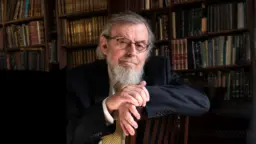
Rabbi Nathan Lopes Cardozo
Rabbi Dr. Nathan Lopes Cardozo is the Founder and Dean of the David Cardozo Academy and the Bet Midrash of Avraham Avinu in Jerusalem. A sought-after lecturer on the international stage for both Jewish and non-Jewish audiences, Rabbi Cardozo is the author of 13 books and numerous articles in both English and Hebrew. He heads a Think Tank focused on finding new Halachic and philosophical approaches to dealing with the crisis of religion and identity amongst Jews and the Jewish State of Israel. Hailing from the Netherlands, Rabbi Cardozo is known for his original and often fearlessly controversial insights into Judaism. His ideas are widely debated on an international level on social media, blogs, books and other forums.