In Tractate Sanhedrin 91a, we read a story that took place in the days of Alexander of Macedon, known as Alexander the Great (fourth century bce.) Just after Moshe’s death, when Yehoshua was leading the Jewish people into the Land of Israel, seven tribes hostile to the Jews occupied the land. Yehoshua offered them peace and security on condition that they commit themselves to the seven Noahide Laws, the basic moral code for all humanity. If they refused – which would constitute a statement that they would not adhere to civilized behavior – Yehoshua informed them that they could leave peacefully. Afterwards, he led the people into the land.
Since most of the tribes refused to accept either alternative, war broke out. The only tribe that actually left was that of the Canaanites. Tradition has it that they settled in Africa (Rambam, Melachim 6:5).
Centuries later, the Canaanites came to Alexander’s international court with a claim that the land of Israel should be returned to them. When the court asked the reason, the Canaanites, who were also called the bnei Africa (the inhabitants of Africa), said that the Israelites had forced them out during Yehoshua’s time and that this injustice should be rectified. When Alexander asked them for proof of their claim to the land, they responded that it was the very Torah of the Jews that supported it. Did it not say, “The land of Canaan with its coasts” (Bamidbar 34:2)? And, since Canaan was their ancestor, they had a legitimate claim to return to the land and take possession of it.
Consequently Alexander, who is known to have been somewhat sympathetic to the Jews, asked the sages to respond. An unlearned Jew, Geviha ben Pesisa, who was known for his great love for his fellow Jews, asked to be allowed to defend the Jewish claim to the land against the Canaanites. “Let me go and plead against them before Alexander of Macedon,” he pleaded. “If they defeat me, then [you can] say: ‘You have defeated one of our uneducated people,’ and if I defeat them, then say: ‘The Torah of Moshe has defeated them.’” After the sages decided to give him their approval, Geviha ben Pesisa asked the Canaanites, “From where do you have your proof?” “From the Torah!” they responded. “I will also bring a proof from the Torah,” he said. “It says that when Cham, one of Noach’s children, had uncovered his father’s nakedness, Noach said, “Cursed be Canaan. A servant of servants shall he be unto his brothers” (Bereshit 9:25). (Canaan was another name for the children of Cham.) Geviha ben Pesisa continued, arguing that since the curse made the Canaanites into slaves to the children of Shem (another son of Noach and the ancestor of the Semitic peoples and the Jews), the Jews would be the owners of the land in any case. According to Jewish law, “Whatever a slave acquires belongs to his master” since slaves are their master’s property. “Moreover,” he said, “you have not served us for years!”
“Alexander told them [the Canaanites]: ‘Answer him.’ ‘Give us three days,’ they said. They searched, but finding no answer, they left.”
When we study this incident carefully, we find that several matters are difficult to understand. First of all, it is obvious that the Canaanites were guilty of reading the Torah selectively. Had they turned the page, they would have read that the land had been promised to Avraham already in earlier days and that the Torah reiterates that God gave it to the Jews. Even more mysterious is Geviha ben Pesisa’s defense. Why did he use such a roundabout argument? Why did he not use the most obvious one – that the Torah makes it abundantly clear that the land was given to the Jews? He could have quoted dozens of verses to support his claim!
Rabbi Shmuel Eliezer Edeles (the Maharsha) argues in his commentary that the Canaanites’ motivation was much more sophisticated than one might imagine. They had read the Torah very carefully and knew of the promise that God had made to the Israelites concerning the land. They reminded Alexander’s court that they, the Canaanites, had been forced out of the country because of their immoral behavior. The Holy Land had no longer been able to contain them and had consequently spat them out. Yet, continued the Canaanites, the Israelites had become just as evil as they themselves had been! They had also become disobedient and had violated the moral code. Moreover, had not the Torah made it clear that the Jews would only merit the land when they were a holy nation, as the Torah demanded? In that case, the Jews no longer had a claim on the land and they, the Canaanites, who had lived there before the Jews, had every right to take it back!
Even an unlearned man like Geviha ben Pesisa understood the Canaanites’ argument and had to admit that their point was somewhat valid. Therefore, there was no point in citing verses stating that God had promised the land to the Israelites earlier. The promise was no longer effective till the Jews repented. The only way that he could defend the Jewish claim was indeed a roundabout one, the one referring to Noach’s curse of Cham. However, it does not take much to realize that this claim is weak and unconvincing.
We cannot but be reminded of this Talmudic narrative when we think of Israel’s imminent disengagement from the Gaza Strip. Unless we are missing some major element necessary for understanding the logic of this measure, the plan to leave the Gaza Strip and Gush Katif makes no sense from any angle. Besides the fact that such a withdrawal can only be interpreted as rewarding terrorism, Israel gains no real benefit from it since there is no evidence that the Palestinians are capable of maintaining peace or that they even wish to. It only results in endangering a large contingent of Israel’s population, which will now only be even more vulnerable to rockets and other terrorist actions. It is after all difficult to see why Afula and Ashkelon will be less endangered tomorrow than Sderot and Gush Katif today.
Common sense tells us that rather than saving the other settlements of the West Bank from ruin, disengagement will only whet the appetite of the Palestinian terrorists and the international community to force Israel into an ongoing surrender of more and more land until it will be impossible to defend its “Auschwitz borders,” as Abba Eban called them.
Most disturbing is that there is no longer any serious opposition to the plan from anyone in Israel’s top leadership, intelligentsia or, above all, the press. At this point there is no longer any strong, outspoken opposition in the Knesset. While many of the common people have protested in every way possible, no strong voices are challenging this plan. The press, which plays a major role in shaping people’s understanding of what is really taking place, continues to fail in its moral obligation to inform the population of the facts. It is becoming more and more obvious that it deliberately sees its task as one of covering up the truth rather than revealing it.
A silence is covering the land as if its leaders, including the opposition, have been intoxicated by a kind of dream state like a person who has just awakened from surgery but, unable to resist the effects of the anesthesia, falls back into deep slumber.
Although nobody can fathom the workings of the mind of God, from a religious point of view we must ask whether this silence and ambivalence are not the result of divine interference. Could we be losing our grip on this land because we have lost our way as the people of God? One wonders whether the Lord of the Universe is preventing the Israeli leadership from waking up and seeing the facts as they are since they, together with much of the nation, have failed to understand the significance of the people of Israel in all its moral and religious dimensions. Therefore, it is playing into the hands of the Canaanites’ old claim that we too have given up our right to this land.
Unless the governmental and religious leaders of Israel wake up and inject Israel with a strong moral code and a deep sense of Jewish religious content, Israel will fall more and more into the hands of those who, out of desperation and lack of vision, will keep on chopping away pieces of land until we are forced to recognize, to our utter bewilderment, that by having forfeited our Jewish connection to this land, we have forfeited the land itself. We will then be forced to wake up from our slumber and find that all of Israel has turned into one large Gush Katif.
What we will then discover is that it was not political errors that were ultimately responsible for our dangerous predicament. Rather, these errors were the direct result of our ongoing refusal to face our Jewishness. Only when the people of Israel realize that its moral-religious mission is crucial to its survival will it be able to understand its relationship to the land. It will then become clear that without a strong attachment to Jewish identity, a deep involvement with Jewish living and religious authenticity combined with the highest level of moral behavior, the Lord of the Universe may no longer be prepared to guarantee this land as an obvious inheritance of the people of Israel.
Since it is becoming ever clearer that the secular and religious establishments in Israel are incapable of turning the tide, common people of Israel must undertake the task of insisting on radical changes in order to force the governmental, educational and rabbinical leadership to take action, or otherwise replace them.
One of the characteristics of a dream is that nothing in it surprises us. It permits us to be quietly and safely insane without being aware of it. It allows human beings to live in a world of deafness, impervious to the cries of the real world.
Nevertheless, we should never forget that the efforts that we make to escape our destiny only lead us into it. Let us also be aware that miracles do take place and that all may turn out for the best. Still, we must remember that human beings create miracles when they use the courage and intelligence that God gave them.
Note:
Let it be clear that we do not propose a Greater Land of Israel policy. Israel is a means and not an end in itself. The goal is to be a light to the nations and a holy people not holding on to land for its own sake. To be a holy people can only be achieved through proper inspirational Jewish Education. One of the great mistakes of the religious Gush bloc, about which we have warned many times, was in making Jewish education subordinate to the land. Jewish education was not its primary goal and consequently Jewish Education was not properly developed and applied to its full force. As such it lost a great opportunity to forge a great Jewish moral mission which would have inspired a large percentage of Israeli society. This would have had a direct effect on how Israel would have been able to deal with the Palestinian uprising. Since the religious Gush bloc includes Israel’s finest inhabitants, it could have created an unprecedented spiritual revolution in Israel which would have created a strong Jewish pride throughout the land. We believe that it is now vital that this bloc re-considers its task in Israel and starts working on this very revolution.

Rabbi Nathan Lopes Cardozo
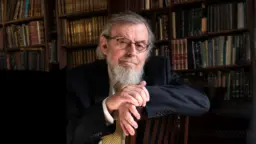
Rabbi Dr. Nathan Lopes Cardozo is the Founder and Dean of the David Cardozo Academy and the Bet Midrash of Avraham Avinu in Jerusalem. A sought-after lecturer on the international stage for both Jewish and non-Jewish audiences, Rabbi Cardozo is the author of 13 books and numerous articles in both English and Hebrew. He heads a Think Tank focused on finding new Halachic and philosophical approaches to dealing with the crisis of religion and identity amongst Jews and the Jewish State of Israel. Hailing from the Netherlands, Rabbi Cardozo is known for his original and often fearlessly controversial insights into Judaism. His ideas are widely debated on an international level on social media, blogs, books and other forums.