Skip to content

Biographies

  • It All Starts With Awe

    In Biographies

    The biggest questions about life are unanswerable. Not one philosopher has ever given a satisfactory answer to these questions; neither has science or any other form of human knowledge. Logic and science tell us about the “what” and the “how” but not about the “why”. They fall flat when it comes to the “ultimate” questions. But if this is the case, why ask questions which are unanswerable?

  • Prayer, and Authentic and Unauthentic Sexuality

    In Biographies and Jewish Thought and Philosophy

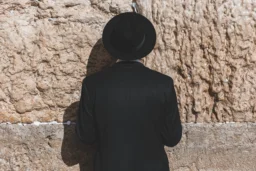
    The beauty of the human body in the eyes of another human is beyond comprehension just as God’s “splendor” is. However, when the beauty of the body is used for the wrong reasons it becomes vulgar, and the inner Divine beauty is exposed and violated.

  • The Encounter with the Divine, Prayer and Sexuality

    In Biographies and Jewish Thought and Philosophy

    I am often asked whether I actually experience moments of God’s Presence. This is a difficult question to answer, because it relates to things that cannot be verified by conventional means. It touches on something that does not fall within the parameters of any other experience.

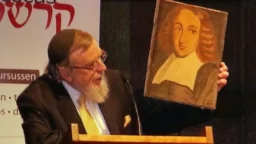
  • My Father, Spinoza and I

    In Baruch Spinoza and Biographies

    My father constantly spoke about the famous, highly controversial philosopher Baruch Spinoza (1632-1677). Spinoza was raised in the Portuguese Spanish Jewish Community whose members had fled from Spain and Portugal to the Netherlands after the Inquisition in 1492, a fate shared by my own family. Spinoza's attacks against Judaism made me wonder what Judaism was all about and why he so strongly opposed it. Thus, paradoxically, it was Spinoza who set me on the road to Judaism.

  • My Spiritual Problem With the 26 Letters of the Alphabet

    In Biographies and Jewish Thought and Philosophy

    While the Greek narrative focuses on “seeing,” the biblical perspective focuses on “hearing” the deeper internal dimension that eludes the naked eye.

  • Making Sense of a Mixed Marriage

    In Biographies

    My non-Jewish background allows me to understand the non-Jewish mindset and explain Judaism to those for whom it is entirely foreign.

  • Turning the “Foreign” into Jewishness

    In Biographies

    Rosenzweig was seeking to transform “the maximum of what is alien” into Judaism’s greater glory. The task of Teshuva is to convert negative aspects that are seemingly detrimental to Judaism into a positive force that can enhance Judaism. Can "hearing" other religions be part of this?

  • Franz Rosenzweig’s Disturbing Demand

    In Biographies and Jewish Thought and Philosophy

    I am taking the reader through the uncharted territories I traversed during my voyage of discovery. Only after I have taken the reader through the many mountains and valleys will I be able to reflect on my journey as a whole and attempt to articulate my holistic re-visioning of Judaism. I am guided by the Talmudic method of argumentation where ideas are raised and discussed; sometimes these ideas are accepted, while other times, they are rejected. There are instances where a final determination is never reached. At other times, the debate might suddenly continue many pages later or may even resume unexpectedly in a different Talmudic tractate altogether. It is in this spirit that this contemplative Autobiography is written.

  • Inner Enigmatic Struggles

    In Biographies

    This is Chapter 4 of my Contemplative Autobiography. It is the story of how I rediscovered—and continue to rediscover—what I believe to be authentic (Orthodox?) Judaism. It is the story of a search for deep religiosity and the re-engagement with Halacha, which I view as musical notes written by the Great Maestro to be played by each one of us on the strings of our souls.  

  • Catch 22

    In Biographies

    As I reexamined my Jewish observance, I found that my dilemma was not about the existence of God per se but the practical consequences of this question in terms of determining an appropriate lifestyle. Pascal's wager asks "What is the correct way to live in case God exists?"

  • A Return to the Beginning

    In Biographies

    No one can inherit religion, neither from one’s parents nor from one’s teachers. Only by embarking on a relentless quest for truth can we reap the rewards of personal discovery.

  • בודד, אבל לא לבד

    In Biographies

    הרקע הלא-טיפוסי שלי השפיע על החשיבה שלי בדרכים לא שגרתיות ועד היום הזה הוא גורם לי לצרות עם כמה מעמיתיי רבנים, כמו גם עם יהודים דתיים וחילוניים כאחד.