
Skip to content

The Book of Leviticus

Leviticus 1:1-27:34

Sefer Vayikra moves inward, from the drama of liberation to the disciplined work of holiness, centering on how a redeemed people lives in the presence of God. The book explores sacrifice, ritual, purity, and ethical responsibility as interconnected dimensions of a life oriented toward the sacred. Far from being merely technical, Vayikra asks what it means to draw near to God, to repair what is broken, and to cultivate a community shaped by justice and compassion. At its core, the book offers a demanding but profound vision: to be holy as God is holy.

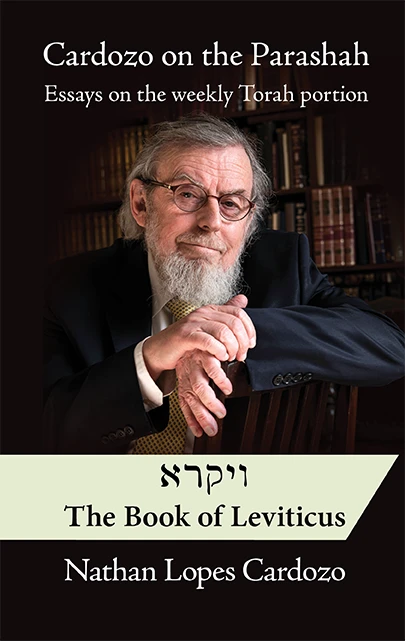
Cardozo on the Parashah: Volume 3

The Book of Leviticus

In this collection of essays, Rabbi Nathan Lopes Cardozo looks at the weekly Torah portion through the eyes of philosophy, contemporary controversies, and personal struggles. Written in his unique style, this book offers something for many different types of readers: laymen and clergy, full-time students and the intellectually curious, Jews and non-Jews alike.

How to get your copy →


  • Parashat Vayikra

    Leviticus 1:1-5:26

    God calls to Moshe from the Tent of Meeting, initiating a detailed system of offerings that structure Israel’s relationship with the divine. The various sacrifices — voluntary and obligatory — express gratitude, atonement, and the yearning to restore connection. The parashah presents worship not as spontaneous emotion alone, but as disciplined, meaningful practice.

    Explore Parashat Vayikra
  • Parashat Tzav

    Leviticus 6:1-8:36

    This portion shifts the focus from the one who brings the offering to the priests who perform the service. Ritual precision, continuity, and responsibility are emphasized, highlighting that sacred work requires care and constancy. Tzav underscores that holiness is sustained through faithful, everyday devotion.

    Explore Parashat Tzav
  • Parashat Shemini

    Leviticus 9:1-11:47

    The Mishkan is inaugurated with joy and divine fire, marking a climactic moment in Israel’s spiritual journey. Yet celebration is shattered by the sudden death of Nadav and Avihu, revealing the peril of approaching the sacred without restraint. The parashah confronts the tension between intimacy with God and reverent boundaries.

    Explore Parashat Shemini
  • Parashat Tazria

    Leviticus 12:1-13:59

    Tazria introduces complex laws of purity related to birth and certain skin conditions, linking physical life to spiritual order. These laws reflect an awareness that the human body, with all its vulnerability, is part of a sacred cosmos. The parashah invites reflection on how life, illness, and healing intersect with holiness.

    Explore Parashat Tazria
  • Parashat Metzora

    Leviticus 14:1-15:33

    The focus turns to purification and reintegration, as those affected by impurity undergo ritual and social restoration. The portion also addresses mysterious afflictions affecting homes, suggesting that moral and spiritual disorder can manifest in communal space. Metzora portrays holiness as something that must be actively repaired and protected.

    Explore Parashat Metzora
  • Parashat Acharei Mot

    Leviticus 16:1-18:30

    In the wake of tragedy, God outlines the service of Yom Kippur, a day devoted to national atonement and renewal. The parashah emphasizes restraint, responsibility, and the possibility of spiritual cleansing. It teaches that even after failure, the covenant can be healed.

    Explore Parashat Acharei Mot
  • Parashat Kedoshim

    Leviticus 19:1-20:27

    “Be holy, for I the Lord your God am holy” becomes the moral heartbeat of the book. A wide range of ethical commandments — love of neighbor, honesty, justice, and care for the vulnerable — is presented as sacred duty. Kedoshim insists that holiness is lived in everyday relationships.

    Explore Parashat Kedoshim
  • Parashat Emor

    Leviticus 21:1-24:23

    The laws of the priesthood and sacred times structure Israel’s spiritual calendar and communal identity. Festivals, Shabbat, and the rhythms of the year frame memory, gratitude, and hope. The parashah portrays time itself as a vessel for holiness.

    Explore Parashat Emor
  • Parashat Behar

    Leviticus 25:1-26:2

    On Mount Sinai, God reveals laws of land, rest, and economic justice, including the Sabbatical and Jubilee years. These commandments resist permanent ownership and unchecked inequality, reminding Israel that the land ultimately belongs to God. Behar envisions a society where freedom and dignity are preserved through sacred limits

    Explore Parashat Behar
  • Parashat Bechukotai

    Leviticus 26:3-27:34

    The book concludes with blessings for faithfulness and warnings against betrayal of the covenant. History is framed as morally responsive: choices shape destiny, individually and collectively. Yet even in the darkest moments, God promises that the covenant with Israel will endure.

    Explore Parashat Bechukotai