Skip to content

Contemporary Issues

  • In Defense of Haredim

    And a Plea to Their Leadership

    In Contemporary Issues

    The haredi world must again become a model of moral purity, holiness, and distinction. Every trace of corruption or dishonesty must be eliminated. Conformity, while comforting, can also dull the soul. The community must cultivate independent thinkers and halachic authorities of stature, as it once did, especially in an age when the secular world fails to provide tools for moral and spiritual endurance.

  • War and the Challenge of Conscience

    In Contemporary Issues, Parashat HaShavua and Parashat Shelach

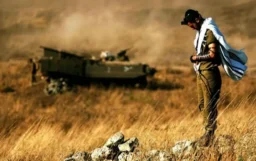
    In Parashat Shelach, the spies feared giants. But perhaps what they truly feared was the moral burden of destiny. In this deeply personal and timely reflection, Rabbi Nathan Lopes Cardozo explores the tragedy of justified war, the conscience of a chosen people, and what it means to be holy in a world that demands violence.

  • Judaism without God

    In Contemporary Issues and Jewish Thought and Philosophy

    With the terrible pogrom which took place in my hometown, Amsterdam, and the ongoing Anti-Semitism in Europe, the United States, and indeed worldwide, it is time to give proper attention to one of the great mistakes of modern Jewish history. This is the myth that if Jews would only “normalize” themselves, anti-Semitism would come to an end. This constantly repeated mantra has proven to be entirely wrong and in fact, dangerous.

  • Israel and the World Cup – Some Rabbinic Advice

    In Contemporary Issues

    A tongue-in-cheek look at how Israel could win the next World Cup in Soccer. Hint: it's all about listening to the rabbis!

  • How Long Will Our Soldiers Continue to Fight?

    In Contemporary Issues

    After this war is won, the next great challenge facing the State of Israel will be the possibility that its soldiers will one day refuse to serve and defend this country. How long will we be able to rely on the Israeli army if its combatants do not realize what it is they are fighting for? It is important that they know that they are defending an idea and a holy mission which far surpasses the defense of a piece of land!

  • Escaping the Luxury of Powerlessness: A cautionary tale

    By Calev Ben-Dor

    A curious midrash on the Megillah examines the attraction - and dangers - of exile. The powerlessness of exile can free us from the difficult moral decisions of sovereignty. But this freedom from guilt comes at the price of our ability to control our circumstances.

  • Parashat Tetzaveh – Amalek and Modern Antisemitism

    By Yehoshua Looks

    God has made two unconditional promises to the Jewish people: one that we are eternal, that we will not disappear; and the second that He will ultimately redeem us. Unfortunately, He has also warned us that a certain kind of irrational hatred will be our lot throughout the generations.

  • Unity, not Uniformity – Changing the discourse in Israel

    In Contemporary Issues and Parashat Metzora

    In these difficult days, we have a moral obligation to create an environment for respectful discourse. We should all do what we can to provide our families, our friends, and our children with the tools to control how we speak about and to one another. The noble teachings of the Jewish Tradition could greatly help with this.

  • The Strolling Light of Shabbat – The art of creative abstinence

    In Contemporary Issues, Parashat HaShavua and Shabbat

    When the light of the setting sun announces the entrance of Shabbat, a miracle happens: the light assumes the quality of light in a Rembrandt painting. The light slows down. It strolls! There is no way to see the strolling of the light unless one actually opens the door to let it in. One cannot talk about mystery. One must be grasped by it. And that is only possible when insight and creative inaction become one.

  • Putting God on Trial: The problem of Divine Collateral Damage

    In Contemporary Issues, Jewish Thought and Philosophy and Theodicy

    The Jewish Tradition never told people not to question divine justice. Such questions are not only legitimate, they are holy because they rise from a deep realization that God is righteous and at the same time honest enough to admit that He is at fault.

  • The Conditional Promise of Peace – The Realism of a Biblical Verse

    In Contemporary Issues

    The sudden rediscovery of Jewish identity in Israel since the start of the war has led me to understand a verse in the Torah that I never really understood before. In this verse, God promises peace in our borders under certain conditions. Due to all that we have experienced in the last weeks—the trauma of the attacks and then the incredible new awakening to what it means to be a Jew—perhaps we need to reconsider this verse.

  • Avraham weeps for Sarah

    To our Friends outside the Land of Israel

    By Yehoshua Looks

    This week marks the Sloshim, 30 days since the massacres of October 7. The Jewish laws of mourning focus first on the dead, on dignity from death to burial. The focus then turns to the needs of the close relatives of the deceased, with Shiva, the seven days of intense mourning, to the Sloshim, which—with the exception of the death of one’s parents—marks the end of the mourning period. However, even 30 days later, we as a nation find it hard to get past the mourning.