Skip to content

Education

  • Parshat Shemini – Are You Really Eating Kosher?

    In Education, Halacha, Parashat HaShavua and Parashat Shemini

    Kosher animals, as is well known, can be identified by two simanim (physical signs). They must chew their cud, and their hooves must be wholly cloven. (2) In order to be kosher, the animal must possess both simanim. The Torah goes out of its way to emphasize the fact that an animal in which only one sign is present cannot be considered kosher in any way.

  • Rabbinical Courage and the Frozen Text

    In Education and Jewish Thought and Philosophy

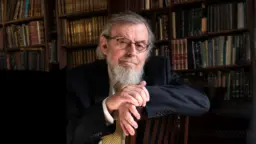
    The Talmud discusses the identity of a Gavra Rabba, an exceptionally great person or Torah sage. It quotes a most remarkable observation made by the well-known Sage Rava, who states: “How foolish are some people who stand up [out of respect] for a Sefer Torah but do not stand up for a Gavra Rabba” (1).

  • Mission Statement of the David Cardozo Academy – A Remorseless Judaism

    In Contemporary Issues, Education and Jewish Thought and Philosophy

    Judaism is about bold ideas. Its goal is not to find the truth, but to inspire us to honestly search for it. Torah study is not only the greatest undertaking there is, but also the most dangerous, since it can easily lead to self-satisfaction and spiritual conceit. The leashing of our souls is easier than the building of our spirit.

  • Milk and Meat

    A Dangerous Mixture

    In Education, Halacha, Jewish Thought and Philosophy and Parashat Mishpatim

    One of the most puzzling laws in Judaism is the prohibition of mixing milk and meat. Strangely enough, this mysterious law has had the greatest influence on the daily life of Jews for thousands of years, right up to this very day.

  • Am I Still Orthodox?

    Reply to a Jerusalem Rabbi

    In Baruch Spinoza, Contemporary Issues, Education and Jewish Thought and Philosophy

    Once the city magistrates of 17-century Amsterdam had made it abundantly clear to the Portuguese-Spanish Jewish Community that it could settle in Amsterdam only on condition that no member would ever dare to challenge the belief in the biblical God and the Old and New Testaments, Spinoza’s so-called heretical ideas became a serious challenge for the rabbis and leaders. It was a clear infringement of the agreement with the City of Amsterdam.

  • The Desecration of Halacha

    In Contemporary Issues, Education and Halacha

    The foremost point of departure in any halachic decision must be that all people are created in the image of God and that all human life is holy. We forget this principle at our own peril

  • Admitting A Mistake: Even God Does.

    In Education and Jewish Thought and Philosophy

    Nothing is more difficult than admitting a mistake, yet nothing is more human than making one. This may well be the reason why even God sometimes makes a "mistake." In a famous passage in the Talmud, we read that the Sages decided a certain law against the opinion of Rabbi Eliezer who was known to be the sharpest mind of his day and was fully supported by God:

  • Yeshivot and the Toy Industry The Art of Imagination

    In Education and Halacha

    One of the most unique talents with which human beings are blessed with is the faculty of imagination. Unlike any other creature, the human has nearly unlimited potential for constructive fantasy.

  • Biblical Studies: Relevance, Eternity and Unawareness

    In Education

    Understanding Chumash (the Five Books of Moses) is far more than knowing how to give expression to the deeper meaning of the biblical text. After all, it is impossible to treat the Chumash as any other classical work since, according to Jewish Tradition, the People of Israel are not the author of this text; rather, it is the author of the people.

  • Open Think Tank meeting - March 2017

    Session 6: Mikveh, Education, and Written & Oral Law

    In Biographies, Contemporary Issues and Education

    The first discussion of this meeting opened around Rabbi Cardozo’s use of the metaphor of the mikveh. Rabbi Cardozo converted at age sixteen, but came to realize that to “convert” only once is nearly meaningless. Immersing in a mikveh symbolizes an inner transformation, resembling emerging afresh from the womb; and he deeply desires to emerge transformed from each and every visit to the mikveh, as he did upon his conversion many years ago.

  • Why I Love to Teach at Limmud

    In Education

    Printed in the Jewish Chronicle London, United Kingdom, December 2011 Judaism is the most astonishing and daring religion the world has been blessed with. It defies all definitions and stands head and shoulders above anything else I know. It is not just a faith, a sentiment, or a ritual, but above all an immense yet […]

  • Emerging Cracks at the Heart of Judaism

    In Education

    We often ask whether the Jews constitute a race; a people; a religion; a cultural entity; a historic group; or a linguistic unit. But we do not ask what we are spiritually; who we are morally; what we owe the world and what our mission is.