Skip to content

Halacha

The Jewish Law

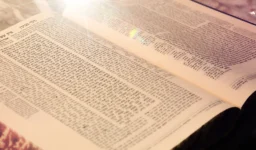
Halakhah is often translated as “Jewish law,” yet its literal meaning is “the way” — the path along which Jewish life unfolds. Rooted in the Torah and shaped through centuries of debate, interpretation, and responsa, Halakhah is not a static code but an ongoing conversation. It seeks to sanctify daily existence, bringing Divine presence into the concrete details of life.

  • The Chaos Theory of Halacha (Part 2 of 3)

    In Halacha and Jewish Thought and Philosophy

    One of the most remarkable aspects of Orthodox Halacha is that it is almost an open market within the confines of the masoret, an unwritten and undefined tradition going back thousands of years. Some will view the masoret as a minimal and almost fundamentalist observance, and others will view it as a maximal and highly flexible tradition, which allows for much innovation.


  • The Chaos Theory of Halacha (Part 1 of 3)

    In Halacha and Jewish Thought and Philosophy

    Chaos is God’s signature when He prefers to remain anonymous. The same can be said about Halacha. Halacha is the chaotic way through which God wants the Jew to live his life, according to strict rules that seem to be part of a well-worked-out system. People do not come before God as actors in a play that has been planned down to the minutest detail. If they did, they would be robots and life would be a farce.

  • Parshat Bechukotai – The Miracle of Satisfaction

    In Contemporary Issues, Halacha, Jewish Thought and Philosophy and Parashat Bechukotai

    “Your threshing season will last until your grape harvest, and your grape harvest will last until the time you plant. You will have your fill of food, and you will dwell securely in your land.” (1) This blessing is promised to the people of Israel on condition that, as a unified nation, they observe the laws of the Torah and live by its spirit. Its promise is quite surprising.

  • Blessed Are Those Who Eat Chametz!

    Just not on Pessah

    In Halacha, Jewish Thought and Philosophy, The Jewish Year and Passover

    Why is it prohibited to eat or to possess chametz (leaven) on Pessah? What is there in the nature of leaven that makes it forbidden, and why only on Pessah? The Talmud offers an insightful answer.

  • Parshat Shemini – Are You Really Eating Kosher?

    In Education, Halacha, Parashat HaShavua and Parashat Shemini

    Kosher animals, as is well known, can be identified by two simanim (physical signs). They must chew their cud, and their hooves must be wholly cloven. (2) In order to be kosher, the animal must possess both simanim. The Torah goes out of its way to emphasize the fact that an animal in which only one sign is present cannot be considered kosher in any way.

  • Hareidi-Bashing, Modesty, and Normative Values: A response to Yael Valier

    By E.S.

    There is a limit to how far we should accommodate Hareidi norms in the public space. A normative system doesn’t simply respond to reality; it actively shapes and influences people’s perceptions of reality. The rules followed by the Hareidi world actively encourage a perception of women as little more than dangerously arousing sexual objects. They do not encourage a perception of women as responsible members of society fully the equal of men in all matters of intelligence and competence. Hence these norms should not be indulged in the public sphere.

  • Open Think Tank meeting - March 2017

    Session 8: The Founding of the State of Israel and the Challenge of Halachic Living

    In Halacha and Israel & Zionism

    The think tank discusses whether the founding of the State of Israel has changed how we approach Halacha and its mode of development, as well as what kind of changes can be made to the halachic system.

  • When religious arguments descend into Hareidi bashing

    By Yael Valier

    Recently yet another opportunity for Hareidi-bashing appeared, with the news that an 81 year-old woman is suing El Al after being forced to switch seats because a Hareidi man refused to sit next to her. Rabbi Marc Angel commented on the incident in a short article, "Thoughts on the Scandal on an El Al Airplane." But Rabbi Angel's critique misses a crucial point. In fact, there's reason to applaud one aspect of the Hareidi worldview.

  • Milk and Meat

    A Dangerous Mixture

    In Education, Halacha, Jewish Thought and Philosophy and Parashat Mishpatim

    One of the most puzzling laws in Judaism is the prohibition of mixing milk and meat. Strangely enough, this mysterious law has had the greatest influence on the daily life of Jews for thousands of years, right up to this very day.

  • The Desecration of Halacha

    In Contemporary Issues, Education and Halacha

    The foremost point of departure in any halachic decision must be that all people are created in the image of God and that all human life is holy. We forget this principle at our own peril

  • Needed: Redemptive Halakhah – How Halakhah Must Transcend Itself

    In Contemporary Issues and Halacha

    In September 2015 the Journal of the Institute for Jewish Ideas and Ideals, “Conversations”, published a long ground breaking essay on the need to redeem the Halacha and to bring it into line with the larger mission of the Jewish people in our days. Below are some segments.

  • Oh, that I Could Take Off My Kippah!

    In Contemporary Issues and Halacha

    I need to be honest. I am contemplating taking off my kippah. Why, you might ask? I no longer want to be observant. Observance, for me and for many young people, has become irrelevant. It has been used by large sections of religious Jews to live in self-assured ease. Their religion is part of their contentment.