
Skip to content

Halacha

The Jewish Law

Halakhah is often translated as “Jewish law,” yet its literal meaning is “the way” — the path along which Jewish life unfolds. Rooted in the Torah and shaped through centuries of debate, interpretation, and responsa, Halakhah is not a static code but an ongoing conversation. It seeks to sanctify daily existence, bringing Divine presence into the concrete details of life.

  • Courage, Rabbis, Courage! The Need For Mass Conversion

    In Contemporary Issues, Converting to Judaism and Halacha

    Rather than waiting until a potential convert is ready to take on all of Jewish law, and only then converting them, we should first convert them, and then slowly introduce them to Jewish religious values and Halacha. This should be done by way of gentle persuasion and love, with no coercion whatsoever. We must give them the option of making their own choices, introducing them to a ladder of observance that they can climb at their own pace and within their own abilities.
  • Conversion and Annie Fischer’s Interpretation of Schumann’s Klavierkonzert in A Minor

    In Contemporary Issues, Converting to Judaism and Halacha

    Just as a human being who’s never had an encounter with classical music won’t know what he’s missing until he is introduced to Mozart, Beethoven or Bach, so it is with Judaism. But it all depends on who is playing the music.

  • Conversion Is Not About Halacha

    In Contemporary Issues, Converting to Judaism and Halacha

    As the Israeli Chief Rabbinate and the new rabbinical initiative for an independent conversion court (which I fully support) are headed toward a major showdown, it is remarkable that neither side has considered a most crucial question: Is conversion even possible? This may sound like a rhetorical question, since the answer is in the affirmative. Yet it goes to the very core of the problem. And as long as we do not deal with it, all deliberations concerning this matter are more or less meaningless.

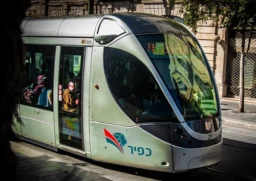
  • Jerusalem light rail

    Bold Ideas: Take the Bike or Tram, Get a Free Coffee, and Observe Shabbat!

    In Halacha, Jewish Thought and Philosophy and Shabbat

    One of the great challenges, if not the greatest, is Shabbat, the only official day of rest in Israeli society when people enjoy visiting their parents and friends who live far away or who may be in hospital. Many would love to go to a restaurant and enjoy an afternoon ride through neighborhoods in Yerushalayim or other cities. But none of this is possible without the use of cars or taxis and with no open restaurants. This article offers some suggestions to overcome these obstacles.

  • Halacha: The Disturbing Search for God

    In Halacha and Jewish Thought and Philosophy

    Religion is a protest against taking life for granted. There are no insignificant phenomena or deeds in this world, and it is through Judaism’s demands and far-reaching interference in our daily life that we are made aware of God as our steadfast Companion. This is clearly the meaning of the famous talmudic statement by Rabbi Chanania ben Akashia (2) when he said: “The Holy One blessed be He desired to make Israel worthy, therefore He gave them Torah and mitzvot in abundance, as it is said: ‘God desires for the sake of His righteousness that the Torah be expanded and strengthened. ’” (3).

  • The Dangling Bridges of Halacha

    Making rules where rules should not exist

    In Halacha

    Halacha makes rules where rules should not exist but need to exist lest chaos ensue. But it is these very rules that create unsolvable problems that are inherent to our existence.

  • Yeshivot and the Toy Industry The Art of Imagination

    In Education and Halacha

    One of the most unique talents with which human beings are blessed with is the faculty of imagination. Unlike any other creature, the human has nearly unlimited potential for constructive fantasy.

  • Jumping Into Deep Waters -The Cornerstone of Judaism

    In Halacha and The Jewish Year

    Judaism is about new ideas. It is dependent on fresh concepts deeply rooted in its tradition. Innovative thinking is the need of the hour. It is time for halachic authorities, rabbis, and religious thinkers to take notice of the immense changes that have taken place in our day. Never has the world gone through so many adjustments in so short a time. Never have the Jewish people been confronted with so many challenges. It is not only the security of the State of Israel that is at stake, but even more so, its very spirit and spiritual future.

  • To Be Secular Would Be Hell, Everything Would Be Forbidden

    In Halacha

    A few years ago I saw a cat hit by a car. It rolled over several times but escaped unhurt. Its face showed no sign of shock (1), but its body language indicated clear signs of panic and disorientation.

  • To Be Religious is to Be a Halachic Poet

    In Halacha

    Halacha is the practical expression of discovering the infinite within the finite. To grasp the world of religiosity, or the real essence of halacha, it is not enough to know all of the Written and Oral Torah. One must also see how the birds fly and the flowers blossom; one must sit by the bed of the dying, watch the stars, and have unexpected meetings. Because all of these are a living commentary on the Text.

  • My Brother and the Kosher Wine Bottle – Defensive Halacha and Prophetic Halacha

    In Halacha

    Laws such as issur maga nochri become an obstacle to the universal mission of the Jewish people when they are applied to those to whom they are not applicable.

  • The Divine Word Is Deadly, Only A Melody Can Rescue it.

    In Halacha

    The Divine Word is deadly and causes paralysis. The Word, wrought by fire in the upper world, is unmanageable and wreaks havoc once it descends. Its demands are not of this world; they belong to the angels. The Word therefore comes to naught once it enters the human sphere, since there is no one to receive it. All have died before the Word is able to pronounce its second word. How then can it delight the living soul?