Skip to content

Halacha

The Jewish Law

Halakhah is often translated as “Jewish law,” yet its literal meaning is “the way” — the path along which Jewish life unfolds. Rooted in the Torah and shaped through centuries of debate, interpretation, and responsa, Halakhah is not a static code but an ongoing conversation. It seeks to sanctify daily existence, bringing Divine presence into the concrete details of life.

  • Halacha and “trivialities”

    In Halacha

    Judaism is a religion of holy trivialities. Commonplace deeds are the moments through which man has the opportunity to meet God more intensively than at any other instant. Trivialities were created by God in order to show man that there are no insignificant moments and that every move of man counts, however small.    It is God's opportunity to show man that He is concerned with every day of man's life and that every second counts.

  • Idol Worship

    In Halacha

    As it well known, Judaism considers Avodah Zarah (idol worship) as its main enemy. According to the view of many thinkers, all evil is rooted in idol worship, and therefore the Torah goes out of its way to condemn this practice. Jewish law has taken extreme steps to root out any affiliation with this kind of worship. It is therefore most surprising that the commentators seem to have a major difference of opinion what idol worship is all about and why it is forbidden.

  • Technology and the Existential Meaning of a Sefer Torah

    In Halacha and Shemini Atzeret & Simchat Torah

    Last Sunday night my synagogue in Yerushalayim celebrated the inauguration of a new Sefer Torah, Torah scroll. It was a very happy occasion during which hundreds of people danced in the streets while the children carried torches which made it, together with the stars in the sky, a nearly mystical experience

  • Halachic Limits to Halacha

    In Halacha

    There has never been a period in Jewish history during which Halacha has been so challenged as in our days and in this country. For nearly two thousand years, Jews have been living under foreign rule and as such were able to play the role of what I call  "comfortable spectators".

  • Mitzvoth, Minhagim, and Their Dangers

    In Halacha

    At times, we are confronted with problems with how some people observe some well-established customs, and even mitzvoth.

  • Between Frumkeit and Religiosity

    The Law of the Nazir

    In Halacha and Parashat Naso

    Many people feel the need to express their religious devotion through the acceptance of stringencies that conventional Jewish Law does not in actual fact require. But the Torah does not appear to condone such stringencies.

  • Baruch Spinoza and Johann Sebastian Bach

    The tragedy of the meeting that never happened

    In Baruch Spinoza and Halacha

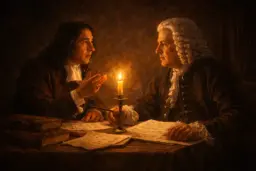
    What if two of Europe’s greatest minds had met—Baruch Spinoza, the philosopher who rejected Jewish law, and Johann Sebastian Bach, the composer who obeyed every rule of musical composition? Bach’s music provides the perfect response to Spinoza’s critique of Halacha: true creativity is not born from rejecting rules, but from mastering them. The law, far from suppressing the soul, becomes the instrument through which it sings.

  • Book Review: One People, Two Worlds

    In Halacha

     "One people, two worlds"

    "A Reform Rabbi and an Orthodox Rabbi Explore the Issues that Divide Them"

    By Amiel Hirsch and Yosef Reinman*

    "The ultimate measure of a man is not where he stands in a moment of comfort and convenience, but where he stands in times of challenge and controversy"