Skip to content

Jewish Thought and Philosophy

  • Child with teddy bear on train tracks

    Children’s Toys and Trivializing Torah

    In Jewish Thought and Philosophy

    Human beings are uniquely blessed with the faculty of imagination, and they possess nearly unlimited potential for constructive fantasy. Imagination is essential for advancement and progress throughout the world, which is also the case for Torah study. And yet, the sophistication invested in the production of toys for our children limits their processes of pretense, and thus the possibility for innovation and new insights in Torah learning.


  • The Mystery of the Missing Verse and the Problem of Evil

    In Jewish Thought and Philosophy

    There is a pasuk (verse), missing from the Torah, a verse that is the most important of all—without which the Torah is not complete! This missing verse should have been written before the first verse in the Torah: “In the beginning God created heaven and earth.” This verse should have told us why God “decided” to create heaven and earth, the millions of stars, black holes, animals, vegetation, and above all, human beings. The absence of this verse is deliberate—for there is no way to write it; it could only have been “written” in God’s personal “language” that is beyond the capability of humankind to understand. The implications of this missing verse have profound meaning for human existence.

  • A Short Introduction to God

    In Baruch Spinoza and Jewish Thought and Philosophy

    While in pantheistic and other non-monotheistic philosophies, the Divine has no moral input, nothing could be further from the Jewish concept of God. For Judaism, God is the source par excellence of all moral criteria. And yet, on occasion He Himself seems to violate these very moral criteria — such as in the case when He causes a devastating flood in the days of Noah. God is a conscious Being Who created the world with a purpose. And this world is real and by no means a mirage. The human being’s deeds are of great value, far from an illusion; they are the very goal of creation. Judaism objects to the pantheistic view of the human being since it depersonalizes him, ultimately leading to his demoralization.

  • Parashat Bereshit: The First Divine Commandment is to Enjoy the World

    In Jewish Thought and Philosophy, Parashat HaShavua and Parashat Bereshit

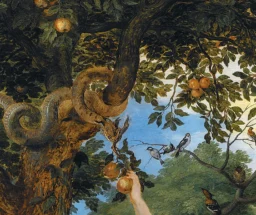
    It is often thought that God’s first commandment to Adam was the prohibition regarding the Tree of Knowledge. This would mean that man’s first encounter with the will of God was a negative experience: a restriction. However, this isn't actually true: This was not the first commandment! Careful analysis of the text shows that the first commandment to Adam and Chava was to eat from all the other trees and enjoy them.

  • Retirement Homes, Afterlife and the Denial of Death

    In Contemporary Issues and Jewish Thought and Philosophy

    Only when we realize that our world has become barer and barer, and incapable of giving itself ultimate meaning is there hope that we may recapture the possibility of an afterlife Our denial of the afterlife and the need for a spiritual passport to continue the road has created enormous psychological problems.

  • Prayer, and Authentic and Unauthentic Sexuality

    In Biographies and Jewish Thought and Philosophy

    The beauty of the human body in the eyes of another human is beyond comprehension just as God’s “splendor” is. However, when the beauty of the body is used for the wrong reasons it becomes vulgar, and the inner Divine beauty is exposed and violated.

  • The Encounter with the Divine, Prayer and Sexuality

    In Biographies and Jewish Thought and Philosophy

    I am often asked whether I actually experience moments of God’s Presence. This is a difficult question to answer, because it relates to things that cannot be verified by conventional means. It touches on something that does not fall within the parameters of any other experience.

  • Tractatus Dialogico Philosophico De Faceta – A Modern Humorous Dialogue

    In Jewish Thought and Philosophy

    A humorous look at the problem of human communication. Enjoy!

  • The Map Problem and the Fly

    In Jewish Thought and Philosophy

    Some have said that only what can be proven is of value. True, if we limit ourselves to that which can be proven, we run less risk of error, and yet, by limiting ourselves so, we also run the risk of missing out on that which is most important. After all, the things that bring us the greatest meaning are those very things that cannot be proven.

  • Parashat Vayikra – The Challenge Of Tisha B’av And The Temple Sacrifices

    In Jewish Thought and Philosophy and The Jewish Year

    Regardless of the many traditional approach to offering sacrifices in our day, there is no question that the Temple and its rituals once played an enormous role in Judaism, and that offering sacrifices was at the very center of its holy service. So, what was it that made sacrifices such an essential part of Judaism in bygone times? Was it merely primitivism? Or was it something that we are no longer connected to today and are missing out on? What holiness could there have been in the offering of sacrifices? And were we to discover this holiness, would that mean we should reintroduce the sacrificial rites in our own contemporary times?

  • Why does Jewish Law forbid religious images?

    In Jewish Thought and Philosophy

    When scientists describe or teach about atoms and electrons they use models and images on the blackboard or computer screen.  However, these are but metaphors and symbols; no one believes them to be the real thing. Why then, does Jewish Law forbid images that are meant to represent God, even when we know these images are only metaphors?

  • Is God Really of Supreme Importance?

    In Jewish Thought and Philosophy

    Is God really of supreme importance? The answer affects the way one lives, behaves, and perceives life. A believing person claims that he lives in the palace of the King of all Kings; if one lives in this palace, one must behave as befits royalty, and it is religion’s task to give us the guidelines as to how to do this.