
Is believing in God the same as believing that He exists?
Is there a difference between believing in God and believing that God exists? Might belief in God imply that we not only believe that He exists but that we trust Him?

Is there a difference between believing in God and believing that God exists? Might belief in God imply that we not only believe that He exists but that we trust Him?

Is belief in an afterlife a fundamental tenet of Jewish faith? I personally believe that a human being’s life does not come to an end with death, but I do not believe that this is a fundamental tenet of our faith. In fact, I believe that to consider this as such harms the integrity of Judaism.

In my Thoughts to Ponder I have tried to touch on issues that were ignored or even denied in the religious Jewish community, often because these challenged conventional religious notions that I felt needed more attention and a different approach.

It’s high time that we who consider ourselves religious have an honest look in the mirror and ask ourselves what brought us to this lifestyle. Was it a genuine longing for religion and mitzvah observance, or was it an insurance policy?

Joy is not a “peak experience” which climaxes and ends suddenly, but rather a plateau. It is not the ecstatic fire of the moment but the glow of growing from within.

The purpose of genuine religious life is to protest against this optical illusion and to teach us to refocus our spiritual spectacles. It is not that religion shows us something new. Rather, it shows us what we have seen all our lives but have never noticed, that there is dazzling goodness in this world. There is order instead of chaos; there is diversity, not just monotonous existence; and above all, there is the infinite grace of the human deed.

In Contemporary Issues, Converting to Judaism and Jewish Thought and Philosophy
Judaism and the Jewish people are intertwined and interact in ways which nobody can fully grasp. Are we a religion, or a nation? If we are a religion, how can it be that somebody who does not believe in God or refuses to observe even one commandment still remains Jewish as long as he or she is born to a Jewish mother? And if we are a nation, how does religion come in, telling us who belongs to the nation and who does not? Any attempt to find a solution to this problem will always fail. This is one of the greatest mysteries of Jewish identity.

What is the Talmud all about? The first thing that must be emphasized is that the Talmud displays deliberate chaos. It roams from one topic to another without any real inner logic, other than that one word gives rise to a whole new idea without warning us that it is coming. The outsider may have trouble making heads or tails of it all. And then suddenly one gets the hang of it and realizes that all this chaos flows together into an unbelievable picture, with hundreds of colors harmoniously coming together. That moment of comprehension is a great joy for the intellect and the human soul.

By Yael Shahar
The Talmud manages to do what few legal systems even attempt: it integrates psychological and moral issues seamlessly with normative legal guidelines. But to appreciate the full extent of this integration, it's important to pay attention to something that is too often left out of today's Gemara classes: the aggadah.
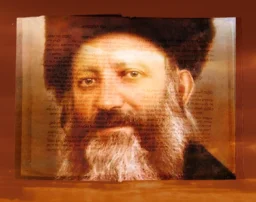
In returning the prophetic spirit to Judaism, the world of Aggadah is of crucial importance. Aggadah is the prophetic voice within Judaism, where prophecy not only speaks, but allows the reader to answer. It is the part of Judaism that deals with the sum total of human life. It prevents mechanical observance by freeing our inner spirit. Whereas Halacha is the consummation, Aggadah is its aspiration.

COVID-19 has highlighted the weaknesses of our ideologies, both religious and secular, to provide meaning to our lives.
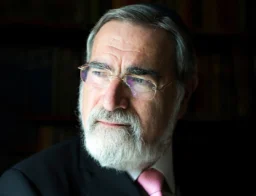
With the demise of Rabbi Sacks, world Jewry as never before, has to ask itself how it can produce Rabbis on the level of Rabbi Sacks so that Judaism can continue to be a world player.