
Skip to content

Jewish Thought and Philosophy

  • The Perfect Torah Versus the Evolving Torah – Part 4

    By Yehuda DovBer Zirkind

    In these trying times, it is of great value to focus on spiritual matters that may move us to a different plain. This will give us comfort, broaden our minds and enlarge our souls, as we carefully follow all the health regulations prescribed by our authorities. Here is the fourth part of Yehudah DovBer Zirkind’s reflections on the ideas of the Mei HaShiloach and my own comments.

  • The Message of The Corona Virus

    In Contemporary Issues and Jewish Thought and Philosophy

    The new reality in the age of COVID-19 forces us to break with the monotony that most of us are used to. Almost all of us jump into routine every morning – whether it’s a job, or the need to sleep, eat, or entertain ourselves. And now, the corona virus suddenly forces us to rethink everything, making us wonder what this life of ours is really all about.

  • The Perfect Torah Versus the Evolving Torah – Part 3

    By Yehuda DovBer Zirkind

    The two different approaches to the Torah: the “perfect Torah” and the “evolving Torah” approaches are related to a broader theological question about the nature of the mitzvot: Do the mitzvot reflect God’s ultimate and unconditional will (kvayachol), or do they reflect God’s instrumental will for humanity, providing an instruction manual for how to redeem the world? In other words, is the main purpose of the mitzvot for the sake of God (i.e. that humankind should fulfill God’s wishes) or for the sake of man (i.e. that God’s plan for humanity should be realized)?

  • The Perfect Torah versus the Evolving Torah – part 2

    By Yehuda DovBer Zirkind

    The giving of the Torah has radically altered the course of Judaism and we cannot revert to a pre-Torah age. Nevertheless, Rabbi Cardozo believes that the vision and spirit of this formative era, i.e. the vibrancy of an inchoate and incipient Judaism - or to borrow a metaphor from biology, a “stem cell” based Judaism - should be kept alive and maintained as a counterweight against the ethos of textual fixation and rigid Halachic codification which is so prevalent within the contemporary Orthodox Jewish world.

  • The Perfect Torah vs. the Evolving Torah

    By Yehuda DovBer Zirkind

    Part 1 of a series discussing the ideas of the Chassidic master, Rabbi Mordechai Yosef Leiner of Izbica, Poland (1800-1854), also known as the Mei Hashiloach, after the title of the book containing his teachings.

  • Fundamentalism, Education and The Wisdom of the Gentile

    In Jewish Thought and Philosophy, Parashat HaShavua and Parashat Yitro

    By designating Yitro to be the father-in-law of the most holy Jew of all times, God made it clear that He would not tolerate racism and that a righteous gentile could climb up to the highest ranks of saintliness.

  • chess board

    The Halakhic Chess Game

    In Jewish Thought and Philosophy

    Chess reminds us of the world of Talmudic halachic debate with all its intrigues, its severe obstacles, and its seemingly deliberate tendency to make life more difficult and sometimes nearly impossible.

  • Rembrandt and the Quest for Integrity

    75 Years After the Holocaust

    In Jewish Thought and Philosophy, Theodicy and Yom HaShoah

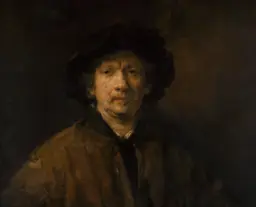
    Rembrandt reminds us that if we want to really live we must show flawless integrity and demonstrate great authenticity. It is all about making a genuine contribution to the world, with no regard for gain, and even being prepared to pay the price of one’s rank and position in the conventional community. A person must make sure that he can look himself in the mirror at the end of his life and say, I lived my life; it did not just pass me by.

  • The Unorthodox Education of Moshe Rabbenu

    In Defense of Heresy

    In Converting to Judaism, Education, Jewish Thought and Philosophy and Parashat Shemot

    Judaism was born out of opposition, rebellion and protest. It overthrew and outlived mighty empires and gave the world a radically new understanding of itself. Judaism has nothing to fear. It has prevailed over all those who criticized it but has also learned much about itself by listening to opposing voices. Through these voices, it has been able to sharpen its own claims and if necessary change its mind when the inadequacy of these claims has become clear. Only in this way will it continue to play a central role in the future of mankind.

  • The Talmudic Olympic Games

    In Jewish Thought and Philosophy

    Last week, something remarkable happened. Thousands of Jews from all over the world came together to study the last page of an old book with the ineffable anticipation of starting to study it all over again from page one and not to lose a minute.

  • Two New Podcasts: On the Jewish Mission and the Most Difficult Mitzva

    In Jewish Thought and Philosophy

    Dear Friends, Shalom u-vracha. Although we have received several new gifts, for which we are most thankful, our financial situation has still not been resolved. The unfortunate “witch hunt” against some of my ideas seems to continue and has created much financial damage to our programs, projects and writings. As I have stated before, I […]

  • The Religious Value of Doubt

    In Jewish Thought and Philosophy

    Faith means striving for faith. It is never an arrival. It can only burst forth at singular moments. It does not arise out of logical deduction, but out of uncertainty, which is its natural breeding ground. To have faith is to live with unresolved doubts, prepared to rise above ourselves and our wisdom. Looking into the Jewish tradition with its many debates, one clearly understands that those who deny themselves the comfort of certainty are much more authentic than those who are sure.