Skip to content

The Jewish Year

  • Child with teddy bear on train tracks

    Yom HaShoah and the Future of the Jewish People

    In The Jewish Year and Yom HaShoah

    While important in its own right, fighting antisemitism is not an answer to assimilation. We need to bring an uplifting and transformative Judaism to our young people and turn being Jewish into an experience of moral and religious grandeur. We must show that Judaism ennobles the commonplace, endowing all worldly matters with hieratic beauty and transcending holiness.
  • Detail of Lauder Haggadah

    In every Generation

    By Calev Ben-Dor

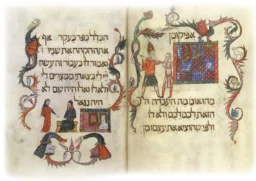
    The phrase “in every generation” appears in two different places in the Hagaddah, but with two very different meanings: “In every generation” they rise up to destroy us, and the Holy One, Blessed be He, delivers us from their hands. But we are also told that “in every generation” we are to liberate ourselves from slavery, which means that we’re also obligated to relieve ourselves of any hate, and fear, towards those who wronged us. Those two “in every generations” clash. Too much focus on one the first (our enemies) undermines our ability to do the second (overcoming hate). Emphasizing the second (no hate) may dull our senses to the reality of the first.

  • Scroll of Esther

    Purim – The Covenant Ratified in Exile

    By Yael Shahar

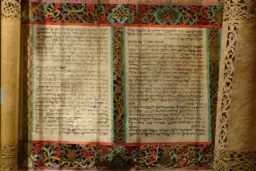
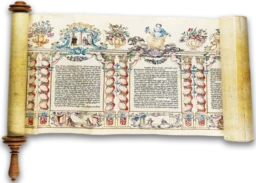
    The rabbis of the Talmud sought to anchor Purim in the Biblical tradition, with varying degrees of success. But one of the most striking rabbinic comments appears in a surprising place: in Massechet Shabbat, we find a curious reference to the events on which Purim is based: “'The Jews confirmed and accepted'—on that occasion they confirmed what they had accepted long before." What exactly, did the Jews living in the Persian exile accept?

  • Menora

    Chanukah, the Jews, and the Nature of Anti-Semitism

    In Israel & Zionism and The Jewish Year

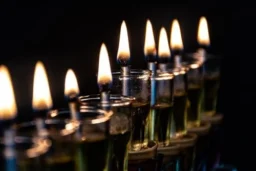
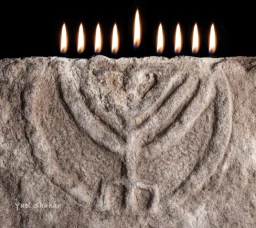
    It must have been an extraordinary experience when the Kohanim in the days of the Chashmonaim suddenly realized that a tiny amount of oil which should have lasted for only one day would last for eight days. A solemn terror must have overtaken them. This is the foundation of genuine religiosity; the dawning of awareness that all things cannot be explained by the ordinary. It is radical amazement, which shatters the commonplace and makes us realize that our wisdom is sometimes inferior to dust. And so it is with the Jews. Like the Chanukah lights, they keep on reminding the world that there is exceptionality, which transcends history and ordinary human accomplishments.

  • Lulav and Etrog

    Dancing over the Abyss

    By Yael Shahar

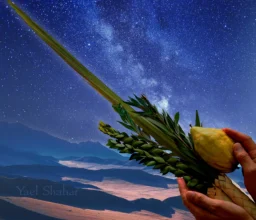
    While other holidays are said to be times of joy as well, Sukkot is singled out in particular by the Torah (D'varim 16:15): "You shall be altogether/only joyful." But can we ever be "only" joyful? Is there ever a time when we are completely without other emotional states? Is the Torah asking of us the impossible?

  • The Shofar, my Grandchildren, and the Sound of the Great Lion

    In The Jewish Year

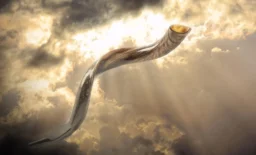
    We are God’s stake in human history and we could not make a greater mistake than to believe that we could ever be a nation like other nations. This is our great challenge. Will we remain complacent, letting the shofar sit in the cupboard, never daring to go beyond ourselves? Or will we have the nerve to blow the shofar and produce something which surpasses ourselves?

  • The Day after the Shabbat – What an ancient controversy teaches us about nation-building

    By Yael Shahar

    Shavuot is one of the three Pilgrimage Holidays mandated by the Torah, and yet the text tells us very little about the holiday or how it is to be observed. Even the date on which it is celebrated is left undefined, leading to intense debate among rival factions during the Second Temple era. In fact, this controversy was part of a much larger debate which threatened to split the Jewish nation along sectarian lines. The split hinged on a major difference of opinion over the nature of Jewish society and its foundation texts: Is the Torah a fixed text, unchangeable for all time, or is it a living document meant to be reinterpreted in the light of changing circumstances?

  • The Betrayal of Freedom – Yom Ha’atzmaut 2024

    In The Jewish Year

    The Jewish Tradition has two different words for freedom: “Chofshiut” and “Cherut”: Chofshiut means to be free from physical bondage, such as when a slave becomes free from his master. While he is physical free, he is not morally free. True freedom is found only within the rule of moral law. The State of Israel should give birth to moral liberty, not just physical freedom. Physical freedom can be lost when others take it away, but moral freedom can never be stolen, since it is found in the heart and deeds of those who commit to higher aspirations as found in the Jewish Tradition.

  • The Wisdom of the Wicked Son

    In The Jewish Year and Passover

    As Pesach approaches, there is something very important that we must understand. It is that the wicked son in the Haggada is in fact the wisest and most honest of the four sons. Why? Because he is the one who is asking the most important question of all!

  • The Book of Esther as Political Critique

    By Yael Shahar

    While the Book of Esther bears all the literary marks of a fairy tale, the underlying themes are far from trivial: At what point does a ruler become unfit to rule? When is civil disobedience not only allowed, but imperative? Why continue to believe in social justice in a seemingly unjust universe?

  • Escaping the Luxury of Powerlessness: A cautionary tale

    By Calev Ben-Dor

    A curious midrash on the Megillah examines the attraction - and dangers - of exile. The powerlessness of exile can free us from the difficult moral decisions of sovereignty. But this freedom from guilt comes at the price of our ability to control our circumstances.

  • A Light on the Threshold: The unwritten message of Hanukah

    By Yael Shahar

    To the question “What is Hanukkah?” the Talmud doesn't give us the answer we expect. We're told only that when the victorious Maccabees rededicated the Temple, the sole remaining jar of ritually pure olive oil for the menorah sufficed for eight days. Why no mention of the military victory over vastly superior forces and the resurrection of an independent Jewish state? Why does the Talmud leave so much out?