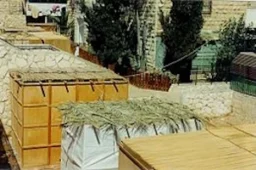
The Paradox of Sukkot
Nothing is more crucial for the religious personality than the question as to whether there is a God we can trust and rely on. Often, even one who believes that God exists may still wonder whether he can have faith in Him.

Nothing is more crucial for the religious personality than the question as to whether there is a God we can trust and rely on. Often, even one who believes that God exists may still wonder whether he can have faith in Him.
Tisha B’Av, the ninth day of the Hebrew month of Av, is often misunderstood—for Tisha B’Av is frequently perceived as a day of victimization, the date both Temples were destroyed and the Jewish People was transformed into a nation of eternal victims. If this was true, there would be no purpose to Tisha B’Av. If […]

Shavuot 5783/2023 Hallelujah: Do You Live The Divine Song? (Inspired by Leonard Cohen) Now I have heard of a secret chord That Moshe learned and it pleased the Lord, And he brought it down in human words, But its essence stayed up in the Heavenly Court. Above it is fire, Below it are letters, The […]
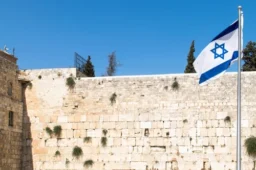
There is no logic to the State of Israel and it is no foundation for commonplace, Nor is it habit, or routine. Israel is a marvel and unique - we must never forget its Jewish and religious basis.
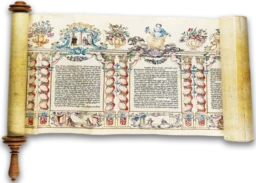
Attaining the Level of Non-Acquaintance—Pseudo-Dionysius, the Areopagite The most discussed topic in philosophy of the Middle Ages is, without doubt, God’s existence. Many great philosophers such as Rambam (Maimonides, 1138-1204) and the Christian thinker Thomas Aquinas (1225-1274) invest a lot of time in clarifying the concepts of “omnipotence,” “divine excellence” and other such terminologies.[1] […]
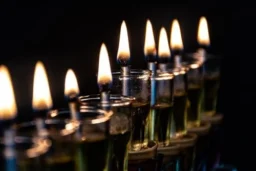
The menorah of Chanukah, sometimes called the chanukiah, has its roots in the menorah of the Temple. While there are many halakhot (laws) regarding the appearance and structure of the biblical menorah, Rashi, the great French commentator, points to a most remarkable halachic feature. Regarding the instruction to arrange the lamps so that they will […]

In Jewish Thought and Philosophy, The Jewish Year and Sukkot
Winter - bleak, dreary and cold - often has a negative effect on our moods and even outlooks. The message of Sukkot, The Festival of Tabernacles, must be continued into this period of darkness and, indeed, into our lives. The Sukkah is a structure that is quite plain and feeble by definition and requirement, and yet it interior and significance are tremendously beautiful and solid. Our lives can be greatly enriched and understood and even assigned deep purpose when we understand the Sukkah.

Traveling through a desert is journeying through a lonely place, completely forsaken. There is neither food nor water, nor any other form of sustaining substance. There is only the unbearable sun and its heat. There is no grass and there are no trees. The only signs of life are deadly snakes and scorpions. In a […]

Religious experiences can be few and far between. It is essential to translate religious experiences into a significant and lasting realities. All religions are born out of the intense feelings, often panic-filled astonishment, that follow such an experience. Jewish Law is a successful "recipe" for maintaining and incorporating religious experiences into our lives.
In Israel & Zionism and The Jewish Year
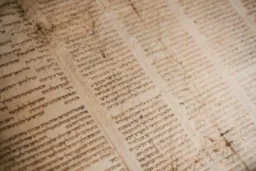
The bond, a marriage, between the People of Israel and its land stretches far back prior to the Declaration of the State of Israel in 1948. This marriage weathered wars, conquest, and exile - and now more than ever it is our duty to maintain and fortify the relationship of every Jew to the Land of Israel and the Jewish State.

In The Jewish Year and Passover
The seder on Pesach night opens with a mysterious practice - dipping a vegetable, "karpas," in salt water and then eating it. This is done immediately following Kiddush, and just as the recital of the Haggada begins. Why was this practice instituted and what does it teach us about the Exodus? Understanding karpas holds the key to understanding Judaism's approach to Pesach and the universal significance of the Exodus.
In The Jewish Year and Purim
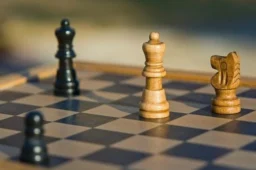
Purim is a festival of tremendous grandeur, splendor... and stupidity! The story of Purim as told in Megillat Esther reveals the arbitrary acts that at once were dangerous and fraught with large risk, and yet concluded as a move of courage and wisdom. Using this unusual strategy can be quite successful in chess...