Skip to content

Parashat Noach

Genesis 6:9-11:32

Parashat Noach portrays a world that has lost its way and the devastating consequences of moral corruption, culminating in the flood. Yet within the destruction lies a covenant of renewal, symbolized by the rainbow — a divine commitment to the continuity of creation. The parashah wrestles with questions of justice, mercy, and whether humanity can truly learn from its past.

  • God and Natural Disasters

    Parashat Noah

    In Jewish Thought and Philosophy, Theodicy and Parashat Noach

    Must we believe that the whole universe was created only to test man’s moral and religious conduct? Is it not be more logical to conclude that God’s reasons for creating the universe are much greater and more significant than the problem of human behavior?
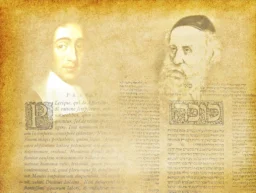
  • Spinoza’s Blunder And Noach’s Misguided Religiosity

    In Baruch Spinoza, Parashat HaShavua and Parashat Noach

    In his Tractatus Theologico-Politicus, Spinoza accuses Judaism of demanding obsessive and outrageous obedience. Parashat Noach teaches us that while Spinoza’s assessment is entirely mistaken, it is a warning to many religious Jews who know nothing other than "negative" obedience as opposed to positive obedience. Judaism teaches us to stand on our own feet and make our own decisions.

  • Man against night sky

    Hearing and Seeing

    In Jewish Thought and Philosophy and Parashat Noach

    Contemplation about the mitzvot without actually fulfilling them makes one deed-deaf. The profound meaning of a mitzvah may only be understood by experiencing it.

  • Israel is Gush Katif

    The Palestinian Claim to Israel

    In Parashat Noach

    Although nobody can fathom the workings of the mind of God, from a religious point of view we must ask whether this silence and ambivalence are not the result of divine interference. Could we be losing our grip on this land because we have lost our way as the people of God?

  • Jewish Tradition and the Intifada

    Part 1 of a Two-Part Essay

    In Parashat Noach

    As religious people we are asked to look for the deeper meaning of world history, since our belief is that God has a hand in the unfolding of history. We consult biblical and Talmudic sources, examining them and drawing conclusions. Above all, we must try to discover the moral lessons from these texts that inspire us to be better human beings and Jews.

  • Palestinian’s Claim to Israel

    In Contemporary Issues and Parashat Noach

    In Tractate Sanhedrin (91a), we read about a most relevant story which took place in the days of Alexander of Macedonia, known as Alexander the Great (4th century before the common era.) Just after Moshe' death, when Yehoshua entered the land of Israel together with his people, there were seven tribes, hostile to the Jews, occupying the land.