Skip to content

Parashat HaShavua

  • War and the Challenge of Conscience

    In Contemporary Issues, Parashat HaShavua and Parashat Shelach

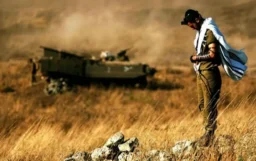
    In Parashat Shelach, the spies feared giants. But perhaps what they truly feared was the moral burden of destiny. In this deeply personal and timely reflection, Rabbi Nathan Lopes Cardozo explores the tragedy of justified war, the conscience of a chosen people, and what it means to be holy in a world that demands violence.
  • The Book Between the Books Thoughts on Parashat Beha’alotecha

    In Parashat HaShavua and Parashat Beha'alotcha

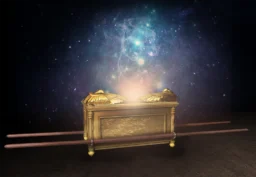
    Why do the Jewish people exist outside of history? What does it mean for a book of the Torah to contain a ‘book within a book’? In Parashat Beha’alotecha, we explore a deeper view of identity, memory, and Divine presence—through the Ark, the wilderness, and two verses that upend everything we know about linear time.

  • The Sotah Ritual

    The Trial That Should Not Have Been – Reflections on the Sotah Ritual in Parashat Naso

    In Parashat HaShavua

    One of the most disturbing and mystifying rituals in the Torah appears in Parashat Naso: the case of the Sotah—the woman suspected by her husband of adultery. This ritual, unparalleled in Torah law, is effectively a trial by ordeal, the only one of its kind in Judaism. Trial by ordeal—a practice associated with medieval Europe’s witch hunts—is rejected by Jewish legal tradition as both primitive and dangerous. And yet, here it is, near the beginning of Sefer Bamidbar.  What is this strange ritual all about?

  • Order in the Wilderness: Hierarchy, Resistance, and the Fragile Dream of Nationhood

    In Parashat HaShavua

    In Parashat Bamidbar, the Israelites stand on the brink of transformation. From a loose confederation of tribes defined by kinship, they are now being reshaped by Moshe into a disciplined and hierarchically organized nation. The census, or pikud, is more than just a count—it is the foundation for creating a centralized government, establishing an army, assigning roles, and imposing a nascent form of taxation and bureaucracy. But did the Israelites truly accept this imposed order?

  • A House Divided – A warning for our time

    By Yael Shahar

    In this week’s parashah, Yaakov, now the head of a large family, heads home to the land of Canaan after living for two decades in the house of Lavan. During those years, he has gone from being an “innocent” tent-dweller to becoming a savvy man of business. Having deceived his father and stolen his elder brother’s blessing, he has been deceived in his turn, having been given the elder daughter in marriage before the beloved younger. He has come full circle. But there are hints that Yaakov has still to learn one crucial lesson: the price of fatherly favoritism.

  • The Merit of Isaac’s Ashes

    By Calev Ben-Dor

    The theme of ashes, (efer / עפר) plays a role in two stories in this week’s parsha. Abraham uses the term when entering into negotiation with God to spare the city of S’dom. The other mention of ashes is in the Akeida, where Abraham is commanded to take his beloved son Isaac to Mount Moriah and offer him as an olah, a burnt offering. The story not only fascinated traditional commentators but modern Israeli and Zionist thinkers too. What does this story mean for us today?

  • Parashat Chukat – The Red Heifer and the Meaning of Life

    In Parashat HaShavua

    This week’s parashah opens with the perplexing law of the Red Heifer, whose ashes purify one who has come into contact with the dead. This strange ritual requires that “a red cow without blemish, in which there is no defect and on which no yoke has been laid” be slaughtered, then burned and its ashes mixed with water. This water would be held in reserve to be sprinkled over an individual who had come into contact with a corpse and was consequently ritually “impure”. Even stranger is the fact that the priest who prepares this purifying water, by his involvement with the preparation process, become impure! This law is held up as the exemplar of a “Chok”—a commandment for which no obvious rationale can be found. Such a law is very different from the “Mishpatim”—those commandments whose moral or intellectual underpinnings are clear and reasonable. What are we to make of this “irrational law” of the Red Heifer?

  • Parashat Midbar – Beyond the I-We Dichotomy

    By Yael Shahar

    Sefer BaMidbar is the story of a great test: Can the disparate tribes of Israel put into practice the lessons learned during the revelation at Sinai and the subsequent building of the Mishkan. Can they forge themselves into a nation capable of conquering their ancestral homeland and building a just and lasting society?

  • Shemita – The Blessing which can turn into a Curse

    In Parashat HaShavua

    After God commands the Israelites to leave the land barren in the seventh year and not work it, God tells them that they should not worry that they will not have food in the seventh year and the following ones, because He will bless the sixth year with a crop sufficient for three years. With the establishment of the State of Israel God has not re-introduced the blessing of the sixth year. The law is still a rabbinic one, and thus it is possible to apply leniencies to make it easier to observe the shemita law. The question is: why has this blessing of abundance in the sixth year not been renewed?

  • Parashat Sh’mini – The Danger of Negating a Miracle

    By Yael Shahar

    Parashat Shmini: What was the crime of Nadav and Avihu, who were consumed by divine fire while offering incense? It turns out that by comparing this incident with a later one, in which Moshe strikes a rock to bring forth water, we can learn a lot about miracles, holiness, and leadership.

  • Spinoza, the Alter Rebbe, and the Eternal Fire

    In Baruch Spinoza, Jewish Thought and Philosophy, Parashat HaShavua and Parashat Tzav

    The Talmud states that all the sacrifices were consumed by a heavenly fire, not by the fire lit by the Cohanim. This seems to imply that there was absolutely no need to keep the human fire on the altar burning so as to consume the sacrifices. So why were the Cohanim commanded to keep the fire on the altar lit? It seems that an answer may be found in contrasting the teachings of two very different thinkers--Spinoza, who famously did not believe in miracles, and the Alter Rebbe, who believed the existence itself is a miracle.

  • Parashat Vayakhel – The Limits of Creation

    By Yael Shahar

    This week's parashah opens with an odd juxtaposition. Just before explaining to the Israelites how the Mishkan is to be constructed, Moshe pauses to exhort the people to sanctify the Shabbat. Why is the commandment of the Shabbat inserted here? The usual answer is that building the Mishkan—as important as it is—nevertheless does not over-ride the prohibition of work on Shabbat. But this only puts off the question: why are we are told to sanctify the Shabbat by ceasing all creative work on that day?