Skip to content

Parashat HaShavua

  • Traveling to Home Base and Eternal Life

    In Parashat HaShavua

    When confronted with death, our first reaction is consternation. We are stunned and broken. But slowly, our sense of shock gives way to a feeling of mystery. The mysterium magnum enters, and a new perspective makes itself known as a kind of revelation and elevation. Suddenly, our whole life, which we knew so well, gradually becomes concealed behind a great Secret. Our speech is silenced. Our understanding fails. There is only awe for the Other.
  • Kohanim: The Challenge of Educational Dissent

    In Education and Parashat HaShavua

    Living Judaism must be able to stand up against ideas that are highly un-Jewish and at the same time be open to new ideas. But this can be achieved only by fostering a notion of spiritual dissent rooted in eternal ideas that have the capacity to re-invent themselves. It can be accomplished only by radical thinking and audacity informed by deep learning and faith.

  • The Unchallenged Holiness of the Jew: A Dangerous Claim

    In Jewish Thought and Philosophy and Parashat HaShavua

    When contemplating the re-establishment of the State of Israel after nearly 2000 years of exile, no Jew should believe that the land is guaranteed to remain theirs forever. It could easily be taken away, as it has been in the past. If its inhabitants do not behave properly. If they hide behind the claim that they are observant or moral, while in fact they are fighting each other and disobeying the ethical dictates of God, the Book of Amos makes it clear that the State of Israel will not endure. Nor can we hide behind the abundance of Torah learning today to save us.

  • Parashat VaYikra: The Trouble with Sacrifices

    In Baruch Spinoza, Parashat HaShavua and Parashat Vayikra

    We need to ask ourselves a pertinent question: Is our aversion to sacrifices the result of our supreme spiritual sophistication, which caused us to leave the world of sacrifices behind us? Or, have we sunk so low that we aren’t even able to reach the level of idol worshipers who, however primitive we believe them to have been, possessed a higher spiritual level than some of us who call ourselves monotheists?

  • The Tent of Meeting and Johann Sebastian Bach

    In Parashat HaShavua and Parashat Vayakhel

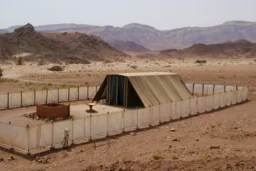
    The divine instructions relating to the building and the architecture of the Mishkan (Tabernacle) are laid out in great detail; not even the smallest nuance is excluded, and nothing is left to human imagination. Preciseness stands out, and every pin and string is mentioned. This is in total opposition to the spiritual condition and devotion required of every Israelite when helping to erect the Mishkan, which called for personal input, creativity and inspiration. How do we reconcile these contradictions: formality versus spontaneity; total commitment to the letter of the law versus unprecedented emotional outbursts of religious devotion? Are such notions not mutually exclusive and irreconcilable?

  • Sinai Now!

    In Parashat HaShavua

    Learning Torah is equivalent to standing at Sinai. Learning Torah is hearing it and consequently seeing its contents transmitted at Sinai in the here and now. So the learning of its text is a religious happening, the experience of something that normally can only be recalled.

  • Parshat Shemini – Are You Really Eating Kosher?

    In Education, Halacha, Parashat HaShavua and Parashat Shemini

    Kosher animals, as is well known, can be identified by two simanim (physical signs). They must chew their cud, and their hooves must be wholly cloven. (2) In order to be kosher, the animal must possess both simanim. The Torah goes out of its way to emphasize the fact that an animal in which only one sign is present cannot be considered kosher in any way.

  • The Threat of Freedom

    A historical lesson from the Exodus

    In Parashat HaShavua, The Jewish Year, Parashat Bo and Passover

    When reading the story of the Exodus from Egypt, we are confronted with a strange phenomenon: the mashchit (destroyer). What was this mysterious threat?

  • The Religious Scandal of Akeidat Yitzchak and the Tragic God Parashat Lech Lecha

    In Jewish Thought and Philosophy and Parashat HaShavua

    What is Avraham to do now? Should he rescue God from Himself and refuse to have a hand in this suicide attempt? Or should he perhaps become an atheist? After all, such a God cannot exist! But Avraham chooses neither of these options.

  • The Inescapable Obligation to Care For the Wicked

    By Yael Unterman

    If you were Abraham, would you have interceded for Sodom? Do you think that he was delighted at the existence of an entire city filled with evil as Sodom was? This man who the midrash describes as cursing the builders of the Tower of Babel for caring more for the loss of bricks than of human laborers? The answer is no, undoubtedly their behaviour nauseated him; yet still he tried to salvage it through the presence of ten righteous inhabitants.

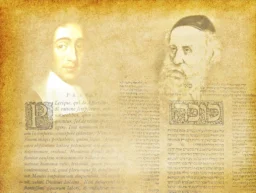
  • Spinoza’s Blunder And Noach’s Misguided Religiosity

    In Baruch Spinoza, Parashat HaShavua and Parashat Noach

    In his Tractatus Theologico-Politicus, Spinoza accuses Judaism of demanding obsessive and outrageous obedience. Parashat Noach teaches us that while Spinoza’s assessment is entirely mistaken, it is a warning to many religious Jews who know nothing other than "negative" obedience as opposed to positive obedience. Judaism teaches us to stand on our own feet and make our own decisions.

  • Racism and Gentile Wisdom

    In Parashat HaShavua and Parashat Yitro

    The Israelites' experience of slavery had made them utterly convinced that mankind at large was anti-Semitic. God therefore sent them a righteous gentile by the name of Yitro, to impress upon them that the non-Jewish world includes remarkable people, who not only possess much wisdom but actually love the people of Israel and contribute to Jewish life.