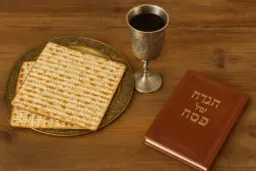
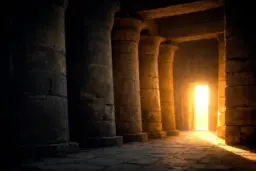
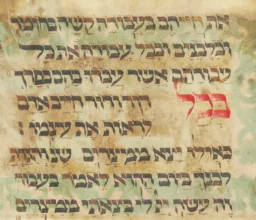
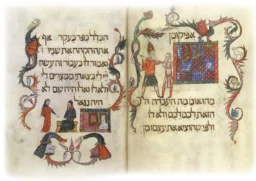
Pesach celebrates freedom, without romanticizing it. Liberation from Egyptian slavery is swift and dramatic, but living with freedom brings new challenges. The hurried exodus leaves no time for certainty, only for trust. Matza becomes the bread of unpreparedness, reminding us that genuine freedom is unsettling and often resisted. Pesach insists that redemption is not the end of responsibility but its beginning, confronting us with the frightening question of what we will do with a life no longer ruled by oppression.
The Torah remembers Egyptian slavery not as a wound to be mourned, but as a moral summons. Why does Jewish memory refuse to linger on victimhood—and instead demand responsibility toward the stranger?
The phrase “in every generation” appears in two different places in the Hagaddah, but with two very different meanings: “In every generation” they rise up to destroy us, and the Holy One, Blessed be He, delivers us from their hands. But we are also told that “in every generation” we are to liberate ourselves from slavery, which means that we’re also obligated to relieve ourselves of any hate, and fear, towards those who wronged us. Those two “in every generations” clash. Too much focus on one the first (our enemies) undermines our ability to do the second (overcoming hate). Emphasizing the second (no hate) may dull our senses to the reality of the first.
As Pesach approaches, there is something very important that we must understand. It is that the wicked son in the Haggada is in fact the wisest and most honest of the four sons. Why? Because he is the one who is asking the most important question of all!
The seder on Pesach night opens with a mysterious practice - dipping a vegetable, "karpas," in salt water and then eating it. This is done immediately following Kiddush, and just as the recital of the Haggada begins. Why was this practice instituted and what does it teach us about the Exodus? Understanding karpas holds the key to understanding Judaism's approach to Pesach and the universal significance of the Exodus.
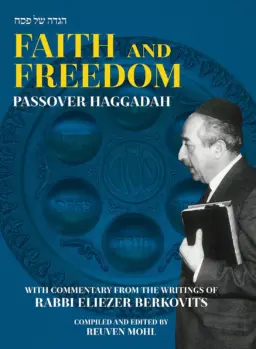
Book Review: The Passover Haggadah of Rabbi Dr. Eliezer Berkovits
It is a great joy to study Faith and Freedom: Passover Haggadah, With Commentary from the Writings of Rabbi Eliezer Berkovits. In this Haggadah, not only do we find very interesting insights by Rabbi Berkovits on themes that relate to Pesach, but we also get somewhat of an introduction to his philosophy and unique halachic approach in general.
Pesach: God’s Sporadic Presence and Overwhelming Absence in Human History
Contrary to what is commonly believed, the story of the Exodus was mainly one of Divine silence, in which only occasionally a word of God entered the human condition. While Pesach Haggada relates the miracles, the “empty spaces” in between tell us of a frightening Divine silence of some 38 years. And just as our forefathers must have often wondered where God was all those years, so do we. But just as they made it through, so must we.
Why is it prohibited to eat or to possess chametz (leaven) on Pessah? What is there in the nature of leaven that makes it forbidden, and why only on Pessah? The Talmud offers an insightful answer.
When reading the story of the Exodus from Egypt, we are confronted with a strange phenomenon: the mashchit (destroyer). What was this mysterious threat?
No nation or religious movement can live in isolation, nor should it. It needs to develop inner strength so that it can open itself up to other cultures and ideologies without losing its own identity.
Judaism is the art of making a problem out of every solution. It correctly believes that what is taken for granted is boring; it does not get our attention and therefore has no significance. Only when we see something as a challenge and give it thought do we come alive. A sense of duty reflects awareness that the trivial is critical. There is no growth except in the fulfillment of one’s duty.