Skip to content

Purim

The Festival of Hidden Miracles

Purim is the unsettling festival where God remains hidden and all certainty disappears. There are no open miracles, only human decisions made under pressure, risk, and moral ambiguity. Salvation emerges not through prophecy or revelation, but through courage, timing, and the willingness to act without guarantees. Purim reminds us that responsibility does not vanish when God is silent. On the contrary, it intensifies. Faith here means acting decisively in a world where meaning is concealed and outcomes are never assured.

14 Adar 5786

Begins at Sundown on Monday, March 2, 2026

Ends at Nightfall on Tuesday, March 3, 2026

  • The Honor of Being Hated

    In Book of Esther and Purim

    Purim confronts us with an uncomfortable truth: perhaps the Jewish mission was never meant to win universal approval. Mordechai’s refusal to bow was not stubbornness—it was identity. In a world that prefers conformity, Jewish distinctiveness can feel dangerous. But what if the real honor is not in being loved by everyone, but in being hated for the right reasons?

  • Amalek – A Warning Against Injustice

    In Purim

    The Torah demands of the Jews: “You shall erase the memory of Amalek from beneath the heavens. You shall not forget.” This commandment seems to be a paradox: How can we erase the memory of Amalek if we are not allowed to forget what he did? However, it is very possible that the Torah is laying upon us the obligation to uproot from within ourselves the ways in which our ancestors dealt with the ancestors of Amalek. “Do not forget” that this behavior was unjustified and consequently caused ongoing pain to this people, and consequently to the People of Israel.

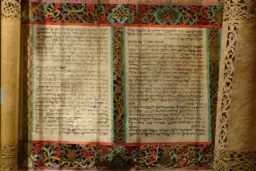
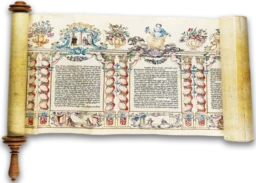
  • Scroll of Esther

    Purim – The Covenant Ratified in Exile

    By Yael Shahar

    The rabbis of the Talmud sought to anchor Purim in the Biblical tradition, with varying degrees of success. But one of the most striking rabbinic comments appears in a surprising place: in Massechet Shabbat, we find a curious reference to the events on which Purim is based: “'The Jews confirmed and accepted'—on that occasion they confirmed what they had accepted long before." What exactly, did the Jews living in the Persian exile accept?

  • The Book of Esther as Political Critique

    By Yael Shahar

    While the Book of Esther bears all the literary marks of a fairy tale, the underlying themes are far from trivial: At what point does a ruler become unfit to rule? When is civil disobedience not only allowed, but imperative? Why continue to believe in social justice in a seemingly unjust universe?

  • Escaping the Luxury of Powerlessness: A cautionary tale

    By Calev Ben-Dor

    A curious midrash on the Megillah examines the attraction - and dangers - of exile. The powerlessness of exile can free us from the difficult moral decisions of sovereignty. But this freedom from guilt comes at the price of our ability to control our circumstances.

  • Parashat Tetzaveh – Amalek and Modern Antisemitism

    By Yehoshua Looks

    God has made two unconditional promises to the Jewish people: one that we are eternal, that we will not disappear; and the second that He will ultimately redeem us. Unfortunately, He has also warned us that a certain kind of irrational hatred will be our lot throughout the generations.

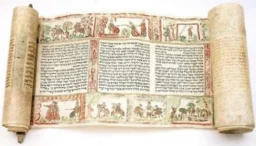
  • Scroll of Esther

    Megillat Esther: Attaining the Level of Non-Acquaintance

    In Jewish Thought and Philosophy, The Jewish Year and Purim

    Attaining the Level of Non-Acquaintance—Pseudo-Dionysius, the Areopagite   The most discussed topic in philosophy of the Middle Ages is, without doubt, God’s existence. Many great philosophers such as Rambam (Maimonides, 1138-1204) and the Christian thinker Thomas Aquinas (1225-1274) invest a lot of time in clarifying the concepts of “omnipotence,” “divine excellence” and other such terminologies.[1] […]

  • chess board

    Purim, or How to Win a Chess Game

    In The Jewish Year and Purim

    Purim is a festival of tremendous grandeur, splendor... and stupidity! The story of Purim as told in Megillat Esther reveals the arbitrary acts that at once were dangerous and fraught with large risk, and yet concluded as a move of courage and wisdom. Using this unusual strategy can be quite successful in chess...

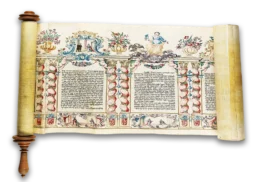
  • Megillat Esther

    The Eternity of Purim

    In The Jewish Year and Purim

    The Purim story, as depicted in Megillat Esther, is miracle-less. Certainly as the events were unfolding the hand of God is absent, and it is only the keen reader who will identify the divine intervention as the drama that threatened the very existence of the Jewish People unraveled. God's covert involvement in the world is extremely difficult to ascertain, and yet it surrounds us every moment of every day, and like the Festival of Purim, will be celebrated for all eternity.

  • The Challenge of Purim and the Coming of the Mashiach

    In The Jewish Year and Purim

    Redemption does not happen overnight; it develops over a long period of intermediate hester panim, until the last stage in the drama of history is fulfilled. The story of Purim reminds us that such periods when God "hides" from us are temporary. It gives us a framework in which to understand our lives and remain optimistic, even in the midst of darkness.

  • Megillat Esther

    In Book of Esther and Purim

    In this lecture, Rabbi Cardozo presents Megillat Esther as a radical meditation on divine hiddenness, moral courage, and Jewish survival, showing how faith is forged not through miracles, but through human responsibility in a seemingly godless world.

  • Purim – Serious Reflections on the Proper Use of Alcohol

    In The Jewish Year and Purim

    Some appropriately irreverent thoughts to...well, no, not to ponder on the occasion of Purim.