A Protest Against Indifference
In Rosh Hashanah and Yom Kippur
Rosh Hashana and Yom Kippur are a protest against the most dangerous of all human character traits: the curse of indifference—they are a protest against taking life for granted.

The Jewish New Year
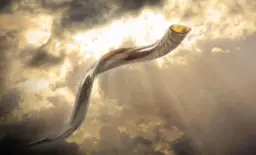
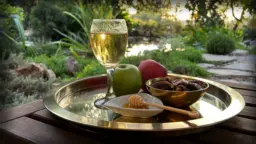
Rosh Hashanah, the Jewish New Year, is a protest against indifference. On this day we are summoned to recognize that our lives are utterly undeserved and fragile, yet unbearably precious. The shofar’s cry shakes us from apathy and calls us to live with astonishment and gratitude, to acknowledge that our lives convey upon us the heavy responsibility of managing its gifts with care, with wonder, and with moral urgency.
1 Tishrei 5787 – 2 Tishrei 5787
Begins at Sundown on Friday, September 11, 2026
Ends at Nightfall on Sunday, September 13, 2026
In Rosh Hashanah and Yom Kippur
Rosh Hashana and Yom Kippur are a protest against the most dangerous of all human character traits: the curse of indifference—they are a protest against taking life for granted.
The Curse of Indifference
In The Jewish Year, Rosh Hashanah and Yom Kippur
Our greatest challenge is that, living under miraculous conditions through no merit of our own, we fall prey to the curse of indifference--indifference to the miserable and impossible situation of our fellow humans who are threatened by suffering and death.
In The Jewish Year and Rosh Hashanah
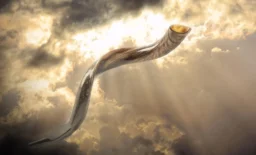
It is Divine humor that tells us to live with absurdity, and supreme holy witticism that asks us to live with laughter. We are asked to enjoy the journey and realize that there is no arrival.
In The Jewish Year and Rosh Hashanah
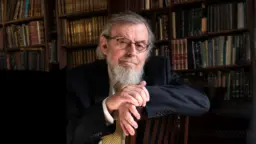
Every ordinary act should be turned into a kind of mitzvah, a spiritual challenge, making it a dignified encounter with God. On Rosh HaShanah and Yom Kippur we are reminded that our deeds must redeem God’s presence and rescue Him from oblivion. In doing the finite we must be able to perceive the infinite.
In Jewish Thought and Philosophy, The Jewish Year and Rosh Hashanah
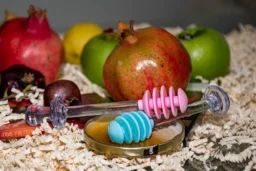
Something strange happens on Rosh Hashana. We spend hours declaring God’s majesty, using poetic and unique phrases. We refer to Him as the Ultimate King and Mover of this world. We ask Him to strengthen and reinforce His relationship with us and show us His omnipotence.
Is Judaism Your Supreme Passion?
As we approach Rosh Hashana and ask ourselves what we should do to become better Jews— not just as individuals but also as a community—we must realize the need to change our attitudes and not just our deeds.
A Matter of Seduction
In The Jewish Year and Rosh Hashanah
What does the haftarah of Shabbat Shuvah mean when it suggests that we should use words of seduction at the time of Rosh Hashana and Yom Kippur to aid in the process of teshuva? Why should we utter words that are not entirely truthful?