Skip to content

Thoughts to Ponder

Thoughts to Ponder is a weekly invitation to think dangerously and question passionately. Drawing on the Torah portion, classical Jewish sources, philosophy, and the crises of contemporary life, Rabbi Cardozo challenges religious complacency and spiritual comfort. These essays are written for readers who seek a Judaism that disturbs, questions, and ultimately deepens the human encounter with God and responsibility.

  • Is Halacha Always Indispensable?

    The Tent of Meeting and the Danger of Organized Religion

    In Halacha and Parashat Pekudei

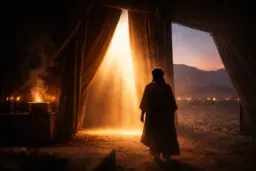
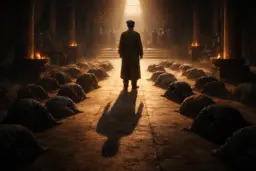
    After the sin of the Golden Calf, something fundamental changed in Judaism. According to several classical commentators, the Mishkan and the expansion of mitzvot may represent a Divine concession to human weakness. Could it be that the elaborate structure of Jewish law emerged as a Divine response to human spiritual fragility? But what happens when religion becomes routine? It’s quite possible that Halachah, while indispensable for most, might also carry unexpected risks.
  • Shabbat and the Holiness of Life

    In Parashat Ki Tisa and Shabbat

    Which is holier: the Temple, Shabbat, or a human life? The Torah’s answer is startling. By forcing us to suspend even the holiest acts for the sake of life, it reveals a radical truth: the ultimate sanctuary is the human being.

  • The Honor of Being Hated

    In Book of Esther and Purim

    Purim confronts us with an uncomfortable truth: perhaps the Jewish mission was never meant to win universal approval. Mordechai’s refusal to bow was not stubbornness—it was identity. In a world that prefers conformity, Jewish distinctiveness can feel dangerous. But what if the real honor is not in being loved by everyone, but in being hated for the right reasons?

  • The Ark and Quantum Theory

    The Unknown Unknown

    In Parashat Terumah

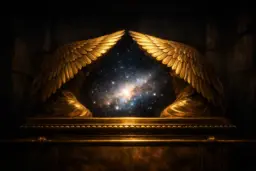
    What if the most powerful voice in the universe comes from nowhere? In Parashat Terumah, God speaks not from the golden cherubim atop the Ark — but from the space between them. Modern physics now tells us that reality itself may emerge through observation. Could the Torah have anticipated something even more radical — that ultimate truth resides not in what we see, but in the mysterious “in between”?

  • Where Was God in the Egyptian Holocaust?

    In Parashat Mishpatim and Passover

    The Torah remembers Egyptian slavery not as a wound to be mourned, but as a moral summons. Why does Jewish memory refuse to linger on victimhood—and instead demand responsibility toward the stranger?

  • A Challenge to All of Us

    Would You Decide to Become Jewish?

    In Parashat Yitro

    Yitro gave up power, honor, and certainty in his search for truth. But would we choose Judaism if we were not born into it? Yitro challenges both the religious and the secular to ask whether their Jewishness is inherited habit — or a courageous, ongoing choice.

  • From Nothingness to Somethingness

    In Parashat Beshalach

    What does it mean to walk on dry land while standing in the midst of the sea? The crossing of the Sea of Reeds can be seen as a miracle of nature, but it can also represent a moment of terrifying becoming. The Torah's description speaks of paradox, the idea that existence itself emerges from nothingness—and that Israel was born precisely in that fragile space between what is no longer and what is not yet.

  • The Art of Redemption

    In Parashat Bo

    Redemption means more than just escaping physical slavery — it is about how we raise our children. Is it ethical to bind a child to a covenant they never chose? Or is denying a higher purpose the greatest injustice of all? True freedom is found not in limitless choice, but in meaningful obligation — and education itself may be the highest form of redemption.

  • God Does Not Exist. So, Let’s Serve Him!

    In Parashat Va'era

    In this week's parashah God announces himself to Moshe: “I appeared to Avraham, Yitzchak and Yaacov as El Shadai, not through my Ineffable Name….” “El Shadai” means: The God of Enough. That name was good enough for Avraham, Yitzchak and Yaacov, who did not experience God in all of His contradictions. But now with the beginning of the Exodus, something has changed. For God to be meaningful to us, He must appear in the world in ways through which we can identify with Him. But God in His essence is something totally different about which we mortals have no clue.

  • Cruelty and Numbers

    In Parashat Shemot

    The Torah and the Midrash describe the Israelites enslavement in Egypt in harrowing detail. Yet many modern scholars insist that it must be exaggerated. It is said to be historically implausible, unsupported by archaeology, psychologically impossible. No society, they argue, could sustain such systematic barbarity. But we have learned, in our own time, how dangerously naïve such arguments are. Both the enslavement in Egypt and the Holocaust are “unbelievable” in exactly the same way: not because they did not happen, but because we desperately wish they had not.

  • Joseph and the Quirks of History

    In Parashat Vayechi

    The story of Joseph is a tale of astonishing coincidences, hidden patterns, and misunderstood events. What appears random and accidental slowly reveals itself as a deep current shaping Jewish history. Meaning emerges only in retrospect — and God’s presence in history is often invisible while we are living it.

  • Generational Awareness

    In Parashat Vayigash

    The Torah relates how Yosef questioned his brothers “Have you a father, or a brother?” Jewish survival depends on the conscious link between earlier and later generations. Rabbi Solovietchik calls this the “mesora community,” a community in which traditions and customs are passed down from generation to generation, not as ancient customs and quaint relics of the past but as living experiences in which we take enormous pride. Thus, Yosef’s question to his brothers had an answer, “Yes, we have a father!”