Rosh Hashana and Yom Kippur. What do these awesome days try to tell us? What are they here to accomplish? Why do we consider these days to be the holiest days of the Jewish year?
These days are a protest against the most dangerous of all human character traits: the curse of indifference—they are a protest against taking life for granted when, in fact, there is no reason for doing so.
The truth is that life is entirely undeserved.
Nobody can claim a right to life, for we have not done anything to deserve it. It is not a reward for earlier good deeds or for any previous accomplishment. It is a gift—completely gratuitously given.
Yet we go about our lives as if we deserve all of it; as if life were a possession, something to which we are entitled. This is a distortion of reality.
It is not only life itself that is undeserved, but also our many faculties and talents. We consider it obvious that we can enjoy food and drink, love music, become artists, read, marry, have children, and receive love. But none of these are owed to us. These are all unearned gifts. We can develop them—or, God forbid, waste them.
We even have the chutzpah, the impertinence, to believe that when things are not going well, we have the right to complain that it is not fair, as though we possess the right to live an ideal existence. On what basis?
In reality, we should feel great anxiety. How can we live with the knowledge that nothing—absolutely nothing—is deserved? How can we enjoy anything while knowing we are not entitled to any of it?
Nothing should be more painful than this appropriate feeling of shame. We should be blushing every moment of our lives. And yet, most of us do not feel such shame; instead, we are disturbed, upset—even annoyed—when life inconveniences us in the slightest manner.
There is only one solution to life’s dilemma: to realize that we are the managers and overseers of our life, not its owners. And management is a difficult and complex art.
We must ask: How can I manage my life so that it does not put me to shame—that the shame of receiving unearned rewards is softened and made less painful?
Gifts obligate. We must discharge some of our debts. Gifts are given for a purpose. They deny the mistaken belief that we may do whatever we want. The more we receive, the more we are obligated to respond in kind.
Gifts delight only as long as we can recompense for receiving them, showing appropriate appreciation by living a life that measures up to the gift. Socrates taught that an unexamined life is not worth living. Judaism teaches that a life without astonishment is not worth being born for.
If we fail to recalibrate our lives, their gift becomes the source of pain, leaving us with an inner emptiness that can become traumatic, debilitating. Much of human unhappiness is rooted in this problem. The sense that life has become empty and meaningless is common.
Millions try to compensate by amassing wealth, indulging in food, drink, and sex, only to discover that none of these brings inner fulfillment. Such fulfillment depends on recognizing that the gifts that life affords us have deep meaning and purpose.
Many wait too long to recognize the inherent dangers. A great Chinese philosopher is reputed to have said: “A man whose leg has been cut off does not value the gift of shoes.”
This is the call of the hour on Rosh Hashana and Yom Kippur. They are days which fight apathy by asking us to recognize the call to us for utter appreciation through prayers, celebration and forbearance.
How great would life be if every person—the businesswoman, the artist, the laborer, the professor, the priest, the rabbi—rose each morning with gratefulness and uncompromising amazement that they are alive. Life would look radically different—and be far more joyful.
The morning cup of coffee could become an act of exaltation. How can any human being eat or drink without pausing to contemplate how wondrous and undeserved this daily gift is? Should one not express it in a moment of excitement —“Wow, I am able to drink”?
Why is it that I like coffee? That I can taste? That my body and its senses actually function? Science can tell us what happens and how it happens; it cannot tell us why it happens.
For this reason, our Sages instituted blessings before eating or drinking. A bracha is an expression of astonishment. Instead of saying “Wow!” we say: “Baruch Ata Hashem… shehakol nihyeh bidvaro”—“Praised is God, King of the Universe, Who created all by His word.”
Indeed, how can anyone eat or drink without an expression of utter amazement?
Even a totally non-religious person must pause before his cup of coffee for a few seconds, uttering radical amazement before bringing it to his lips. Anything less compromises our very existence.
This is why we go to the synagogue on Rosh Hashanah, to say our prayers, and to listen to the awesome sounds of the shofar.
It is a place of protest against indifference, where we can learn to be utterly astonished.

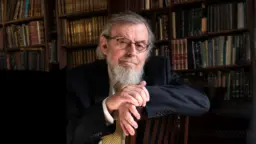
Rabbi Nathan Lopes Cardozo
Rabbi Dr. Nathan Lopes Cardozo is the Founder and Dean of the David Cardozo Academy and the Bet Midrash of Avraham Avinu in Jerusalem. A sought-after lecturer on the international stage for both Jewish and non-Jewish audiences, Rabbi Cardozo is the author of 13 books and numerous articles in both English and Hebrew. He heads a Think Tank focused on finding new Halachic and philosophical approaches to dealing with the crisis of religion and identity amongst Jews and the Jewish State of Israel. Hailing from the Netherlands, Rabbi Cardozo is known for his original and often fearlessly controversial insights into Judaism. His ideas are widely debated on an international level on social media, blogs, books and other forums.