Thoughts to Ponder 817
Ido Pachter’s Introduction to Jewish Law as Rebellion – Conclusion
In Halacha
This essay continues from Part 4, where Rabbi Ido Pachter explained Rabbi Cardozo’s approach to halakha as akin to music and art—something that can be appreciated only from within, and only after honing one’s consciousness to understand. Rabbi Pachter’s explains:
According to Rabbi Cardozo, the problem in the religious world today is that the means have become more important than the goals. Instead of seeing in halacha the notes that produce the music and the lines that generate the painting, halacha has become an end unto itself. Instead of releasing the spirit, halacha has become its prison. Instead of making space for God’s fingerprints in the world, it has usurped His place. The religious person becomes devoted to halacha and strictly adheres to its meticulous demands without even being aware of what it represents and what it is supposed to achieve.
In this last section of the introduction, we see how Rabbi Cardozo’s approach to Halakha works in practice.
Ido Pachter’s Introduction – Conclusion
An example of Rabbi Cardozo’s approach to Halakha
A person with a refined spirit can recognize in the laws of Shabbat a rebellion against the human drive for dominion and a comfortable life. Anyone who opens their eyes can see how the laws of kashrut express a rebellion against gluttony and the obsessive pursuit of pleasure. In family purity, one sees a rebellion against extreme sexual permissiveness. Rabbi Cardozo claims that if there is boredom in the world, it exists primarily among those who place no boundaries on their lives. They chase after excitement to give meaning to their existence, but it is a meaningless pursuit, constantly unfulfilling and lacking in satisfaction. Those who rebel against this tendency—seeking instead to find the depth of existence in what already exists—are the ones who live a life of wonder and continuous excitement. They are the ones who discover meaning.
From these words, it becomes clear that the primary rebellion in halakha is not directed at any particular institution or cultural phenomenon, but rather at the routine of life itself, which draws a person into habit and mediocrity. The essence of halakha is to go against the flow of ordinary life, which threatens to drown us in routine and boredom and accustoms us to what is familiar to us. Halakha elevates a person beyond a routine existence and trains us to find depth and meaning in every action. Through its guidance, all aspects of life gain new perspective, a sense of awe and elevation.
However, for halakha to function in this way, it is not enough to perceive it in this manner and seek such meanings. In certain cases, halakha must be shaped differently from the traditional approach so that it will continue to serve its purpose. One example is the prohibition of stam yeynam, the ban on drinking wine made by non-Jews. In an in-depth article that combines halakhic and philosophical insights, Rabbi Cardozo examines the aims of this prohibition, which was originally meant to distance Jews from the corrupted culture of other nations and to emphasize their moral uniqueness.
But here lies the tragedy of halakha. According to Rabbi Cardozo, the laws of stam yeynam have now achieved their purpose, and those who still observe them “as written” are not only engaging in a meaningless act, but actually act against the purpose of halakha itself. Rabbi Cardozo writes:
When we continue to observe this halakha today, we deny the profound influence of Judaism on the world and humanity.
[…]
At this point, strict observance of the prohibition of non-Jewish wine seems to precent a threat. It suggests that the mission rooted in the concept of redemptive history is counterfeit. This hinders the possibility of developing an effective ideology. Thus, the halakha intended to build a solid and convincing Jewish identity ends up doing the opposite.
If the laws of non-Jewish wine were intended to rebel against the low morals of humanity, they should be abandoned once the revolution has succeeded—as it indeed has. Otherwise, halakha itself becomes pointless, no longer achieving anything meaningful, alienating the younger generation who find no reason to continue the practice. There is no doubt that Rabbi Cardozo’s extensive engagement with this halakha is tied to his personal biography, especially to his unfortunate argument with his brother during a Passover Seder, as described earlier, but this does not diminish the strength of his halakhic and ideological argument. Rabbi Cardozo suggests that instead of focusing on wine, Jewish distinctiveness today should be preserved through education and ideology, which he believes are the strongest motivating forces in the community.
Another example is the chumrot (stringencies) in halakha. Rabbi Cardozo is not opposed to stringencies so long as they do not harm people or any living being. Thus, he advocates establishing a halakhic standard of “Glatt Compassion” alongside that of “Glatt Kosher.” He argues that kosher certification should not be given to any establishment that mistreats animals, and that halakhic authorities should hold their followers to high standards not only in the quality of their tefillin, but also in matters such as extravagant, ostentatious possessions like overly luxurious cars. If the purpose of kashrut is to resist the pursuit of consumption and pleasure, this should be reflected in all aspects of one’s possessions.
More examples of this principle are scattered throughout this book. Rabbi Cardozo believes that not only is it permissible to work on the construction of the light rail on Shabbat, but that it is a mitzvah (commandment) to do so for reasons of pikuach nefesh (saving lives), and that workers should mark Shabbat in their actions. He proposes opening restaurants on Shabbat in a way that does not desecrate Shabbat, and encourages the use of bicycles on Shabbat to reduce car travel. In all these matters, Rabbi Cardozo brings a critical perspective to both halakha and contemporary society, seeking those actions that will serve the goals of halakha itself, to become a force to awaken a dormant world.
Halakha as an evolving force
Another dimension through which Rabbi Cardozo seeks to revive the rebellious nature of halakha is in the way it is taught, and how it evolves. If the purpose of halakha is to awaken the human spirit and teach people to question the status quo, its study cannot be characterized by conformity and obedience. In alignment with the essence of halakha, those who study it should adopt a mindset of resistance, rebellion, and criticism as they engage with it. Rebellious thinkers cannot be cultivated in an atmosphere of obedience, and the pursuit of knowledge cannot flourish in learning that aims to suppress curiosity.
From this perspective, Rabbi Cardozo critiques the major codifications of halakha, such as Rabbi Yosef Karo’s Shulchan Aruch and Maimonides’ Mishneh Torah. While monumental, these works brought misfortune to halakha by reducing it to a fixed, closed list of obligations, cutting off the dynamic and lively discourse surrounding it. According to Rabbi Cardozo, the flourishing of halakha is rooted in the Talmudic dictum “These and these are the words of the living God,” which recognizes the value of disagreement and dissent. In Rabbi Cardozo’s vision, the halakhic beit midrash (study hall) should resemble that of the Talmudic era, where students challenged one another and applied critical thinking not only to their peers but also to the teachings of their rabbis and mentors. Disagreement, he argues, is key to fostering a rebellious spirit in learning.
Rabbi Cardozo does not aim to diminish the authority of the great works of halakha; rather, his goal is to counteract the paralysis they can impose on halakhic thought. Indeed, we know that no single book of halakha has ever encapsulated the entirety of Jewish law without contention. Disputes can be found in every area, and nearly every law in the Shulchan Aruch has been debated in extensive detail by later commentators. As major halakhic authorities, such as Rabbi Nachum Eliezer Rabinovitch, have emphasized, no halakhic text has ever been accepted as the ultimate authority. Later halakhic literature has been synthesized, encompassing a spectrum of disputes and various approaches. Rabbi Cardozo urges students of halakha to immerse themselves in these worlds of disagreement, to be enriched by them rather than leaving their rulings as mere unquestioned facts.
For this reason, Rabbi Cardozo fundamentally disagrees with the Reform and Conservative approaches to halakha. He believes these movements have degraded Judaism by structuring it too rigidly, with a predetermined agenda guiding its direction. “These movements lack the chaos that would make them vigilant and vigorous,” he writes in the book.
Reviving the lost art of wrestling with the text
Indeed, chaos is the most accurate description of Rabbi Cardozo’s vision for the Jewish beit midrash. Rabbi Cardozo aspires to a lively and intense mode of study, where teachers do not uphold conformity and agreement but instead embrace dissent and intellectual freedom. He demands that educators challenge their students’ thoughts and develop within them the capacity to argue against accepted norms. The desire of educators to present certainty, he argues, stifles the search for meaning. “Uncertainty is the stimulus that drives a person to broaden their intellectual horizons. Every concept in halakha should be multifaceted, full of contradictions, opposing views, and unsolvable paradoxes,” he writes in his book.
Rabbi Cardozo has developed this educational approach in the batei midrash and think tanks he established. However, one must acknowledge that this remains a distant vision, almost impossible for large segments of the Jewish community. Perhaps for this reason, this book serves as an important call to the contemporary Jewish world—if only as a caution to the educators and halakhic teachers who are content with their current path. Rabbi Cardozo elaborates and substantiates why this path will ultimately fail and why it is far from the authentic nature of both halakha and Judaism. If the Jewish world does not awaken, a significant question looms over its continued relevance.
I hope that this book will fulfill its purpose within the broad Israeli public—both observant and non-observant—reviving the spirit of halakha and restoring its role as a profound and dynamic force in renewing Jewish life. Today, there is no greater mission for the Jewish spiritual world than this, and we owe Rabbi Cardozo immense gratitude for his courage in awakening us to engage in it. May the Holy One, blessed be He, grant him strength and health to continue enriching the Jewish bookshelf with his writings and ideas, in both English and Hebrew, for many years to come.

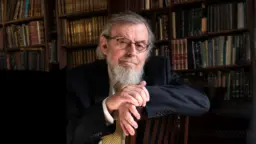
Rabbi Nathan Lopes Cardozo
Rabbi Dr. Nathan Lopes Cardozo is the Founder and Dean of the David Cardozo Academy and the Bet Midrash of Avraham Avinu in Jerusalem. A sought-after lecturer on the international stage for both Jewish and non-Jewish audiences, Rabbi Cardozo is the author of 13 books and numerous articles in both English and Hebrew. He heads a Think Tank focused on finding new Halachic and philosophical approaches to dealing with the crisis of religion and identity amongst Jews and the Jewish State of Israel. Hailing from the Netherlands, Rabbi Cardozo is known for his original and often fearlessly controversial insights into Judaism. His ideas are widely debated on an international level on social media, blogs, books and other forums.