
Skip to content

Thoughts to Ponder

Thoughts to Ponder is a weekly invitation to think dangerously and question passionately. Drawing on the Torah portion, classical Jewish sources, philosophy, and the crises of contemporary life, Rabbi Cardozo challenges religious complacency and spiritual comfort. These essays are written for readers who seek a Judaism that disturbs, questions, and ultimately deepens the human encounter with God and responsibility.

  • Living Like a Jew

    Playing Music and Saying “to Me”

    In Jewish Thought and Philosophy

    Only something placed in relation to the sum-total of the human being bears significance - for such an act indicates complete commitment: “Till death do us part.” This may be the most crucial message for Jews today. Despite the pursuits and activities that occupy them, as long as Jews are not inspired to feel a total, personal commitment to authentic Jewishness, the right conditions for continuity and renewal will never be created.


  • Western Wall

    What Rabbi Shlomo Carlebach Said to the Women of the Wall

    In Contemporary Issues and Liturgy & Ritual

    Our Torah is wide enough and deep enough to cater for everyone. The Torah can speak to each and every person; however, sometimes one aspect will speak to a specific individual while not another. In this impromptu dialogue, Rabbi Shlomo Carlebach expresses a number of very significant, critical thoughts about Judaism, God, the Torah, and our own relations with our fellow.

  • The Wisdom of the Bus Driver: Love Your Fellow As Yourself!

    In Halacha and Jewish Thought and Philosophy

    Loving one's fellow as oneself is a central tenet and practical commandment of our religion. And yet, as simple as it sounds, its application is extremely difficult. Even those well-versed in the intricacies of the significance and laws governing this precept have difficulty incorporating it into their inner selves and actions. On occasion, it takes the insight and words of a bus driver to properly inculcate this love for one's fellow.

  • The Rabbi’s Gift and the Mashiach

    In Jewish Thought and Philosophy

    When my oldest granddaughter became Bat Mitzva I wrote a book for her with advice and stories. Here is one such story.

  • Child with teddy bear on train tracks

    Children’s Toys and Trivializing Torah

    In Jewish Thought and Philosophy

    Human beings are uniquely blessed with the faculty of imagination, and they possess nearly unlimited potential for constructive fantasy. Imagination is essential for advancement and progress throughout the world, which is also the case for Torah study. And yet, the sophistication invested in the production of toys for our children limits their processes of pretense, and thus the possibility for innovation and new insights in Torah learning.

  • The Mystery of the Missing Verse and the Problem of Evil

    In Jewish Thought and Philosophy

    There is a pasuk (verse), missing from the Torah, a verse that is the most important of all—without which the Torah is not complete! This missing verse should have been written before the first verse in the Torah: “In the beginning God created heaven and earth.” This verse should have told us why God “decided” to create heaven and earth, the millions of stars, black holes, animals, vegetation, and above all, human beings. The absence of this verse is deliberate—for there is no way to write it; it could only have been “written” in God’s personal “language” that is beyond the capability of humankind to understand. The implications of this missing verse have profound meaning for human existence.

  • A Short Introduction to God

    In Baruch Spinoza and Jewish Thought and Philosophy

    While in pantheistic and other non-monotheistic philosophies, the Divine has no moral input, nothing could be further from the Jewish concept of God. For Judaism, God is the source par excellence of all moral criteria. And yet, on occasion He Himself seems to violate these very moral criteria — such as in the case when He causes a devastating flood in the days of Noah. God is a conscious Being Who created the world with a purpose. And this world is real and by no means a mirage. The human being’s deeds are of great value, far from an illusion; they are the very goal of creation. Judaism objects to the pantheistic view of the human being since it depersonalizes him, ultimately leading to his demoralization.

  • Parashat Bereshit: The First Divine Commandment is to Enjoy the World

    In Jewish Thought and Philosophy, Parashat HaShavua and Parashat Bereshit

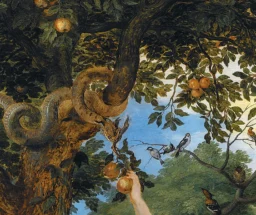
    It is often thought that God’s first commandment to Adam was the prohibition regarding the Tree of Knowledge. This would mean that man’s first encounter with the will of God was a negative experience: a restriction. However, this isn't actually true: This was not the first commandment! Careful analysis of the text shows that the first commandment to Adam and Chava was to eat from all the other trees and enjoy them.

  • Rosh Hashana, Yom Kippur

    The Curse of Indifference

    In The Jewish Year, Rosh Hashanah and Yom Kippur

    Our greatest challenge is that, living under miraculous conditions through no merit of our own, we fall prey to the curse of indifference--indifference to the miserable and impossible situation of our fellow humans who are threatened by suffering and death.

  • Humor, Rosh HaShana, and the Impossible Shofar

    In The Jewish Year and Rosh Hashanah

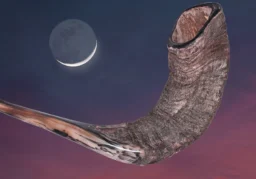
    It is Divine humor that tells us to live with absurdity, and supreme holy witticism that asks us to live with laughter. We are asked to enjoy the journey and realize that there is no arrival.

  • Tractatus Dialogico Philosophico De Faceta – A Modern Humorous Dialogue

    In Jewish Thought and Philosophy

    A humorous look at the problem of human communication. Enjoy!

  • The Map Problem and the Fly

    In Jewish Thought and Philosophy

    Some have said that only what can be proven is of value. True, if we limit ourselves to that which can be proven, we run less risk of error, and yet, by limiting ourselves so, we also run the risk of missing out on that which is most important. After all, the things that bring us the greatest meaning are those very things that cannot be proven.