Skip to content

Thoughts to Ponder

Thoughts to Ponder is a weekly invitation to think dangerously and question passionately. Drawing on the Torah portion, classical Jewish sources, philosophy, and the crises of contemporary life, Rabbi Cardozo challenges religious complacency and spiritual comfort. These essays are written for readers who seek a Judaism that disturbs, questions, and ultimately deepens the human encounter with God and responsibility.

  • Parashat Vayikra – The Challenge Of Tisha B’av And The Temple Sacrifices

    In Jewish Thought and Philosophy and The Jewish Year

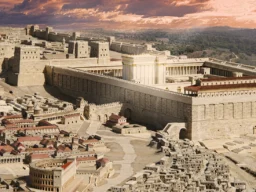
    Regardless of the many traditional approach to offering sacrifices in our day, there is no question that the Temple and its rituals once played an enormous role in Judaism, and that offering sacrifices was at the very center of its holy service. So, what was it that made sacrifices such an essential part of Judaism in bygone times? Was it merely primitivism? Or was it something that we are no longer connected to today and are missing out on? What holiness could there have been in the offering of sacrifices? And were we to discover this holiness, would that mean we should reintroduce the sacrificial rites in our own contemporary times?

  • Belief in the Hereafter

    In Jewish Thought and Philosophy

    Is belief in an afterlife a fundamental tenet of Jewish faith? I personally believe that a human being’s life does not come to an end with death, but I do not believe that this is a fundamental tenet of our faith. In fact, I believe that to consider this as such harms the integrity of Judaism.

  • God as an Idol: The tragedy of being religious

    In Jewish Thought and Philosophy

    It’s high time that we who consider ourselves religious have an honest look in the mirror and ask ourselves what brought us to this lifestyle. Was it a genuine longing for religion and mitzvah observance, or was it an insurance policy?

  • The War between Israel and Hamas

    In Contemporary Issues

    When a nation looses its sense of mission it turns against those who remind them of it. All too often, it is the Jewish nation that earns their hatred with their moral demands and teachings. As a result, these countries call for the destruction of this annoying nation. Its voice, reflecting the One Above, has to be silenced so that the uncertainty of these countries’ conscience and the reality of their guilt can be obliterated.

  • Image by Pezibear from Pixabay.

    Achieving Joy: Be a Simpleton

    In Jewish Thought and Philosophy and Parashat Beshalach

    Joy is not a “peak experience” which climaxes and ends suddenly, but rather a plateau. It is not the ecstatic fire of the moment but the glow of growing from within.

  • Afterthoughts on the Pandemic: the Black Spot or the White Page?

    In Jewish Thought and Philosophy

    The purpose of genuine religious life is to protest against this optical illusion and to teach us to refocus our spiritual spectacles. It is not that religion shows us something new. Rather, it shows us what we have seen all our lives but have never noticed, that there is dazzling goodness in this world. There is order instead of chaos; there is diversity, not just monotonous existence; and above all, there is the infinite grace of the human deed.

  • Conversion is not about Halachah but about Jewishness

    In Contemporary Issues, Converting to Judaism and Jewish Thought and Philosophy

    Judaism and the Jewish people are intertwined and interact in ways which nobody can fully grasp. Are we a religion, or a nation? If we are a religion, how can it be that somebody who does not believe in God or refuses to observe even one commandment still remains Jewish as long as he or she is born to a Jewish mother? And if we are a nation, how does religion come in, telling us who belongs to the nation and who does not? Any attempt to find a solution to this problem will always fail. This is one of the greatest mysteries of Jewish identity.

  • Halachic Jews and Soul Jews

    In Contemporary Issues and Converting to Judaism

    There are probably billions of people who are full-fledged “soul Jews” but don’t know it, and very likely never will. Perhaps it is these Jews whom God had in mind when He blessed Avraham and told him that he would be the father of all nations and that his descendants would be as numerous as the stars in the sky and the grains of sand on the seashore.

  • When Foreign Notions Enter Through the Back Door

    In Contemporary Issues and Parashat Kedoshim

    Due to the long exile of the Jewish people, many Christian ideas have infiltrated Judaism through the back door. One such idea is the notion that saving the soul is more important than saving the body, and that the body is an obstacle to the soul. This idea is completely against the central tents of Judaism, and yet it has been adopted by certain parts of the Chareidi community.

  • The Challenge of Purim and the Coming of the Mashiach

    In The Jewish Year and Purim

    Redemption does not happen overnight; it develops over a long period of intermediate hester panim, until the last stage in the drama of history is fulfilled. The story of Purim reminds us that such periods when God "hides" from us are temporary. It gives us a framework in which to understand our lives and remain optimistic, even in the midst of darkness.

  • Parashat Terumah: On the Tabernacle, Silence, and Prayer

    In Parashat HaShavua

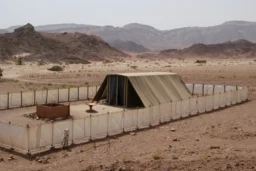
    Some of our greatest commentators have wrestled with the connection between the command to build the Mishkan (the Tent of Meeting or Tabernacle) and the sin of the Golden Calf. It can be argued that the Mishkan was a concession to human weakness, and the same is true of the institution of spoken prayer!

  • A Plea to the Secular and Chareidi Communities

    In Contemporary Issues

    Most of the people in both the secular and the Chareidi communities are deeply committed to their fellow Jews and to the welfare of the State of Israel. And so I ask both communities, why can’t you get on with each other?