Skip to content

Thoughts to Ponder

Thoughts to Ponder is a weekly invitation to think dangerously and question passionately. Drawing on the Torah portion, classical Jewish sources, philosophy, and the crises of contemporary life, Rabbi Cardozo challenges religious complacency and spiritual comfort. These essays are written for readers who seek a Judaism that disturbs, questions, and ultimately deepens the human encounter with God and responsibility.

  • Rosh Hashana: Daring to Blow New Life into Judaism

    In The Jewish Year

    The blowing of the shofar proves that we can surpass ourselves. On our own, using only our vocal cords, we are unable to produce this sound—a terrifying, awesome, penetrating resonance. This is a sound that can cause us to break down, pick ourselves up again, and transform ourselves into new individuals.


  • Musical notes

    Bach, Mozart, and Beethoven: How to be a Genuine Halachic Expert

    In Halacha, Jewish Thought and Philosophy and Parashat Yitro

    To be an arbiter of Jewish law is to be the conductor of an orchestra. It is not coercion but persuasion that makes it possible for the other to hear the beauty of the music and to accept a halachic decision, just as one would willingly listen to the interpretation of a conductor—because one is deeply inspired.

  • Musical notes

    Who can be Mashiach? He who knows how to sing!

    In Jewish Thought and Philosophy

    Music raises the spoken word to a level that touches on prophecy. It gives it a taste of that which is beyond, and transforms it into something untouchable. Just as there is no way to demonstrate the beauty of music to a person who is completely deaf, so is there no way to explain the difference between a spoken word and one which is sung, unless one sings. It lifts a person out of the mundane and gives him a feeling of the imponderable, which is the entrance to joy. It sets the soul in operation and brings us near to the Infinite.

  • Some Bold Ideas How to Observe Shabbat, take the Tram and go to a Restaurant!

    In Halacha

    It is clear a greater number of secular Israelis would like to become more observant. However, for various practical reasons, or due to social pressures, they are unable to make this switch. One of the great challenges, if not the greatest, is Shabbat, the only official day of rest in Israeli society, when people enjoy visiting people, or meeting friends at a restaurant. But none of this is possible without the use of cars or taxis and with no open restaurants. Here are some suggestions to overcome these obstacles

  • Torah: The Confrontation with Ourselves

    In The Jewish Year

    The people of Israel, according to Jewish tradition, are not the authors of the Torah. Rather, the Torah is the author of the people. As a covenant between God and humankind, the Torah is what brought the people into being. Moreover, despite the fact that the people have often violated the commanding voice of this text, it created the specific and unique identity of the Jewish nation.

  • Yom Yerushalayim: The City and People of Eternity

    In The Jewish Year

    A poem for Yom Yerushalayim.

  • The Message of The Corona Virus

    In Contemporary Issues and Jewish Thought and Philosophy

    The new reality in the age of COVID-19 forces us to break with the monotony that most of us are used to. Almost all of us jump into routine every morning – whether it’s a job, or the need to sleep, eat, or entertain ourselves. And now, the corona virus suddenly forces us to rethink everything, making us wonder what this life of ours is really all about.

  • The Perfect Torah Versus the evolving Torah

    Announcing a new initiative by the Cardozo Academy Think Tank: a series of guest essays by Yehudah DovBer Zirkind, based on Rabbi Cardozo's discussion of the Mei Hashiloah, Torah and Halacha.

  • Fundamentalism, Education and The Wisdom of the Gentile

    In Jewish Thought and Philosophy, Parashat HaShavua and Parashat Yitro

    By designating Yitro to be the father-in-law of the most holy Jew of all times, God made it clear that He would not tolerate racism and that a righteous gentile could climb up to the highest ranks of saintliness.

  • chess board

    The Halakhic Chess Game

    In Jewish Thought and Philosophy

    Chess reminds us of the world of Talmudic halachic debate with all its intrigues, its severe obstacles, and its seemingly deliberate tendency to make life more difficult and sometimes nearly impossible.

  • Parashat Bo: Knowing How to Lose

    In Parashat HaShavua

    The secret to Moshe Rabenu's greatness is that he knew that his failures were in fact the building blocks for his future successes. While he may never have known what his accomplishments were, he continued to fight and ultimately prevailed.

  • Rembrandt and the Quest for Integrity

    75 Years After the Holocaust

    In Jewish Thought and Philosophy, Theodicy and Yom HaShoah

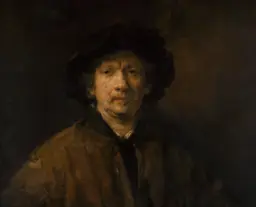
    Rembrandt reminds us that if we want to really live we must show flawless integrity and demonstrate great authenticity. It is all about making a genuine contribution to the world, with no regard for gain, and even being prepared to pay the price of one’s rank and position in the conventional community. A person must make sure that he can look himself in the mirror at the end of his life and say, I lived my life; it did not just pass me by.