Skip to content

Thoughts to Ponder

Thoughts to Ponder is a weekly invitation to think dangerously and question passionately. Drawing on the Torah portion, classical Jewish sources, philosophy, and the crises of contemporary life, Rabbi Cardozo challenges religious complacency and spiritual comfort. These essays are written for readers who seek a Judaism that disturbs, questions, and ultimately deepens the human encounter with God and responsibility.

  • Freedom of Will and Determinism

    A Daring Midrash

    “Hakol biyadey shamaim chutz meyirat shamaim — everything is from Heaven [determinism] except the fear of Heaven [freedom of will]” This is a profound tenet of Jewish belief. It is not that there are certain times when determinism operates, and other times when humans have free will. Rather, both principles function simultaneously: on one level, human beings seem to have the ability to choose; however, on a different level, all is predetermined.


  • Amalek – A Warning Against Injustice

    In Purim

    The Torah demands of the Jews: “You shall erase the memory of Amalek from beneath the heavens. You shall not forget.” This commandment seems to be a paradox: How can we erase the memory of Amalek if we are not allowed to forget what he did? However, it is very possible that the Torah is laying upon us the obligation to uproot from within ourselves the ways in which our ancestors dealt with the ancestors of Amalek. “Do not forget” that this behavior was unjustified and consequently caused ongoing pain to this people, and consequently to the People of Israel.

  • In Defense of Haredim

    And a Plea to Their Leadership

    In Contemporary Issues

    The haredi world must again become a model of moral purity, holiness, and distinction. Every trace of corruption or dishonesty must be eliminated. Conformity, while comforting, can also dull the soul. The community must cultivate independent thinkers and halachic authorities of stature, as it once did, especially in an age when the secular world fails to provide tools for moral and spiritual endurance.

  • From Beethoven to Esav

    In Parashat Toldot

    According to the Divine plan, Yaacov and Esav started life as twins in the same womb. Although their paths later diverge, they each have a part to play in the drama of history. Esav sold his birthright to Yaacov, but he cannot reconcile himself to this sale. It was a mekach ta’ut—a faulty sale. After all, one cannot sell one’s very being! Esav begs his father Yitzchak: Bless me too. I am still part of your nation. Even if a Jew abandons his mission, rejecting everything Jewish and turning against his own people, he remains a Jew.

  • Is Death Really the End

    In Parashat Chayei Sarah

    One who lives with the possibility that there may be an afterlife will think carefully about what to do with his or her life on earth. After all, if there is an aspect of life that is eternal, this life on earth may have an entirely different meaning than we think.

  • The Contradictory God

    In Parashat Vayera

    Avraham is the prototype of every Jew. And his greatest trial is what is experienced by all Jews: the impossibility of identifying God in terms of consistency and goodness.

  • The Courage to Begin Anew

    In Parashat Lech Lecha

    Faith does not begin in continuity, but in disruption. Avraham teaches that God is found through risk, doubt, and radical individuality—not through imitation. To walk with God is to walk into the unknown. God’s call to Avraham shatters the comforts of the familiar and demands a faith born in freedom, doubt, and discovery. Only the one who dares to leave home—spiritually and intellectually—can encounter the Divine and bring blessing to humanity.

  • The Pity of it All

    Nietzsche and the Redemption of God

    Chronicling the history of mankind from the beginning as reflected in the Torah, one can only pity God. From the moment He created the world, nearly everything goes wrong! But for all the despondency in Sefer Bereshit’s first chapters, there is still hope. God at last found a Redeemer in Avraham Avinu, and through him, God saved the world from itself.

  • Beginning Again

    In Parashat Bereshit

    God is the ultimate paradox. Every truth about Him has its counterpart which contradicts it. Every philosophy about Him carries within it its own contradiction.

  • Moshe’s Finest Hour

    The Breaking of the Tablets

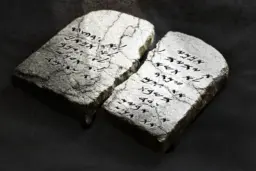
    Moshe Rabbenu’s greatest deed wasn’t splitting the Sea or ascending Sinai. It was shattering the God-engraved Tablets when Israel danced around the Calf. And yet, for this act, Moshe is praised by our sages. Moshe’s audacity saved Torah from becoming stone: a law without music, ritual without spirit. What he broke, he preserved—so that covenant could live.

  • Learning the Art of Dying by Learning the Art of Living

    In Parashat Ha'azinu

    Moshes’ final ascent in Ha’azinu is not a defeat but a masterclass in how to die—by first learning how to live. Ha’azinu invites us to hear life as a composition: rehearsed through daily practice and resolved in a final, dignified cadence. To live and die with grace is not resignation but art: shaping a soul that can leave a world more awake than we found it.

  • When Torah Becomes a Song

    In Parashat Vayelech

    In Vayelech, God tells Moshe not only to teach Torah—but to write a song. Why a song at the edge of exile and failure? Because melody reaches where prose cannot. From the Levitical choir to the sing-song of the beit midrash, song resists staleness, awakens teshuvah, and turns text into encounter—until we no longer just read Torah; we become its music.