Skip to content

Thoughts to Ponder

Thoughts to Ponder is a weekly invitation to think dangerously and question passionately. Drawing on the Torah portion, classical Jewish sources, philosophy, and the crises of contemporary life, Rabbi Cardozo challenges religious complacency and spiritual comfort. These essays are written for readers who seek a Judaism that disturbs, questions, and ultimately deepens the human encounter with God and responsibility.

  • Parashat Behaalotecha Theocracy, Democracy, and Halacha

    In Parashat HaShavua

    Halacha seeks to create a certain duality within the Jewish polity and allows space for a democratic model in which human beings decide the law, not only God. This is with the full permission, nay, on the initiative of God Himself as reflected in the Torah. In other words, the Torah itself gives its imprimatur to state law: “Appoint yourselves shoftim [judges sitting in the Sanhedrin] and shotrim [magistrates who judge according to ‘the law of the king,’ civil law].
  • Why a Second Day of Yom Tov? The Incomparable Greatness of the Land of Israel

    In Parashat HaShavua

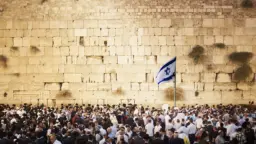
    Since the days of Hillel HaNasi, an official and fixed Jewish calendar (independent of eye witnesses) is in operation and, consequently, there is no longer any doubt about which day is the correct day of Yom Tov. Why then, did the Sages did not annul the second day Yom Tov?

  • Atheism Belief in the Unbelievable

    In Jewish Thought and Philosophy

    I am jealous of atheists because they are able to believe the unbelievable. And I, in my simplicity, cannot reach that state of belief.

  • Parshat Bechukotai – To Have or to Be, That Is the Question

    In Parashat HaShavua

    To be satisfied is one of the greatest blessings that can ever be bestowed upon human beings. The Torah teaches us that when the People of Israel live in accordance with the requirements of the Torah, what will matter is not what a person “has” but what a person “is.”

  • The Tragedy and the Challenge: A Forgotten Mission

    In Jewish Thought and Philosophy

    We Jews are messengers, but we have forgotten the message. It is our obligation to rediscover it and advance it into eternity. Our task is to be more than human, more than good, and more than pious, to surpass all these and once again become God’s stake in the future.

  • Being Jewish vs. Being Israeli

    Rabbi Yochanan ben Zakkai or A.B. Yehoshua?

    In Israel & Zionism, Jewish Thought and Philosophy, The Jewish Year and Yom HaShoah

    Rabbi Yochanan taught us that Jews can survive without Israel, as long as there is Torah, the portable homeland of the Jewish people. But Jews will not survive solely because of the existence of Israel—however powerful it may be—if Israel does not incorporate a large percentage of Jewish traditional resources.

  • Plato’s Haggada in the “Dialogues”

    In The Jewish Year

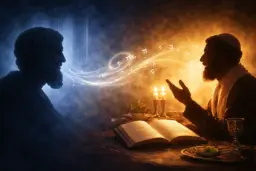
    When we read the text on the Seder night, we should be aware that it only provides the opening words. The real Haggada has no text. It is not to be read, but is rather to be heard. And, just as with the Torah, we have not even begun to understand its full meaning. We are simply perpetual beginners.

  • An Open Letter to Defense Minister Avigdor Liberman and the Charedi Leadership

    In Contemporary Issues and Israel & Zionism

    Radical change has taken place in the Jewish world after the Holocaust and the establishment of the State of Israel. We have been shown that it is impossible for all of us to stay outside of history. The Holocaust has taught us that we cannot survive without entering history. To argue that our yeshiva students are the ones who really defend us against our enemies, and that we do not need soldiers, is an escape from reality.

  • Wonder and the Question of Revelation

    In Halacha and Jewish Thought and Philosophy

    Judaism is about an upheaval in the soul and the need to break with all sorts of idols. It is about living with spiritual trepidation in which man realizes that he was created from dust but has the ability to reach Heaven. Whether or not man succeeds will depend on his willingness to stand in awe.

  • Finding One’s Neshomeh

    In Jewish Thought and Philosophy

    To attend synagogue is an art. People must come with a sincere urge to discover their Jewishness, to reconnect with their inner being and with the Jewish people. To enter the synagogue is to hope for a metamorphosis in one’s soul and a transformation of one’s personality.

  • The Enduring Preciousness of the Secular Jew

    In Jewish Thought and Philosophy

    There is little doubt that secular Jews, consciously or unconsciously, keep a large number of commandments. Many of them may not be in the form of rituals, but there is massive evidence pointing to secular Jews’ commitment to keeping interpersonal mitzvot. Beneath the divisiveness of traditional commitment lie underpinnings of religion such as compassion, humility, awe, and even faith.

  • The Challenge of Yitro

    Would you convert?

    In Jewish Thought and Philosophy, Parashat HaShavua and Parashat Yitro

    Yitro confronts us for the first time with a new phenomenon: to be a Jew by choice. He presents all Jews with a major challenge: how to become a Jew by choice even when one has been born into the fold.