

Skip to content

Thoughts to Ponder

Thoughts to Ponder is a weekly invitation to think dangerously and question passionately. Drawing on the Torah portion, classical Jewish sources, philosophy, and the crises of contemporary life, Rabbi Cardozo challenges religious complacency and spiritual comfort. These essays are written for readers who seek a Judaism that disturbs, questions, and ultimately deepens the human encounter with God and responsibility.

  • Tisha B’Av – Rabbinic Despair and Simple Courage

    In Education, The Jewish Year and Tisha B’Av

    In the wake of the destruction of Jerusalem the leaders of the Jewish people despaired. But the ordinary Jews did not. Despite the total collapse of Jewish life, they opted for the impossible. They not to listen to their leaders, but continued building the nation of Israel, as they had previously been taught by the very sages who now despaired. Sometimes, the simple man has more faith in the Jewish future than the greatest Talmudic scholar.
  • The Chaos Theory of Halacha – Part 3 of 3

    In Education and Halacha

    Halacha is in need of more “chaos.” It must allow for many ways to live a halachic life unbound by too many restrictions of conformity and codification. It must make room for autonomy on the part of individuals, to choose their own way once they have undertaken to observe the foundations of Halacha.

  • The Chaos Theory of Halacha (Part 2 of 3)

    In Halacha and Jewish Thought and Philosophy

    One of the most remarkable aspects of Orthodox Halacha is that it is almost an open market within the confines of the masoret, an unwritten and undefined tradition going back thousands of years. Some will view the masoret as a minimal and almost fundamentalist observance, and others will view it as a maximal and highly flexible tradition, which allows for much innovation.

  • The Chaos Theory of Halacha (Part 1 of 3)

    In Halacha and Jewish Thought and Philosophy

    Chaos is God’s signature when He prefers to remain anonymous. The same can be said about Halacha. Halacha is the chaotic way through which God wants the Jew to live his life, according to strict rules that seem to be part of a well-worked-out system. People do not come before God as actors in a play that has been planned down to the minutest detail. If they did, they would be robots and life would be a farce.

  • Faith is the Joy of Religious Doubt and Uncertainty – Part 2

    In Education and Jewish Thought and Philosophy

    To have faith is to live with unresolved doubts, prepared to rise above ourselves and our wisdom. Looking into the Jewish tradition with its many debates, one clearly understands that those who deny themselves the comfort of certainty are much more authentic than those who are sure.

  • The Kotel – Have We Gone Mad?

    In Contemporary Issues

    You, dear readers, must forgive me for asking this question, but: Have we Jews gone mad? Kotel mad? Have we lost it? Are we Jews, who represent the best brains in the world, incapable of solving a minor – albeit pressing – problem in our long history of unprecedented upheavals and unparalleled challenges?

  • Israel, the American Elections and the Turmoil in Our World

    In Education and Jewish Thought and Philosophy

    Once upon a time, in a large, gloomy palace high on a mountain, where the night wind howled outside its massive walls, there lived a king—a real one. He had a beard as long as a silver waterfall and a voice that boomed like thunder. A king needs no more.

  • Orthodox Rabbi Teaching Halakha Beyond the Shulkhan Arukh, Judaism Beyond the Commandments

    In Contemporary Issues and Jewish Thought and Philosophy

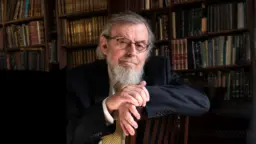
    The Beauty of the Jewish tradition is that it is not always precise and consistent," says Rabbi Dr. Nathan Lopes Cardozo. "And that is a very wise thing. You have to have flexibility, because life is not clear-cut or coherent. Moving here, moving there, you work out the different opinions somehow, and you let it be. As such Jewish Law and beliefs stay fresh and thriving. A musical symphony. But the moment we codify or dogmatize it all, we are basically destroying it”.

  • Parshat Bechukotai – The Miracle of Satisfaction

    In Contemporary Issues, Halacha, Jewish Thought and Philosophy and Parashat Bechukotai

    “Your threshing season will last until your grape harvest, and your grape harvest will last until the time you plant. You will have your fill of food, and you will dwell securely in your land.” (1) This blessing is promised to the people of Israel on condition that, as a unified nation, they observe the laws of the Torah and live by its spirit. Its promise is quite surprising.

  • The Omer: Giving Birth

    In Jewish Thought and Philosophy and Sefirat HaOmer

    As a woman anticipates giving birth, so the people of Israel await the redemption. The labour pains start with ten plagues. Toward the end, the people are confined to their homes: "You shall not leave your houses until morning." They await the birth.

  • Yom Hashoa: The Quest for Authenticity – Rembrandt and the Holocaust

    In Contemporary Issues, Education and Jewish Thought and Philosophy

    On Yom Hashoa one can virtually smell the blood of the six million Jews killed, including one and a half million children. Walking through Yad Vashem in Jerusalem, I see the faces of many of them, and it is not difficult to imagine that these children could have been mine. After all, I missed the Holocaust by a hair’s breadth.

  • Blessed Are Those Who Eat Chametz!

    Just not on Pessah

    In Halacha, Jewish Thought and Philosophy, The Jewish Year and Passover

    Why is it prohibited to eat or to possess chametz (leaven) on Pessah? What is there in the nature of leaven that makes it forbidden, and why only on Pessah? The Talmud offers an insightful answer.