Skip to content

Thoughts to Ponder

Thoughts to Ponder is a weekly invitation to think dangerously and question passionately. Drawing on the Torah portion, classical Jewish sources, philosophy, and the crises of contemporary life, Rabbi Cardozo challenges religious complacency and spiritual comfort. These essays are written for readers who seek a Judaism that disturbs, questions, and ultimately deepens the human encounter with God and responsibility.

  • Beyond Reason

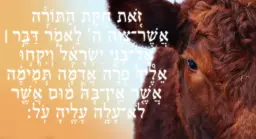
    The Red Heifer and the Ritual of Paradox

    In Parashat Chukat

    It was an astonishing experience. While on a lecture tour in New York, I was approached by two non-Jewish American soldiers who had returned home from Vietnam. They told me something deeply disturbing: though they had come from moral, religious homes that taught the sanctity of life, war had corrupted them. Not only had they […]


  • When Jealousy Masquerades as Theology

    In Parashat Korach

    When Korach challenges Moshe’s authority, the ground beneath him literally gives way. But what if his questions had been sincere? In this probing essay, Rabbi Nathan Lopes Cardozo explores the rebellion of Korach not just as a power struggle—but as a profound confrontation over the nature of holiness, the role of interpretation, and the soul of the Oral Torah.

  • War and the Challenge of Conscience

    In Contemporary Issues, Parashat HaShavua and Parashat Shelach

    In Parashat Shelach, the spies feared giants. But perhaps what they truly feared was the moral burden of destiny. In this deeply personal and timely reflection, Rabbi Nathan Lopes Cardozo explores the tragedy of justified war, the conscience of a chosen people, and what it means to be holy in a world that demands violence.

  • The Book Between the Books Thoughts on Parashat Beha’alotecha

    In Parashat HaShavua and Parashat Beha'alotcha

    Why do the Jewish people exist outside of history? What does it mean for a book of the Torah to contain a ‘book within a book’? In Parashat Beha’alotecha, we explore a deeper view of identity, memory, and Divine presence—through the Ark, the wilderness, and two verses that upend everything we know about linear time.

  • The Sotah Ritual

    The Trial That Should Not Have Been – Reflections on the Sotah Ritual in Parashat Naso

    In Parashat HaShavua

    One of the most disturbing and mystifying rituals in the Torah appears in Parashat Naso: the case of the Sotah—the woman suspected by her husband of adultery. This ritual, unparalleled in Torah law, is effectively a trial by ordeal, the only one of its kind in Judaism. Trial by ordeal—a practice associated with medieval Europe’s witch hunts—is rejected by Jewish legal tradition as both primitive and dangerous. And yet, here it is, near the beginning of Sefer Bamidbar.  What is this strange ritual all about?

  • Order in the Wilderness: Hierarchy, Resistance, and the Fragile Dream of Nationhood

    In Parashat HaShavua

    In Parashat Bamidbar, the Israelites stand on the brink of transformation. From a loose confederation of tribes defined by kinship, they are now being reshaped by Moshe into a disciplined and hierarchically organized nation. The census, or pikud, is more than just a count—it is the foundation for creating a centralized government, establishing an army, assigning roles, and imposing a nascent form of taxation and bureaucracy. But did the Israelites truly accept this imposed order?

  • Rabbi Cardozo, guest presenter on The Philosophical Jew

    In Education, Halacha and Jewish Thought and Philosophy

    In this thought-provoking interview on the Philosophical Jew podcast, Rabbi Nathan Lopes Cardozo, delves into the dynamic nature of Halakha and the importance of spiritual authenticity in modern Judaism. Drawing from his work Jewish Law as Rebellion, Rabbi Cardozo challenges us to view Torah not as a static legal code but as a living, breathing call to moral and spiritual revolution.

  • Tragedy and Hope

    In Israel & Zionism and Jewish Thought and Philosophy

    Zionism will not hold if it is not deeply rooted in Judaism. But this Judaism must radiate grandeur. In exile, Judaism was strangled and reduced chiefly to the private domain. It could not prove its enormous potential as an all-compassing ethos that included all dimensions of human existence. It is the task of great teachers, Jewish thinkers and Halachic authorities to show the way back to this ethos.

  • Child with teddy bear on train tracks

    Yom HaShoah and the Future of the Jewish People

    In The Jewish Year and Yom HaShoah

    While important in its own right, fighting antisemitism is not an answer to assimilation. We need to bring an uplifting and transformative Judaism to our young people and turn being Jewish into an experience of moral and religious grandeur. We must show that Judaism ennobles the commonplace, endowing all worldly matters with hieratic beauty and transcending holiness.

  • My Judaism – An Introduction (Part One)

    In Jewish Thought and Philosophy

    The biggest questions about life are unanswerable. Not one philosopher has ever given a satisfactory answer to these questions; neither has science or any other form of human knowledge. Logic and science tell us about the “what” and the “how” but not about the “why”. They fall flat when it comes to the “ultimate” questions. But if this is the case, why ask questions which are unanswerable?

  • Menora

    Chanukah, the Jews, and the Nature of Anti-Semitism

    In Israel & Zionism and The Jewish Year

    It must have been an extraordinary experience when the Kohanim in the days of the Chashmonaim suddenly realized that a tiny amount of oil which should have lasted for only one day would last for eight days. A solemn terror must have overtaken them. This is the foundation of genuine religiosity; the dawning of awareness that all things cannot be explained by the ordinary. It is radical amazement, which shatters the commonplace and makes us realize that our wisdom is sometimes inferior to dust. And so it is with the Jews. Like the Chanukah lights, they keep on reminding the world that there is exceptionality, which transcends history and ordinary human accomplishments.

  • Judaism without God

    In Contemporary Issues and Jewish Thought and Philosophy

    With the terrible pogrom which took place in my hometown, Amsterdam, and the ongoing Anti-Semitism in Europe, the United States, and indeed worldwide, it is time to give proper attention to one of the great mistakes of modern Jewish history. This is the myth that if Jews would only “normalize” themselves, anti-Semitism would come to an end. This constantly repeated mantra has proven to be entirely wrong and in fact, dangerous.