

Skip to content

Thoughts to Ponder

Thoughts to Ponder is a weekly invitation to think dangerously and question passionately. Drawing on the Torah portion, classical Jewish sources, philosophy, and the crises of contemporary life, Rabbi Cardozo challenges religious complacency and spiritual comfort. These essays are written for readers who seek a Judaism that disturbs, questions, and ultimately deepens the human encounter with God and responsibility.

  • Thoughts to Ponder on Shavuoth

    In The Jewish Year

    The giving of the Torah is a declaration of war. It is a protest not only against the world of Avoda Zarah, idol worship and immorality but also a call to be "unreasonable" since the "reasonable" man adapts himself to the world while the "unreasonable" man adapts the world to himself and what we need to realize is that all progress depends on the "unreasonable" man.

  • Shavuot, Revelation and Learning

    In The Jewish Year

    In the Pirke Avoth (Ethics of the Fathers 3:10), we find a rather exorbitant statement by one of the Sages: "Rabbi Dostai ben Yanai said in the name of Rabbi Meir:" Whoever forgets even one thing of his Torah learning, Scripture regards him as though he is guilty to pay with his life, for it is said: "Be careful and guard your life greatly, lest you forget the things you saw (at the time of the revelation at Sinai) with your own eyes, and lest they be removed from your heart your entire lifetime, and you shall inform your children and grandchildren of them, the day you stood before God, your God at Chorev…. " (Devarim 4,9-10)

  • A Personal Encounter with the Divine

    In Jewish Thought and Philosophy

    There are moments in life when one is confronted with divine intervention. Thoughts on the loss of a great woman.

  • Forsaken by God

    ..........the Jerusalem Post (9.3.07) published in its ‘In Jerusalem' section an essay about haredi (ultra-orthodox) youth who left the fold and turned completely secular. Some of the reasons given for these drop outs are indeed very understandable -  an overly dogmatic and strict religious upbringing at home, the total rejection of secular knowledge or the world at large causing a lot of harm.................
    I responded to these accusations and called for another way to deal with this tragic phenomenon. The following letter was published by the Jerusalem Post in In Jerusalem on February 17 2007.   

  • My Mother a’h’, Heroism and the Gavra Raba

    In Biographies

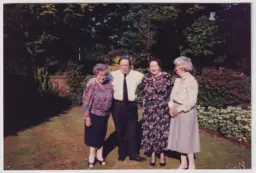
    It is difficult for a child to give an appropriate appraisal of his/her parents. Sometimes it is the intimacy of people which makes it impossible to fully grasp the greatness of another person. Too much familiarity causes too little appreciation. Only when some kind of separation has set in and the other is no longer immediately available, do thoughts break through which allow a better understanding of those who have been the closest to us.

  • Sheloshim Reflections

    In Biographies

    On the occasion of the "Sheloshim" of my dear mother, Bertha Lopes Cardozo a'h. 26 Shevath, 5767, February 14th, 2007.


    Some reflections


  • Some Perspectives on Mortality

    In Memory of My Dear Mother Bertha (Rivka) Lopes Cardozo, z.l., who passed away last week on the 26 of Teveth, 5767, January 16th ,2007, at the age of 88,  and was buried in Beth Haim of the Portuguese Spanish Jewish Community in Amsterdam.
    May Her Memory Be a Blessing.
    (1)

    In Devarim (14.1), the Torah warns against excessive mourning, expressing itself in a most unusual way: "You are the children of God, your God, you shall not cut yourself, nor make a bald patch between your eyes for the dead." This prohibition teaches Man the correct approach towards death.

  • Man against night sky

    Hearing and Seeing

    In Jewish Thought and Philosophy and Parashat Noach

    Contemplation about the mitzvot without actually fulfilling them makes one deed-deaf. The profound meaning of a mitzvah may only be understood by experiencing it.

  • The Gay Parade and other Prohibitions

    In Contemporary Issues and Halacha

    When discussing matters related to the ethical or religious foundation of sexual behavior, people tend to have severe differences of opinion. While up until the second half of the 20th century a more conservative approach was still prevailing, a radical change occurred in the second half of the last century. Well established norms were suddenly challenged, and often replaced by radical approaches which demanded greater "liberty" and "broadmindedness." This provoked a major confrontation between the conservatives and those who claimed that they were "modern-minded."  

  • Preface to Rabbi Francis Nataf’s book

    In Miscellaneous

    For thousands of years, Jews have read a portion of the Torah in the synagogue every Shabbath. It is customary to begin the first portion on Simchat Torah and to finish the Torah on the same day a year later. Once the last verses of the book of Devarim are read and the Torah scroll is closed, a second scroll is brought and the Torah reader starts all over again with the story of the Creation in the Book of Bereshit. This happens within seconds, and there is barely time to breathe between the first and the second readings. It is as if any delay is dangerous. And indeed it would be. The Torah is the life-blood of the Jewish people, and any hampering of its flow would be detrimental. It is the Jewish people's portable homeland, and for millennia it has been seen and experienced as the Divine voice speaking to all generations, instructing them in the correct way of living.

  • Rabbi Yochanan ben Zakkai and A.B.Yehoshua

    In one of its most dramatic texts, the Talmud (Gittin 56b) discusses an episode in Jewish history which describes perhaps the most decisive moment which occurred before the Holocaust. It took place in the first century C.E. at the very hour that the second Temple was to be destroyed by the   Romans who were occupying the land. The Jews were killed in their tens of thousands and there was no longer any food. Despair was rampant everywhere. It seemed as if there was no longer any future for the Jewish people as the Romans had decided on a "final solution".


  • The Future of Israel and the Zionist Enterprise

    Nowhere is the extreme spiritual crisis of the Jewish people more evident than in the State of Israel. A loss of purpose and direction has overtaken the fast majority of Israelis and most of its leaders. Confusion and a feeling of hopelessness has become the call of the day among many people. When searching for the cause of this bewilderment it is crucial, however, not to get confused about the confusion. While many may believe that this feeling of hopelessness is the result of Israel's sudden realization that it has a Hamas  state at its doorstep or  that Iran is seriously preparing itself  to destroy the State of Israel, it is most important to realize that this is to confuse the symptom with the cause. What is at the core of this crisis is a fundamental misreading as regards to the nature and destiny of the Jewish people.