
Skip to content

Thoughts to Ponder

Thoughts to Ponder is a weekly invitation to think dangerously and question passionately. Drawing on the Torah portion, classical Jewish sources, philosophy, and the crises of contemporary life, Rabbi Cardozo challenges religious complacency and spiritual comfort. These essays are written for readers who seek a Judaism that disturbs, questions, and ultimately deepens the human encounter with God and responsibility.

  • The Miraculous Nature of Normality

    In Jewish Thought and Philosophy

    The most challenging question in all of life is what do you do, and what do you believe when you are not sure. It is this question that moves the scientist, the philosopher, and most of all the religious personality. We must destroy the security of all conventional knowledge and undo the normalcy of all that is ordinary. To be religious is to realize that no final conclusions have ever been reached, nor will ever be reached.

  • Spinoza, the Alter Rebbe, and the Eternal Fire

    In Baruch Spinoza, Jewish Thought and Philosophy, Parashat HaShavua and Parashat Tzav

    The Talmud states that all the sacrifices were consumed by a heavenly fire, not by the fire lit by the Cohanim. This seems to imply that there was absolutely no need to keep the human fire on the altar burning so as to consume the sacrifices. So why were the Cohanim commanded to keep the fire on the altar lit? It seems that an answer may be found in contrasting the teachings of two very different thinkers--Spinoza, who famously did not believe in miracles, and the Alter Rebbe, who believed the existence itself is a miracle.

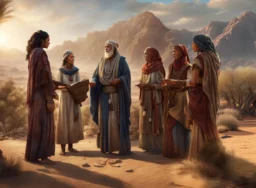
  • Daughters of Tzelafchad

    The Tragic Loss of a Divine Law

    In Converting to Judaism, Parashat HaShavua and Parashat Ki Tisa

    This week's parashah tells us of the giving of the Laws to Moshe on Mt. Sinai, and it's aftermath. But what exactly is Divine Law? And do human beings have any say in what the Law is to be? An incident much later in the Torah hints at the dynamic relationship between the Children of Israel and the Laws of God.

  • Prayer, Sexuality, and the Pleasure Principle

    In Jewish Thought and Philosophy

    Why are males and females physically attracted to each other? What is there in their physical appearance that makes them so excited that they want to be intimate, to the point where they consider this a great joy? The Sages of Israel understood the enormous power of sex and its immense challenges. Unlike other religions, such as classical Christianity, they never saw sexuality in a negative way. This is because sexual attraction is a reflection of Divine love.

  • Unity, not Uniformity – Changing the discourse in Israel

    In Contemporary Issues and Parashat Metzora

    In these difficult days, we have a moral obligation to create an environment for respectful discourse. We should all do what we can to provide our families, our friends, and our children with the tools to control how we speak about and to one another. The noble teachings of the Jewish Tradition could greatly help with this.

  • The Strolling Light of Shabbat – The art of creative abstinence

    In Contemporary Issues, Parashat HaShavua and Shabbat

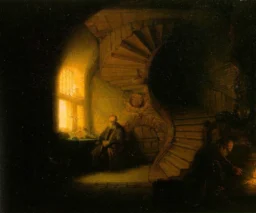
    When the light of the setting sun announces the entrance of Shabbat, a miracle happens: the light assumes the quality of light in a Rembrandt painting. The light slows down. It strolls! There is no way to see the strolling of the light unless one actually opens the door to let it in. One cannot talk about mystery. One must be grasped by it. And that is only possible when insight and creative inaction become one.

  • Putting God on Trial: The problem of Divine Collateral Damage

    In Contemporary Issues, Jewish Thought and Philosophy and Theodicy

    The Jewish Tradition never told people not to question divine justice. Such questions are not only legitimate, they are holy because they rise from a deep realization that God is righteous and at the same time honest enough to admit that He is at fault.

  • The Conditional Promise of Peace – The Realism of a Biblical Verse

    In Contemporary Issues

    The sudden rediscovery of Jewish identity in Israel since the start of the war has led me to understand a verse in the Torah that I never really understood before. In this verse, God promises peace in our borders under certain conditions. Due to all that we have experienced in the last weeks—the trauma of the attacks and then the incredible new awakening to what it means to be a Jew—perhaps we need to reconsider this verse.

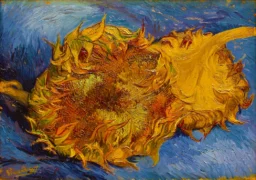
  • Sunflowers by Vincent van Gogh

    The War and the Sunflower

    In Jewish Thought and Philosophy

    The holy task of Halakhic living requires us to see with more than our senses, and to comprehend what is beyond reason. It requires both inner consciousness and the transformation of the deed, by which we express our deepest understanding of the splendor of the world.

  • The Miracle of this War

    In Contemporary Issues and Israel & Zionism

    After the terrible internal fights that nearly tore apart the Israeli nation, this war has brought our people together as never before. It is as if a Divine voice rang out and said: "Enough! This far and no farther! There will be no civil war in Israel. I will not allow it."

  • Questions in Light of a Palace in Flames

    In Contemporary Issues, Parashat HaShavua and Theodicy

    We have become used to thinking of the diaspora as a place of danger; Israel of safety. The fact the biggest murder of Jews in one day since the Holocaust took place in Israel is simply unfathomable. The question is inevitable: Where was God? A strange Midrash on this week's parashah may hint at an answer.

  • The Gaza War and the Challenges of Statehood

    In Contemporary Issues

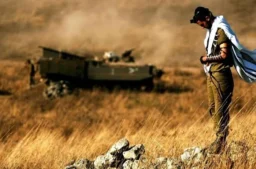
    In the weeks ahead, Israel will be facing one of the hardest tests a nation ever has to face, and it isn’t what we might think. The test is not to stay strong under the threat of rockets fired at our population centers, nor of repelling vicious incursions from across our borders, nor even of standing against the hatred of the nations when we fight back. The war now facing the State of Israel poses a greater challenge, and that is to hold on to the high moral standards that have sustained us since Israel’s founding. We must ensure that we do not become the very thing that we are fighting against.