Skip to content

Thoughts to Ponder

Thoughts to Ponder is a weekly invitation to think dangerously and question passionately. Drawing on the Torah portion, classical Jewish sources, philosophy, and the crises of contemporary life, Rabbi Cardozo challenges religious complacency and spiritual comfort. These essays are written for readers who seek a Judaism that disturbs, questions, and ultimately deepens the human encounter with God and responsibility.

  • Flag of Israel and Old City

    Israel Plagued, Its Destiny and the Call of Our Prophets

    In Jewish Thought and Philosophy

    Throughout the centuries, historians, philosophers and anthropologists have struggled with the concept called “Israel.” While attempting to place Israel within the confines of conventional history, they experienced constant academic and philosophical frustration. Any suggested definitions eventually broke down due to serious inconsistencies. Was Israel a nation, a religion, or perhaps a mysterious entity that would […]
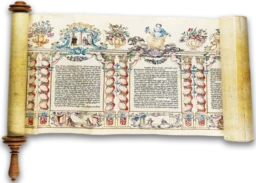

  • Scroll of Esther

    Megillat Esther: Attaining the Level of Non-Acquaintance

    In Jewish Thought and Philosophy, The Jewish Year and Purim

    Attaining the Level of Non-Acquaintance—Pseudo-Dionysius, the Areopagite   The most discussed topic in philosophy of the Middle Ages is, without doubt, God’s existence. Many great philosophers such as Rambam (Maimonides, 1138-1204) and the Christian thinker Thomas Aquinas (1225-1274) invest a lot of time in clarifying the concepts of “omnipotence,” “divine excellence” and other such terminologies.[1] […]

  • Horizin through filter

    Panic: The Visible and Invisible

    In Jewish Thought and Philosophy

    Genuine religiosity is demanding - it requires a sensitivity to the physical human condition as well as the hidden, divine dimension. Living in a manner that combines the visible and the invisible, and more so, harmonizing the two as equal components of our lives, is a tremendous challenge. It is too easy to make a selection - as many individuals and even religions do - between the visible and invisible, preferring one over the other. However, living the one with an imbalance regarding the other is not what Judaism teaches.

  • Open Bible - Navi (Prophets)

    God, Me and the Struggle to Teach Real Torah

    In Jewish Thought and Philosophy

    Despite my many years of experience (and successes), I have felt that something crucial has been missing - which I identified recently: Am I merely conveying knowledge, or do I stand before my students as someone who is entirely imbued with the significance, import and sanctity of the words I utter? God requires of His prophets and those who speak His words to be true and just, and to live His words with every fiber of their beings!

  • children smiling

    The Art of Smiling – Fearing my Kippah (2)

    In Jewish Thought and Philosophy

    A kippah - and every other aspect of dress required by the Halakhah - pose a tremendous challenge! I am constantly aware of how I am to strive to achieve and implement the values that my kippah requires of me - both when I stand before God, and also in the way I face the world. Facing my fellow, my conduct, and even the countenance I assume are spheres that my kippah relates to!

  • Youth with white kippah

    Fearing My Kippah

    In Jewish Thought and Philosophy

    I have a serious dilemma. As I am getting older (I am currently 76, thank God), I am becoming more and more afraid of my kippah. Let me tell you why: I am not sure I have the right to wear a kippah. Although today it is considered an obligation to wear a kippah, it […]

  • Smiling baby

    Birth and Death – The Ultimate Paradox

    In Jewish Thought and Philosophy

    Giving birth to a child creates a paradox. On the one hand, it is the greatest joy we can imagine. The first commandment given to humankind is to be fruitful and multiply (Bereshit 1:28). Procreation is an expression of the highest form of creativity; just as God is the Creator of the Universe, so the […]

  • Menora

    Chanukah: The Art of Balancing

    In Jewish Thought and Philosophy and The Jewish Year

    The menorah of Chanukah, sometimes called the chanukiah, has its roots in the menorah of the Temple. While there are many halakhot (laws) regarding the appearance and structure of the biblical menorah, Rashi, the great French commentator, points to a most remarkable halachic feature. Regarding the instruction to arrange the lamps so that they will […]

  • It is time to stop eating “Kosher”

    In Halacha and Jewish Thought and Philosophy

    "Kosher" is a term that has gained rather wide prevalence, primarily in the context of "kosher food" - food that has been prepared in accordance with Jewish dietary law ("kashrut"). Are these dietary laws sufficient to deem food kosher and fit for consumption? There may be other concerns significances of what "kosher" means that will influence our thoughts and behavior. "Kosher" is, in fact, a matter of holiness - which requires us to advance, progress and improve ourselves. "Kosher" is a term that has gained fame in the context of "kosher food" prepared in accordance with Jewish dietary law. ("kashrut"). Yet "kosher" is a matter of holiness - which requires us to advance, progress and improve ourselves.

  • Open bible

    The Art of Reading the Torah Correctly

    In Jewish Thought and Philosophy

    As mentioned in our last essay (here) the Torah is not a text to be read as a book—rather, it is to be seen as a divine “notebook” containing succinct summaries of a greater lecture or series of lectures. Moshe first heard the lecture in its “sum total” when God delivered a series of lectures […]

  • Question mark

    An Answer to an Unasked Question is Irrelevant

    In Jewish Thought and Philosophy

    The text of the Torah can be quite misleading when read in a vacuum. The casual reader may encounter what he deems to be errors, stylistic inconsistencies, grammar and linguistic anomalies, and more. However, prior knowledge - and primarily a basic understanding of what the Torah text truly is and what the goals of its divine author are - are the keys to properly understanding any and every word of the sacred text.

  • Winter snow bridge over river

    The Art of Making Winter into a Sukkah

    In Jewish Thought and Philosophy, The Jewish Year and Sukkot

    Winter - bleak, dreary and cold - often has a negative effect on our moods and even outlooks. The message of Sukkot, The Festival of Tabernacles, must be continued into this period of darkness and, indeed, into our lives. The Sukkah is a structure that is quite plain and feeble by definition and requirement, and yet it interior and significance are tremendously beautiful and solid. Our lives can be greatly enriched and understood and even assigned deep purpose when we understand the Sukkah.