Thoughts to Ponder 393
Shavuot – Bible Criticism and the Problem of Revelation
In Miscellaneous and The Jewish Year
One of the most challenging aspects of religious life is how to relate to the concept of revelation. The uncompromising claim by Judaism that the Torah is not a book written by man, but is the result of the most famous disclosure of God’s will to man, requires a formidable amount of faith in the face of the prevalent skepticism and secularity.
Over the last few hundred years, a major argument has emerged concerning the divinity of the Torah’s text. Since the days of Spinoza’s Tractatus Theologico-Politicus (17th century), we have witnessed numerous Bible scholars dissecting the Torah in every way possible, concluding that the traditional Jewish claim of its divinity is unfounded and farfetched.
Religious scholars have naturally responded with heavy artillery. They have written profound papers showing that the arguments of Spinoza and others were mistaken and often lacked intellectual objectivity. (1) In our day, a sincere but problematic attempt has been made by some mathematicians and Jewish outreach programs to prove the Torah’s divinity through “Torah codes,” which presumably are found within the biblical text.
But is this the right approach? If the Torah is indeed the ultimate divine word, as Judaism maintains, is it at all possible or even advisable to take an academic approach to verify its divinity? Wouldn’t the fact that it is divine make it absolutely impenetrable to academic scrutiny and proof? Isn’t this like studying inorganic phenomena by applying criteria used by scientists to study organic matter? Moreover, scholars, as well as teachers in outreach programs, should ask themselves if they are not violating the prohibition “Do not test God, your Lord…” (2)
So how should we deal with the claim that the Torah is in fact of divine origin? If it is indeed beyond the capacity of proof, what then are the ways to grasp its divinity? Why are we not as convinced as our forefathers were? Is this due to the fact that we are more knowlegable and intellectually sophisticated than they were? Many of us may be of this opinion, but we should ask ourselves if we are not guilty of self-deception.
Rabbi Yaakov Tzvi Mecklenburg (1785-1865), in his monumental work Haketav Vehakabbalah, seems to touch on this problem. Commenting on the quality of the revelation at Sinai, and quoting the verse “To the Israelites, the appearance of God’s glory on the mountain top was like a consuming fire (aish ochelet),” (3) the venerable rabbi asks what is meant by the expression “a consuming fire”? Doesn’t this indicate a destructive force? Why not just say that God is like fire?
Reminding us of the fact that at Sinai the entire nation of Israel had risen to the level of prophecy immediately following a life of misery and spiritual slavery, he continues:
The truth is that the people of Israel were not all equal in their spiritual level. And they did not all see or perceive the same kind of revelation at Sinai. Rather, each one was able to receive this revelational experience only in accordance with the spiritual condition of his soul. Every Jew saw something, but what he experienced was directly proportional to the preparation he had put into it. When a person was less prepared, he experienced only a minimal level of revelation at Sinai; and the one who prepared more received more. This is the meaning of “a consuming fire.” The perception of God’s greatness is exactly the same as the way fire takes holds of various objects. There are materials that are intrinsically combustible, so that when you touch them with a flame an enormous fire erupts. But there are other items that are fireproof, and when you put a flame to them nothing happens. Just as nature has made certain materials receptive to fire, so it is with the Sinai revelation. (4)
A flame grows or diminishes depending on the combustibility of the substance it touches. So it is with the Jew, and with all people. The Jew’s receptivity to the divinity of Torah is proportionate to the spiritual and emotional preparation he puts into it.
I would suggest that the reason we are confronted with so much skepticism concerning the Torah’s divinity is not because of intellectual sophistication but because of lack of spiritual receptivity, which is developed through labor of the soul. This may seem like a convenient escape when dealing with the issue at hand. But in truth, it touches on the very essence of man’s spiritual condition. As with music and art, the Torah cannot be approached from the perspective of academic learning. It is the soul’s language that is at stake. Fire cannot penetrate where no spark burns.
Aristotle once said, “The slenderest knowledge that may be obtained of the highest things is more desirable than the most certain knowledge obtained of lesser things.” (5)
It would be wise for all parties concerned to stop trying to affirm or deny the Torah’s divinity and instead ask: Are we or are we not made of material that is combustible with the inner world of the Torah? Once we have transformed ourselves and our souls into spiritual fire, all questions concerning the Torah’s divinity may quite well become irrelevant.
***************
(1) For a comprehensive treatment of the academic approach toward the Torah, see my books: Between Silence and Speech, chap. 10, and The Written and Oral Torah, pp. 201-233, both published by Jason Aronson. See also: www.cardozoacademy.org/Library/Studies.
(2) Devarim 6:16.
(3) Shemot 24:17.
(4) Ibid.
(5) Quoted by Thomas Aquinas, Summa Theologica (1:1:5 ad 1).

Rabbi Nathan Lopes Cardozo
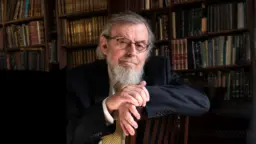
Rabbi Dr. Nathan Lopes Cardozo is the Founder and Dean of the David Cardozo Academy and the Bet Midrash of Avraham Avinu in Jerusalem. A sought-after lecturer on the international stage for both Jewish and non-Jewish audiences, Rabbi Cardozo is the author of 13 books and numerous articles in both English and Hebrew. He heads a Think Tank focused on finding new Halachic and philosophical approaches to dealing with the crisis of religion and identity amongst Jews and the Jewish State of Israel. Hailing from the Netherlands, Rabbi Cardozo is known for his original and often fearlessly controversial insights into Judaism. His ideas are widely debated on an international level on social media, blogs, books and other forums.