Thoughts to Ponder 578
The Challenge of Yitro
Would you convert?
In Jewish Thought and Philosophy, Parashat HaShavua and Parashat Yitro
Yitro said, “Blessed is the Eternal, Who has rescued you from the hands of the Egyptians and from the hand of Pharaoh, who has rescued the people from beneath the hand of the Egyptians.” Shemot 18:10
As we are daily confronted with a steady increase in the number of Jews who have not only left the fold but are actively involved in anti-Jewish activity inside and outside Israel, it would perhaps be instructive to study an episode in the life of a biblical non-Jew who decided to join the Jewish people at all costs.
Yitro, Moshe’s father-in-law — and one of the earliest “converts” to Judaism — presents a challenge, not only to many anti-Jewish Jews but also to those who are actively living a Jewish religious life but lack the intensity and passion for Judaism and its message. For sensitive souls, Yitro’s story is not just a significant narrative but also a painful confrontation with one’s own Jewishness.
After many years of separation, Moshe and Yitro meet again. Moshe had married Yitro’s daughter Tzipora many years earlier, but had then left his father-in-law’s home and gone back to Egypt to redeem his people. Subsequently, he took the Jews out of Egypt and miraculously led them through the Reed Sea. Once the exodus had been accomplished, Yitro, Tzipora and her children were able to join him again. The text tells us that this meeting took place in the wilderness:
Yitro, Moshe’s father-in-law, came with [Moshe’s] sons and wife to the desert, where Moshe was staying . . . [1]
What, asks Rashi, is the importance of knowing that they met in the desert? He answers that this points to the tremendous sacrifice Yitro made when he decided to become a Jew:
The verse speaks in praise of Yitro. He lived in a world of glory, yet his heart prompted him to go out to the desert wasteland to hear the words of the Torah.[2]
Losing everything
Indeed, our tradition teaches us that Yitro was a man of great wealth. He held the prestigious post of high priest in Midian, a kind of Midian “pope”. He was surrounded by servants and basked in glory and abundance. The verse now informs us that he gave up all of this to go to a “desert”, a place where he would no longer have any of these honors. He had decided to “convert”. In many ways, this was a catastrophic decision. All the glory and prestige would be gone. Instead of being the high priest and playing a crucial role in political affairs, he would now be an ordinary Jew, sliding into oblivion. He would become one among many, no longer a great man in his own right, just “the father-in-law of Moshe”.
In fact, our tradition continues to provide us with remarkable information about this sweeping decision. Yitro had become an outcast among his own people. After having rejected all forms of religion and philosophy known in his day, he was excommunicated and abandoned by the societies in which he lived. He had turned into a “lonely man of faith”, as Rabbi Soloveitchik would say.
Once Yitro heard about the exodus from Egypt, the splitting of the Reed Sea, and the soon-to-come revelation of the Divine Teaching at Sinai, everything else seemed of secondary importance. Only this moved him: to be part of the Jewish people and participate in their Torah experience. The price was indeed enormous.
To be a Jew by choice
Yitro confronts us for the first time with a new phenomenon: to be a Jew by choice. He presents all Jews with a major challenge: how to become a Jew by choice even when one was born into the fold; how to feel the fire needed to live the life of an authentic Jew, as Yitro did. Such an undertaking is possible only if one is able to re-enact and experience Yitro’s journey to Judaism.
It must have been a long and difficult road, a heart-rending challenge, with many ups and downs before finally arriving at the top. Along the way, Yitro must have had countless fiery conflicts with his former friends and colleagues, and he surely felt terribly lonely. He may have been plagued by doubts and inner conflicts before he was able to become a Jew. Like a baby taking its first steps, he most likely tried to engage the world of Torah and its spirit, undergoing its hardships before experiencing its joy. How many times must he have nearly thrown in the towel in despair, only to continue his struggle until he overcame all obstacles and took the final, crucial and radical step: to be a Jew and nothing but a Jew; to experience the incredible joy and difficulties that accompanies this mission.
The challenge
For many of us who were born into the fold, Yitro’s desire to become a Jew is a major problem. It hits us in the face. It’s a challenge to all those among us who left the fold, opting for a comfortable secular lifestyle. We must ask ourselves why a non-Jew would be prepared to give up everything to become Jewish. What is there in Judaism that makes a non-Jew conclude that it’s worth losing all? These questions should plague all of us.
But for those of us who are religiously observant, Yitro’s engagement with Judaism is also a challenge, posing questions such as: Am I in love with Judaism as much as Yitro was? Am I prepared to give up everything, including wealth, honor and social standing? Would I have been prepared to exchange my prestigious position in the world for a life in the desert, ridiculed by old friends and colleagues?
Yitro forces each of us to ask ourselves whether we would have opted for Judaism had we not been born Jewish. And if yes, would this not mean that we would have had to start all over again, discovering Judaism on our own in order to really comprehend what it is all about? If Yitro traveled his road to Judaism step by step in order to fully grasp its beauty and truth, we may have to re-engage ourselves with every mitzvah as if we have never done it before, as complete beginners. Only thus can we become “Jews by choice”, real Jews. Perhaps we should begin a process by which we take hold of every mitzvah that we have been observing for years and transform it into something radically new.
Tefillin — not yet
It is told that the great Jewish philosopher and ba’al teshuva Franz Rosenzweig (1886-1929), in his earlier days when he was still on his way to becoming observant, was once asked whether he put on tefillin. “Not yet”, was his answer.
Although he may not have felt ready at the time to take on this great mitzvah, he made it clear that he looked forward to the day when wearing tefillin would become a truly religious experience. Surely this does not mean that we should wait until we are fully ready. After all, it was Rosenzweig himself who taught that it is in the deed that one hears the mitzvah.[3] Only when one actually does a mitzvah can one hear and feel its profundity. But it does mean that when a person just goes through the motions of putting on tefillin, they have not yet authentically performed the mitzvah. Only when one approaches it as a novice, as did Yitro, can one experience its full power. Not out of tradition or habit, but from a genuine desire to fulfill the word of God.
This is the road that Yitro took, which led him to realize the enormous religious profundity of Judaism, of each and every mitzvah, for which he was prepared to give up everything. And therefore he poses a challenge to each of us.
The famous non-Jewish, British literary historian A.L. Rowse (1903-1997) gave added meaning to Yitro’s decision when he wrote at the end of his memoirs: “If there is any honour in all the world that I should like, it would be to be an honorary Jewish citizen.”[4] For him, it remained an unfulfilled dream. For many Jews, it is a reality never dreamed of, and consequently unappreciated. Let us change this attitude and discover great joy in being Jewish.
Notes:
[1] Shemot 18:5.
[2] Ibid. Rashi.
[3] See Nahum N. Glatzer, Franz Rosenzweig: His Life and Thought (NY: Schocken Books, 1961), 245-246. See also Abraham Joshua Heschel, God in Search of Man: A Philosophy of Judaism (NY: Farrar, Straus and Cudahy, 1955), chap. 28.
[4] A.L. Rowse, Historians I Have Known (London: Duckworth, 1995), 204.
Questions from the DCA Think Tank
- Have there been times when you have, so to speak, gone into a metaphorical desert for the sake of your Judaism, or felt uncomfortable in society due to your observance? How did this make you feel? Proud? Embarrassed? Lonely? Resentful? Something else? How did you deal with those feelings?
- The rabbis, asking why Yitro joined the Jewish people, cite the miracles the nation had experienced in the exodus from Egypt. In today’s world, in which God’s presence is less obviously experienced, how can we bring ourselves to feel the inner fire needed to live the life of an authentic Jew? Could such a fire emerge from a different source, and not only the sense of God’s presence — for example, love of Am Yisrael, belief in the value of Torah, or seeing the traditional Jewish way of life as a more mentally healthy one?
- Are there instances in which, although you are fulfilling a mitzvah in practice, you nonetheless experience yourself as only going through the motions on the way to fully observing it? Of which mitzvot is this true? Can we bring ourselves to move from the first stage to the second — and if so, how?

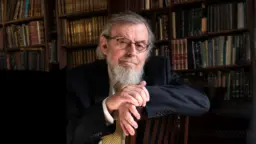
Rabbi Nathan Lopes Cardozo
Rabbi Dr. Nathan Lopes Cardozo is the Founder and Dean of the David Cardozo Academy and the Bet Midrash of Avraham Avinu in Jerusalem. A sought-after lecturer on the international stage for both Jewish and non-Jewish audiences, Rabbi Cardozo is the author of 13 books and numerous articles in both English and Hebrew. He heads a Think Tank focused on finding new Halachic and philosophical approaches to dealing with the crisis of religion and identity amongst Jews and the Jewish State of Israel. Hailing from the Netherlands, Rabbi Cardozo is known for his original and often fearlessly controversial insights into Judaism. His ideas are widely debated on an international level on social media, blogs, books and other forums.