Thoughts to Ponder 112
Jewish Tradition and the Intifada
Part 2 of a Two-Part Essay
Let us speak for a moment about the Palestinians. Who are they? Why are they suddenly making our lives hell? Is it not most remarkable that until only a short time ago, nobody had ever heard about a Palestinian people, and suddenly they have become a major issue in world politics? They appeared out of nowhere with no real historical roots, yet instantly the world accepted them as a nation with considerable power.
Is it not peculiar that after the Palestinians joined the stage of world politics, the Jews surrendered to them the very first cities in Israel that God granted them in Avraham’s time and later under Yehoshua’s leadership in an attempt to make peace with them? These cities include Shechem, Hebron and Jericho, and even Judaism’s most important city, Jerusalem, is not far behind. It seems that we are losing the land in the same order that we received it. The first cities we inherited are the first ones to go. How bizarre!
In an unusual passage in parashat Haazinu, we read the song that Moshe sang at the end of his life. It is one of the most difficult parts of all of the Torah to understand. Nevertheless, some of the verses speak for themselves. Among many important subjects, it discusses the Jews’ misdeeds and includes God’s warning of the consequences.
I [God] said: I will hide My face from them and I will see what their end may be. They are a generation of confusion, children in whom one cannot trust. They have aroused My jealousy with a non-god [they have trusted in powers other than God]. They have annoyed Me with their nullities, and I will provoke them with a non-nation. Through an unwise nation I will provoke them to rage and resentment. (Devarim 32)
Once more we must ask ourselves if these verses do not speak about our own condition in which a non-nation—a group of people without historical roots or cultural identity—heaps terror attack after terror attack upon us, driving us to panic while bringing its own people to ruin.
It also reminds us of Rashi’s observation regarding a section of Moshe’s farewell speech in which he reminded the Israelites of one of their enemies, the Emorites:
The Emorites went out… and pursued you as bees do. They struck you in Seir, all the way to Chorma (Devarim 1:44).
Rashi questions the meaning of the simile, “like bees,” and answers that just as a bee dies immediately after stinging a person, so did the Emorites. Normally, no nation contemplates attacking an enemy whose retaliation leaves no survivors. Only the most vicious, fanatical hatred makes people carry out suicide attacks with the intent of taking as many of their enemies with them as possible.
Hatred can become so powerful that it goes totally out of control, to the point that the one who hates can no longer explain the reason for his hatred. His hatred now rules him; he has fallen victim to it. In such a situation there is no point in offering him any favors or compromise. Not even total capitulation to his wishes will help. By this time his hatred has been completely disconnected from its original motive. It has become hate for hate’s sake.
It seems that hatred has overrun the Palestinian people. Just like bees, they attack, bringing disaster and death on themselves. We are now witnessing this psychological condition in a people whom we tried to help and to whom we offered a large portion of our country. But hatred seems to blind them so completely that they can no longer see the potential for their own future.
Now let us understand this hatred not only from a psychological but also from a religious perspective. Again we are reminded of a verse in the Torah that may relate to our circumstances.
In Shemot 34:24, we read concerning the obligation of each male to come to the Temple on Pesach, Shavuot and Sukkot:
Three times in the year shall all your males let themselves be seen close to the presence of the Lord God, the God of Israel.
When you do so—in other words, when you not only come to the Temple three times a year but also live up to the moral and spiritual condition of that holy place, then—as we read one verse later:
No one will covet your land when you go up three times a year to the Temple.
This verse is remarkable. How can it be that when all Jewish men stand in the court of the Temple on these days, the country will not be overtaken by the enemy? When no soldier guards the country’s borders, how can the land be secure from its enemies? Not only is this impossible in normal human experience, but actually suicidal. Therefore, this biblical promise seems to be absurd.
As we look at these verses carefully, we see that their message is not that when our enemies come to our borders, God will stop them from invading. It says that the enemies will not even covet the land and will show no interest in entering or occupying it!
This is extraordinary. We are being told that the psychological condition of our enemies will change once we behave the way we should. It seems to suggest that our behavior influences their psychological attitudes not only on a social level but also on a metaphysical one. I am not prepared to comment on this other than to say that the issue is striking.
However, let us not make the mistake of thinking that this frees our enemies from their responsibility. It does not say that they will lose their ability to decide between right and wrong and that they are compelled to attack our country like preconditioned robots. It means that it will be harder for them to resist those subconscious elements calling for our downfall, just as in the case of God’s hardening of Pharaoh’s heart in Shemot.
The need for the highest standards of morality
To return to our earlier thesis, we must understand that most of these verses and their rabbinical interpretations emphasize the need for the highest standards of ethical behavior on the part of the Jewish people. While the observance of religious laws such as Shabbat and kashrut are very important, it is clear, as we see particularly in the Netziv’s observations, that the mitzvot bein adam la-chavero, the laws governing human social behavior, seem to be vital when the land needs to be secured. The message should be obvious.
One may live a so-called religious life without being truly religious. If we observe Shabbat, kashrut and other ritual mitzvot but fail to treat our fellow human beings properly, society will not be able to function properly and will eventually disintegrate.
What was the reason for the The Flood?
We are reminded of a profound observation made by the great sage Rabbi Meir Simcha ha-Cohen of Dvinsk (1843–1926) in his commentary on the Torah, Meshekh Chochma. In his commentary on Shemot 14:29, Rabbi Meir Simcha draws our attention towards a problematic statement in the Torah about the cause of the Flood. In Bereshit (6:11) we read:
The earth was (tishachet) corrupt before God and the earth was filled with (chamas) violence.
Rashi, ad loc., comments: Corruption (hashchata) refers to sexual immorality and idol worship, while violence (chamas) refers to robbery.
He continues, making the following comment based on the Talmud (Sanhedrin 108): “The divine decree [to bring the flood] was sealed because of robbery.” In other words, robbery—rather than sexual immorality or idol worship—was the cause of the flood.
Rabbi Meir Simcha argues that this is a bizarre assertion that contradicts Jewish law. According to the Torah, robbers are liable to fines and punitive damages, while those who commit idol worship and sexual immorality incur the death penalty. So how could God have brought the Flood on all humankind merely because of robbery?
If anything, the reasons for the Flood should have been sexual immorality and idol worship. This idea is intriguing because one of the great principles of Judaism is that God is obligated to act according to His own rulings (see the Jerusalem Talmud, Rosh ha-Shannah 1, 3a). So how could He mete the death penalty to humankind when the crime was robbery? This violated His own law!
Rabbi Meir Simcha responds by revealing an extraordinary concept within Jewish law, laying down a major principle that has far-reaching consequences.
He argues that although individuals are subject to the death penalty for sexual immorality or idol-worship, this is only true when the vast majority of their fellow human beings are not. In such a case, individuals should know better since their surroundings make it abundantly clear. Almost no one else practices these immoral acts since they consider such behavior unacceptable.
But what happens when all of humankind engages in these practices? Rabbi Meir Simcha argues that in such a case, the death penalty no longer applies. The reason is obvious: when everyone commits such acts, no one knows better. Once the practice becomes the accepted norm, no one can be made liable. To make an individual liable in that case would not be justified. How would the individual know that such practices are forbidden when all of humankind accepts them as legitimate?
However, this is only true concerning laws that deal with the relationship between human beings and God, such as idol worship or sexual immorality (in which both parties consent to the relationship and are not harming society). In these cases, God may waive His personal honor and forgive the offenders.
This is not true in the case of robbery. One cannot argue that since all people are robbers, robbery is consequently permitted since the offender knew no better. After all, everyone sees the result of robbery—the breakdown of society. No one can argue that he did not know that robbery is wrong and thought that it was a norm.
In fact, Rabbi Meir Simcha argues, the more people engage in robbery, the worse the transgression. While one or two robbers can do only limited damage, in a case where all of society starts stealing, the damage is much greater. Consequently, the customary monetary penalty will not be enough. After all, it is no longer robbery of which people are guilty, but the total destruction of society. Such a collective sin requires a much stronger punishment, since it undermines all that society stands for.
According to Rabbi Meir Simcha, this is the reason why the generation of the flood became liable to capital punishment because of robbery rather than idol worship or sexual immorality. They had destroyed their society completely. It was as if they had committed social suicide. If they had broken the laws of idol worship or sexual immorality, God would not have brought the Flood upon them, since they would not have known better. Such behavior would have been considered the norm.
A statement in the Jerusalem Talmud (Peah, chapter 1, mishna 1) can serve as proof:
In the generation of King David there were only righteous people, but because there were informers among them, they—the righteous people—fell and died in war. In the days of King Ahab, many were involved in idol worship, but because there were no informers among them, they were victorious.
In the latter case, the verse “He [Divine providence] will [still] dwell among them in their contamination”(Vayikra 16:16) applies, but in the case of the informers the text reads: “He will be lifted above the heavens”(Tehillim 57:6). In other words, the Divine Presence will no longer be among them. In the first case, people violated the moral code as far as their fellow human beings were concerned. Therefore, God was no longer prepared to remain with them even though there were many righteous people among them. In the second case, even though the people were idol-worshippers, they behaved properly to each other. Consequently, the Divine Presence stayed with them despite their great sin.
The sages made a similar point when they asked which of the destructions was worse—that of the first Temple or the second. The answer is striking: the second. While the first Temple was destroyed because of idol worship and sexual immorality, the second was destroyed because of sinat chinam—groundless hatred—even though many people studied Torah then. The fact that the construction of the second Temple took only several years shows that the punishment for idol worship and sexual morality is limited. Yet once the second Temple was destroyed two thousand years ago, no third one has yet been built. This shows us that God considers groundless hatred between fellow Jews much worse than idol worship or sexual immorality (Yoma 9a, b).
In other words there is overwhelming evidence that on a national level, the commandments dealing with the relationship between fellow human beings are vital.
While we cannot be sure that the various biblical and rabbinic texts apply to Israel’s current precarious situation, we should at least conclude that we have a duty to inspire ourselves and our fellow Jews to take these texts to heart and try to build a better Jewish society. It is widely known that there are few places in the world where so much kindness is done as in Israel. We are blessed with charitable organizations of every kind, of a scope unheard of in other countries. As Operation Defensive Shield demonstrated, Israeli soldiers follow standards of moral warfare that no other nation in the world would contemplate. In their frustration, these nations have turned against us because they cannot bear the knowledge that their leadership and armies are so far removed from our soldiers’ moral standards. This is our fate and we should be proud of it.
Still, there is much to be done. Israel should start a national campaign to promote the commandments between human beings. National outreach programs that use radio and television broadcasts, websites, email, CDs and educational videos could reach hundreds of thousands of people. We should flood Israeli society and the Jewish world at large with uplifting literature, presented in an attractive way in order to inspire people to show the highest sensitivity to the feelings of our fellow human beings. Advertisements on billboards at bus and train stations and in shopping centers sponsored by major industries, should call on readers to be more patient with each other, greet passersby with a smile, show courtesy, help wherever possible and make it a matter of honor and pride to be a real mensch.
This can be done in effective ways without preaching, appearing pietistic or too agreeable.
Because Israelis have been through so many wars, they are reluctant to show their emotions lest they be thought weak or compromising. Nevertheless, anyone who knows Israeli society understands that inside all Israelis are delicate Jewish souls looking for ways to help and serve their fellow human beings.
Religious Jews have an important task in all this. They must be able to strike a light inside the hearts of other Jews by setting a good example. They need to realize that they must be a light to their own nation before they can be a light to other nations. There can be no mediocrity. This requires that religious schools, seminaries and yeshivot devote more time to teaching and discussing the commandments between human beings. There is no point in suggesting stringencies in the laws of Shabbat and kashrut if they are not accompanied by similar, if not stricter stringencies in our relationships with our fellow human beings. This is the great challenge that now faces religious Jewry and its leaders.
Dear friends, I want to reiterate that while the verses I cited above may apply to our crisis, there is no guarantee that they actually do. Nobody really knows. Nevertheless, I think we agree that we should draw the necessary conclusions and act as if they did. Nothing is more uplifting than having an even better society.
In fact, we should realize that if these verses do indeed discuss our situation, then they carry a message of great hope. After all, what do they suggest? They submit that our future is first of all in our own hands and not in the hands of our enemies. This, I might suggest, makes the problem easier to solve. All we need to do is put our house in order. It is not our foreign policy that will solve the problem, but our conduct. This is possible. There is little doubt that with a lot of effort, we can change Israeli society for the better. This is especially true because our society carries the seeds for excellent behavior, as Israel’s brief history has shown again and again.
The unprecedented feeling of unity at this hour is striking. We see how the religious and non-religious are able to work hand in hand. We can testify that there is a common recognition of brotherhood between Sefardim and Ashkenazim, between rich and poor. This should wake us up. Every crisis is also an opportunity. Without denying or belittling in any way the terrible tragedies in which so many people have been killed and injured in the past several months, this crisis may one day turn into a blessing and function as a catalyst towards a better future. Let us work and pray that it will.
May the God of Israel grant us mercy, and may we soon see the day in which tranquility will return to this great country.

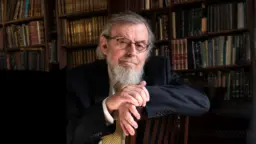
Rabbi Nathan Lopes Cardozo
Rabbi Dr. Nathan Lopes Cardozo is the Founder and Dean of the David Cardozo Academy and the Bet Midrash of Avraham Avinu in Jerusalem. A sought-after lecturer on the international stage for both Jewish and non-Jewish audiences, Rabbi Cardozo is the author of 13 books and numerous articles in both English and Hebrew. He heads a Think Tank focused on finding new Halachic and philosophical approaches to dealing with the crisis of religion and identity amongst Jews and the Jewish State of Israel. Hailing from the Netherlands, Rabbi Cardozo is known for his original and often fearlessly controversial insights into Judaism. His ideas are widely debated on an international level on social media, blogs, books and other forums.