Thoughts to Ponder 846
The Pity of it All
Nietzsche and the Redemption of God
Chronicling the history of mankind from the beginning as reflected in the Torah, one can only pity God. From the moment He created the world, nearly everything goes wrong! Adam and Eve eat from the Tree of knowledge and are exiled from Gan Eden, from Paradise. Then Kayin kills his brother Abel, introducing murder to the world. After generations of increasing human depravity, God decides to bring an end to mankind through the Flood.
Even His attempt to start over again with Noach and his family ends in disaster when their offspring build “a city and a tower whose top will reach heaven”. Their intention was to “depose” God to make for themselves a “glorious name”.
It is as if mankind was constantly attempting to undermine God and His magnificent plans for this world.
“And God regretted that He had made man on earth, and His heart was saddened.” (Bereshit 6:6)
This leads to the greatest tragedy in the history of mankind. As Friedrich Nietzsche expressed in his famous parable of the Madman: “I am looking for God!” he cried, before declaring, “Where has God gone? … We have killed him — you and I. … God is dead. God remains dead. And we have killed him.” [1]
Nietzsche warns that once we “wipe away the entire horizon,” mankind is left “perpetually falling… through an infinite nothing,” with no up or down, no source of meaning or moral direction.
But for all the despondency in Sefer Bereshit’s first chapters, there is still hope. “Some men go on a hunger strike in the prison of the mind, starving for God,” wrote Rabbi Abraham Joshua Heschel. “Faith is not the clinging to a shrine but an endless pilgrimage of the heart.”[2]
God at last found a Redeemer in Avraham Avinu, and through him, God saved the world from itself. And so began the long journey of repair: mankind learning, through Avraham, not how to bury God, but how to rediscover Him—and, in doing so, redeem itself.
Notes:
[1] Friedrich Nietzsche, The Gay Science, 1882, Walter Kaufmann ed, New York, Vintage,181-182.
[2] Abraham Joshua Heschel, Man Is Not Alone, New York: Farrar, Straus and Giroux, 1951, p. 160.

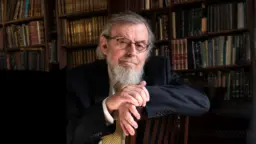
Rabbi Nathan Lopes Cardozo
Rabbi Dr. Nathan Lopes Cardozo is the Founder and Dean of the David Cardozo Academy and the Bet Midrash of Avraham Avinu in Jerusalem. A sought-after lecturer on the international stage for both Jewish and non-Jewish audiences, Rabbi Cardozo is the author of 13 books and numerous articles in both English and Hebrew. He heads a Think Tank focused on finding new Halachic and philosophical approaches to dealing with the crisis of religion and identity amongst Jews and the Jewish State of Israel. Hailing from the Netherlands, Rabbi Cardozo is known for his original and often fearlessly controversial insights into Judaism. His ideas are widely debated on an international level on social media, blogs, books and other forums.