ויאמר ה’ לנח בא אתה וכל ביתך אל התבה כי אתך ראיתי צדיק לפני בדור הזה
Then the Eternal said to Noah, “Go into the ark, with all your household, for you alone have I found righteous before Me in this generation. Bereshit 7:1
I believe that if a triangle could speak, it would say . . . that God is eminently triangular, while a circle would say that the divine nature is eminently circular. Thus each would ascribe to God its own attributes, would assume itself to be like God and look on everything else as ill-shaped. — Baruch Spinoza[1]
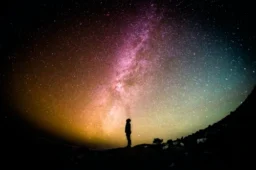
Elsewhere I have suggested that from an authentic Jewish point of view, it is a mistake to hold humankind or the Jewish people morally responsible for natural disasters such as earthquakes, tsunamis, hurricanes, or fires. Though some disasters may indeed be due to our failures, it is in fact irresponsible and dangerous to make human beings responsible for every disaster; it reflects the same mistake the friends of the biblical Iyov (Job) made when they assumed that he must have sinned. For them it was obvious that he was at fault, otherwise why would so many terrible afflictions have befallen him? Iyov, however, insisted that he has not sinned, and challenged God as to why he had been made to endure such terrible miseries, since he was innocent! God responded that He knew this to be true, but confronted Iyov with a question which speaks to the core of the matter: Where were you when I laid the foundations of the earth?[2] In other words: Since when is the human being really the measure of all things? The universe with its black holes, galaxies, and trillions of stars clearly indicates that God’s reason to create the universe surpasses by far the argument that all this was just created for our sake. That we suffer, and that natural disasters take place, may have to do with matters which go to the very foundation of all existence and have nothing to do with our religious or moral failures.
Do terrible tragedies which afflict the innocent raise the question of whether it is more honest to deny God’s existence? Does all the pain in this world not make a strong case for such a proposition? Is the constant attempt to justify God’s existence, by way of apologetics, not a farce, and futile?
This attitude suffers from erroneous reasoning. It assumes, as do the “pro-God” apologists, that God needs to fit the picture we have of Him, or would like to have of Him: a good God. However, by making God good by our standards, we are essentially making God into an idol, one who fits our standards and fulfills our needs. That is surely not the Jewish God. While He shares with us certain qualities, He is far more than that. He does not belong to any category with which we can identify.
It seems that God is not the type of “good God” we always speak about and want to believe in. His goodness may apply only to the fact that He is good in and of Himself. He possesses a goodness, a truth known only to Him and which has no bearing on us. This argument is not apologetic but an admission of our limited understanding.
Creating God in our image
Atheism is no solution. It is an escape, but ultimately only increases the problem. It requires greater faith to argue that all of existence is accidental than to argue that there is a purpose and a Creator to all existence. The believer is a greater skeptic than the atheist. The difference is that one admits his limitations, while the other one does not. “The writers against religion whilst they oppose every system, are wisely careful never to set up any of their own,” said Edmund Burke.[3]
This idea is supported by a well-known passage in the Talmud[4] discussing the case of shiluach haken — the obligation to send away a mother bird before taking her young.[5] In an unusually harsh statement, the sages forbid one to say that compassion is the reason for this law, and they declare that one who says this “is to be silenced.” It is not mercy behind this law, says the Talmud, but the unknowable Divine Will. Ultimately, we do not know why things are the way they are. God cannot be scrutinized.
The problem of creating God in our image is not a new one. Moshe asks God to reveal His name to him before he conveys the message to the Jews that He will redeem them from Egyptian bondage. God refuses to do so, and His answer is astonishing: “I will be Whoever I will be. I am not a ‘what,’ or a ‘when.’ I am not even a ‘who.’ There is no term you can use to describe Me. Any attempt to give Me an image is a violation of My very being. Any conclusive explanation of My deeds is idol worship. I permit you to describe Me in human terms only as long as you know that any such description will ultimately break down. No word can ever contain Me.”
What are we to do?
During a two-and-a-half-year debate, Bet Hillel and Bet Shammai discussed the question of whether it is better for human beings to have been created, or not.[6] They concluded that it would have been better for mankind not to have been created, but now that he is created, he should watch his deeds. This is a most remarkable observation. The truth about this bizarre debate is that it touches on one of the greatest mysteries known to mankind:
What is the purpose of the universe and of human existence? Can we even know? By deciding that it would have been better for us not to have been created, Bet Hillel and Bet Shammai made a powerful point. There is no way to know the ultimate purpose of our existence. We have no idea why God wanted us — or for that matter the universe — to exist. Perhaps to reward us for our good deeds? Maybe so that we may enjoy life and merit to observe the mitzvot?
But these answers only raise more questions. Why did we need to be created so as to be rewarded, or to enjoy life and perform the mitzvot? Would it not have been better if we had not been created? First, we would have been unaware of what we were missing. Second, we would not have had to encounter the many and frequent severe trials accompanied by unbearable pain. Are the joys of life and reward really enough to warrant creation when it goes hand in hand with genocide, natural calamities, disease and death? From the point of view of morality, there is nothing to support creation. It is unjust and indefensible. Yet, God has decided it must be. The reason, then, must be much greater than we can ever fathom.
Ultimately, God alone is responsible, not only for natural catastrophes, as we saw in the last chapter, but ultimately also for man’s evil deeds. After all, He created mankind and gave us the capability to do evil. The most Bet Hillel and Bet Shammai could conclude was: now that we are here, we had better watch our deeds.
Questions to Ponder from the DCA Think Tank
- If attempting to understand why bad things happen to good people through a theological lens is, in fact, idolatry, is there any lens through which tragedy can be examined? And if so, what might that lens be? Alternatively, would you be willing to embrace the notion that tragedy might have no meaning at all (or at least not in any terms we can understand)?
- “Theodicy as a means of claiming that God can be justified in human terms is a form of idol worship.” Yet if God’s terms are in the realm of the unknowable, then how else are we to engage with the Divine, if not in human terms?
- When God tells Avraham at the end of Genesis Chapter 18 that Sodom will be destroyed, Avraham famously argues, holding God to account. If God cannot be scrutinized, what are we to learn from this story? Are we not to follow in Avraham’s footsteps and to likewise hold God to account, even today?
- The suggestion is made here that God might not only not be good by human standards, but even have “reasons beyond righteousness.”. What are your thoughts on this? Does it bring up any visceral feelings?
The following is a poem by Think Tank member Dina Pinner, who wrote the above Questions to Ponder.
In God’s image I am cast
In rage, jealousy, violence, destruction
Plagued, thirsty, deserted
And it is good
And enough
What creative piece might you put together in response to Rabbi Cardozo’s words about God and tragedy?
[1]. Benedict de Spinoza, Letter 60 (56) “Between Spinoza and Hugo Boxel on Ghosts,” in Improvement of the Understanding, Ethics and Correspondence, trans. R.H.M. Elwes (New York: Cosimo, 2006), 392.
[2]. Iyov 38:4.
[3]. Edmund Burke, The Works of Edmund Burke: With a Memoir, Volume 1 (NY: Harper & Brothers, 1860), xii.
[4]. Berachot 33b.
[5]. Devarim 22:6-7.
[6]. Eruvin 13b.

Rabbi Nathan Lopes Cardozo
Rabbi Dr. Nathan Lopes Cardozo is the Founder and Dean of the David Cardozo Academy and the Bet Midrash of Avraham Avinu in Jerusalem. A sought-after lecturer on the international stage for both Jewish and non-Jewish audiences, Rabbi Cardozo is the author of 13 books and numerous articles in both English and Hebrew. He heads a Think Tank focused on finding new Halachic and philosophical approaches to dealing with the crisis of religion and identity amongst Jews and the Jewish State of Israel. Hailing from the Netherlands, Rabbi Cardozo is known for his original and often fearlessly controversial insights into Judaism. His ideas are widely debated on an international level on social media, blogs, books and other forums.